To feed a growing population, the United Nations projects, worldwide agricultural yields must increase by 50 percent between now and 2050.And that ambitious goal does not factor in the effects of climate change. Plants thrive on carbon dioxide, but very hot days suppress crop yields.
…
Last year, RIPE [Realizing Increased Photosynthetic Efficiency project] researchers demonstrated for the first time that it was possible to improve crop yields in the field by engineering photosynthesis. By increasing the expression levels of three genes involved in processing light, they improved tobacco yields by 20 percent.
Now the RIPE team is trying to use the same genetic-engineering trick to increase yields in more recalcitrant food crops. Making it happen in cassava falls in part to Amanda De Souza, a postdoc from Brazil.

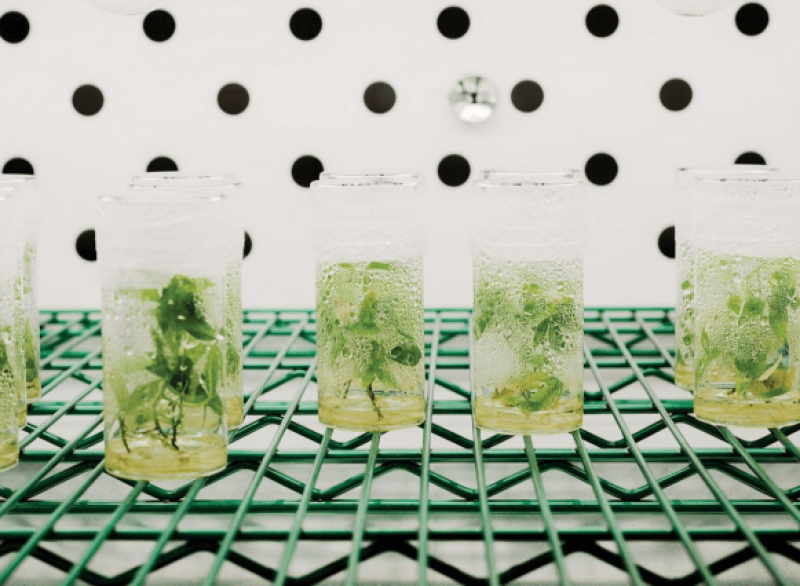
Genetic engineering of photosynthesis in cassava is a delicate and lengthy process. De Souza opens a petri dish to show off cassava embryos, light-yellow clusters about a millimeter wide. She grows them using tissue plucked from a bud on a full-grown cassava plant. This cluster of cells, called a “callus,” can be infected with bacteria carrying the light-processing genes. Only a few cells will actually take up the genes. Those that do will then be exposed to a hormone cocktail that will drive them to grow a stem and roots.
The GLP aggregated and excerpted this article to reflect the diversity of news, opinion and analysis. Read full, original post: To Feed the World, Improve Photosynthesis