Challenging idea organic fruits, vegetables more nutritious, better for the environment

organic produce

[Editor’s Note: Emma Beckett is a molecular nutritionist at the University of Newcastle’s School of Medicine and Public Health]

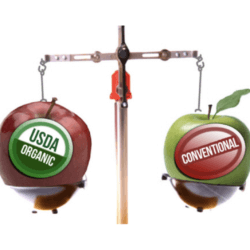
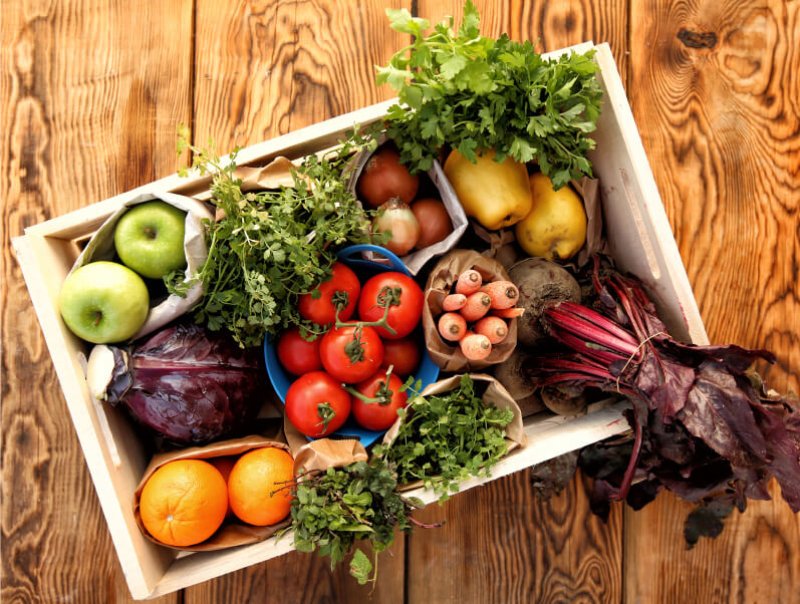
Many people believe that organic food is nutritionally superior. This is not really backed up by the science. Research comprising of hundreds of studies has found that organic produce is no more nutritious than conventional equivalents. While vitamin and mineral levels may vary between organic and conventional produce, they also vary significantly within these classifications. Where there are differences, they are often small, and not likely to impact on health.

Pesticide residues and heavy metal levels have been found to be lower in organic produce. While pesticides are often dangerous in large amounts, pesticide levels are monitored in Australia and are kept within safe levels, especially if you wash or peel you fruit and veg before consumption.

Organic foods may have less of an environmental footprint. But this might be a privileged position. If all food was farmed using organic methods, studies show that it appears unlikely we could feed the whole world’s burgeoning population due to the significant productivity gap between organic and conventional methods.

The important thing is to consume fruits and vegetables regardless of the source. When most of us simply aren’t eating enough fruits and vegetables, it is perhaps pointless to quibble over organic status.

The GLP aggregated and excerpted this article to reflect the diversity of news, opinion and analysis. Read full, original post: Organic Food: How Good Is It, Really?


{{ reviewsTotal }}{{ options.labels.singularReviewCountLabel }}
{{ reviewsTotal }}{{ options.labels.pluralReviewCountLabel }}
{{ options.labels.noReviewsLabel }}
{{ options.labels.newReviewButton }}
{{ userData.canReview.message }}

Related Articles

Infographic: Global regulatory and health research agencies on whether glyphosate causes cancer

Infographic: Global regulatory and health research agencies on whether glyphosate causes cancer

Does glyphosate—the world's most heavily-used herbicide—pose serious harm to humans? Is it carcinogenic? Those issues are of both legal and ...

Most Popular

ChatGPT-Image-Mar-10-2026-01_39_01-PM
Viewpoint—“Miracle molecule” debunked: Why acemannan supplements don’t work
Screenshot 2026-07-11 094410
Growing animal muscle and fat cells inside rice grains and calling it beef: One of numerous genetically engineered products shaking up our ecosystem
Screenshot 2025-09-17 at 12.41
Misinformation alert: No, glyphosate use in Canadian forests is not spurring more wildfires
ChatGPT-Image-Jun-25-2026-12_23_17-PM
No, Bill Gates did not secretly engineer ticks to promote veganism
Screenshot 2026-07-16 at 8.49
Pete Hegseth’s bizarre Viagra commercial as Trump administration endorses ‘hormone replacement therapy’
file-f-d-d-
Facts & Fallacies Podcast: Europe's AC debacle underscores fatal flaw in green activism
Screenshot-2026-07-16-at-11.32.12-AM
Viewpoint: Trump appoints climate change hoax promoter to head influential government policy project
ChatGPT-Image-Jul-9-2026-02_39_22-PM
Viewpoint: Polyphenols or NAD+ supplements to combat aging: No, Gwenyth Paltrow and followers, don’t waste your money.

Sorry. No data so far.

glp menu logo outlined

Get news on human & agricultural genetics and biotechnology delivered to your inbox.