Italy’s GMO corn ban unlawful, European Union court rules

MODIFY jumbo
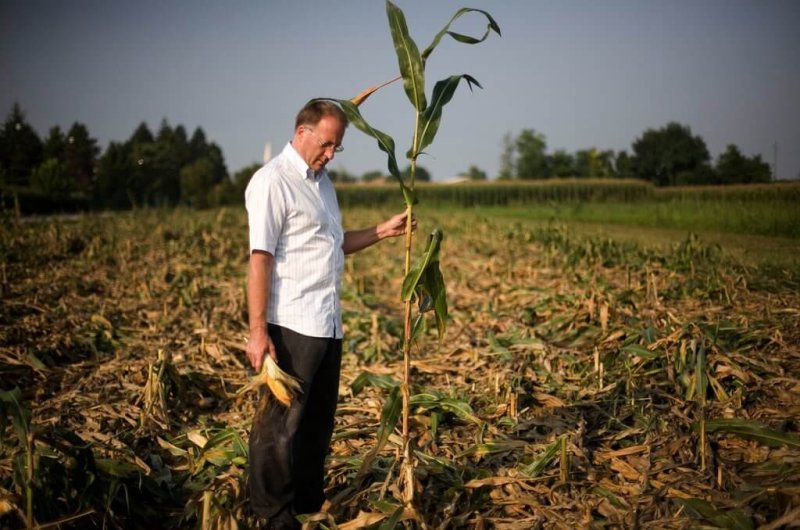
Italian farmer Giorgio Fidenato, who had planted genetically modified corn, stands amid stalks that had been trampled by anti-GMO activists.

The European Union court ruled Wednesday (September 13] in favor of an Italian activist farmer who has defied his nation’s laws by planting genetically modified corn.

Italy has prosecuted Giorgio Fidenato for cultivating the corn on his land, citing concerns the crops could endanger human health.

But the European Court of Justice ruled Wednesday that a member state such as Italy does not have the right to ban GM crops given that there is no scientific reason for doing so. It noted the European Commission in 1998 authorized the use of the specific maize seeds Fidenato planted, finding “no reason to believe that that product would have any adverse effects on human health or the environment.”

Screen Shot at AM
Giorgio Fidenato

Fidenato, whose fields lie in Pordenone, northeastern Italy, became persuaded of the benefits of genetically altered crops during a visit to the United States in the 1990s, seeing that they require fewer chemicals than traditional crops and produce higher yields and profits.

But he has faced huge opposition in Italy, where many are fearful that genetically altered foods are less natural than traditional crops and could be dangerous. He has faced both fines from the government and the wrath of anti-GM activists who have destroyed his crops.

The GLP aggregated and excerpted this article to reflect the diversity of news, opinion and analysis. Read full, original post: European court sides with Italian farmer pushing GM crops

{{ reviewsTotal }}{{ options.labels.singularReviewCountLabel }}
{{ reviewsTotal }}{{ options.labels.pluralReviewCountLabel }}
{{ options.labels.newReviewButton }}
{{ userData.canReview.message }}

Related Articles

Infographic: Global regulatory and health research agencies on whether glyphosate causes cancer

Infographic: Global regulatory and health research agencies on whether glyphosate causes cancer

Does glyphosate—the world's most heavily-used herbicide—pose serious harm to humans? Is it carcinogenic? Those issues are of both legal and ...

Most Popular

Screenshot-2026-05-01-at-1.29.41-PM
Viewpoint: What happens when whole grains meet modern food manufacturing? Labels don’t tell the whole story.
S
As vaccine rejectionism spreads, measles may be taking a more dangerous turn
Screenshot 2026-05-06 at 2.56
Singularity crisis ahead? Can super babies save us from rogue AI geniuses?
Screenshot-2026-05-06-at-2.07.43-PM
Manufacturing a conspiracy: The timeline of how  the White House embraced the fringe claim that scientists are being mysteriously murdered
Screenshot-2026-04-20-at-2.26.27-PM
Viewpoint — Food-fear world: The latest activist scientists campaign: Cancer-causing additives
Screenshot-2026-04-30-at-2.19.37-PM
5 myths about summer dehydration that could damage your health — or even kill you
Screenshot-2026-03-13-at-12.14.04-PM
The FDA wants to make many popular prescription drugs OTC—a great idea. Here’s why it’s unlikely to happen
Screenshot-2026-04-12-135256
Bixonimania: The fake disease scam that AI swallowed whole
ChatGPT-Image-May-6-2026-03_41_05-PM
‘Protecting the integrity of science’: Kennedy’s FDA blocks release of taxpayer-funded studies finding COVID and shingles vaccines safe
Screenshot-2026-04-03-at-11.15.51-AM
Paraben panic: How a flawed study, media hype, and chemophobia convinced the public of the danger of one of the safest classes of preservatives
glp menu logo outlined

Get news on human & agricultural genetics and biotechnology delivered to your inbox.