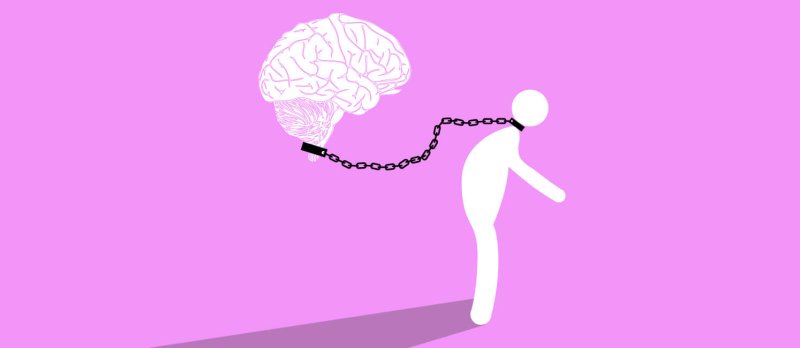

If you’ve ever read an article proclaiming that neuroscience disproves free will, you’ve probably heard of the Libet experiment.
…
The claim advanced by Libet and many others was that the readiness potential is an empirical indicator of the underlying neurological mechanism that we experience as volition. Our conscious experience of free will is therefore merely something we report after the fact, once our brains have initiated the action. Free will can thus be measured, the argument went — and it is the product of neurochemistry, not the conscious mind.
…
[W]hen confronted with the choice to murder, my decision is not simply the result of a logical process of deliberation but also a response to a well-formed impulse — something that might well appear from a neurological perspective to be a “real-time read-out of neural precursor activity.”


…
Neuroscientists continue to claim that they have annexed free will to their domain. But, at least for now, freedom belongs still to the philosophers.
The GLP aggregated and excerpted this blog/article to reflect the diversity of news, opinion, and analysis. Read full, original post: Can Neuroscientists Measure Free Will?