Dog genome project: How your breed originated

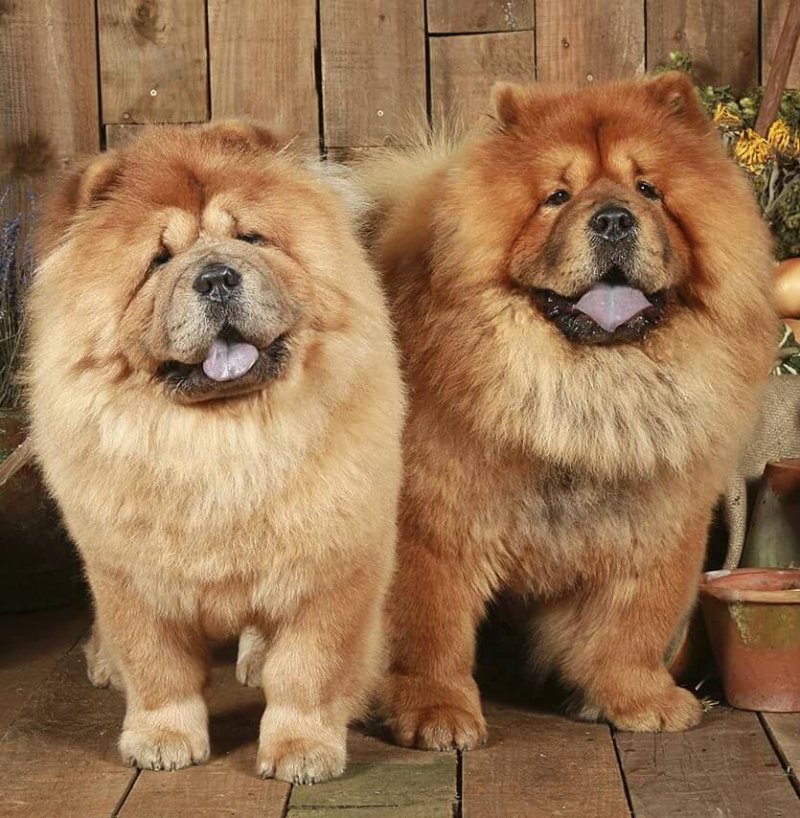
chow chow resized a ac df cf e

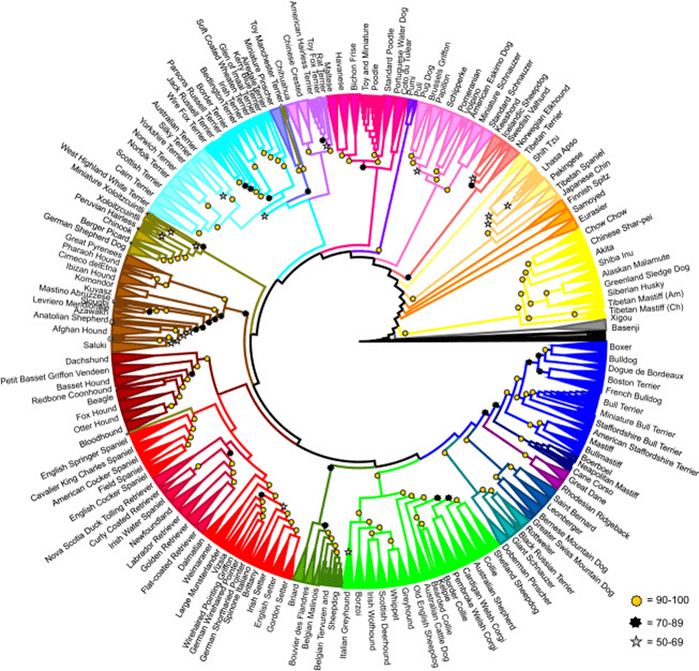
From the 80-kilogram Great Dane to the 1-kilogram tiny teacup poodle, there seems to be a dog for everyone. Now, the largest genetic analysis to date has figured out how those breeds came to be, which ones are really closely related, and what makes some dogs more susceptible to certain diseases.

[Researchers] Elaine Ostrander and Heidi Parker […] weren’t interested in determining how and when dogs were domesticated, but how all the breeds developed. Their sample now includes 1346 dogs representing 161 breeds, or not quite half of all kinds of dogs.

Almost all the breeds fell into 23 larger groupings called clades, the team details [April 25] in Cell Reports. Although genetically defined, the clades also tended to bring together dogs with similar traits: Thus boxers, bulldogs, and Boston terriers—all bred for strength—fall into one clade; whereas herders like sheepdogs, corgis, and collies fall into another.
[B]efore vets couldn’t really understand why a genetic disease called collie eye anomaly, which can distort different parts of the eye, and shows up in collies, border collies, and Australian shepherds, also occurs in Nova Scotia duck tolling retrievers. But the genetic analysis shows that this retriever has either collie or Australian shepherd ancestors that may have passed on the defective gene.
breeds

The GLP aggregated and excerpted this blog/article to reflect the diversity of news, opinion, and analysis. Read full, original post: Where did your dog come from? New tree of breeds may hold the answer

{{ reviewsTotal }}{{ options.labels.singularReviewCountLabel }}
{{ reviewsTotal }}{{ options.labels.pluralReviewCountLabel }}
{{ options.labels.newReviewButton }}
{{ userData.canReview.message }}

Related Articles

Infographic: Global regulatory and health research agencies on whether glyphosate causes cancer

Infographic: Global regulatory and health research agencies on whether glyphosate causes cancer

Does glyphosate—the world's most heavily-used herbicide—pose serious harm to humans? Is it carcinogenic? Those issues are of both legal and ...

Most Popular

ChatGPT-Image-May-7-2026-12_32_36-PM
Viewpoint: The state of U.S. vaccine policy? Dismal nationally, but some states are stepping up.
Screenshot-2026-04-22-at-10.46.29-AM
Viewpoint: How to counter science disinformation? Science journalist offers 12 practical tips
Screenshot-2026-04-13-at-1.39.26-PM
Viewpoint: ‘Safer for children?’ Stonyfield yogurt under fire for deceptive organic marketing
ChatGPT-Image-May-7-2026-12_16_37-PM-2
Viewpoint: Are cancer rates ‘skyrocketing’ as RFK, Jr. and MAHA claim? The evidence says mostly the opposite
ChatGPT-Image-May-7-2026-01_23_27-PM-2
Viewpoint: Will AI democratize personalized cancer treatment or fuel medical misinformation?
Defense_Secretary_Ash_Carter_tours_the_Microsoft_Cybercrime_Center_in_Seattle_March_3_2016
How criminals are using AI to target social media users and steal their money and confidential data
the magic of mRNA
Viewpoint: Anti-vax fake ‘turbo cancer’ claims threaten cancer treatment breakthroughs
ChatGPT-Image-May-12-2026-08_39_41-PM
GLP podcast: Big Pharma, Big Ag, Big Food—health harming industries or life-saving innovators?
artificial intelligence brain think illustration md
Viewpoint — Digital gods and human extinction: Will we be the first species ever to design our own descendants?
Screenshot-2026-04-23-at-11.00.36-AM
Regulators' dilemma: Thalidomide, Metformin, and the cost of getting drug approvals wrong
Picture1-1
Cooling the planet with balloons: Could a geoengineering gamble slow global warming?
Picture1-14
When superbugs threaten vulnerable children: Can AI help solve antibiotic resistance?
RFKjr-Tech-Vax-Misinfo
As U.S. officials spread medical misinformation, scientists fact check online
glp menu logo outlined

Get news on human & agricultural genetics and biotechnology delivered to your inbox.