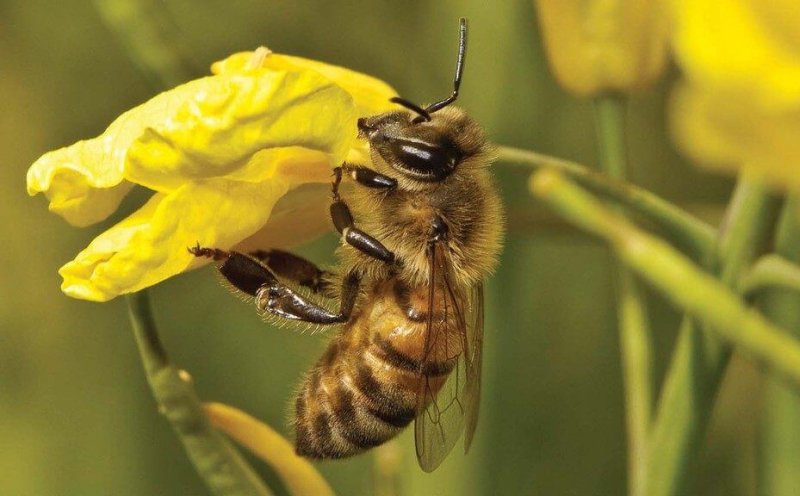
What’s next in the long, heated battle over bees and neonicotinoid insecticides?

beeshoneybeeonoilseedrapepollinators Main e
[S]tudies showing real-world evidence of harm from pesticides in the field have been mounting — and environmental organizations have demanded wide-ranging bans. … This month, the EU’s European Food Safety Authority is due to complete a re-evaluation of evidence for restricting neonics; the EU will then need to decide what action to take. The US Environmental Protection Agency is expected to complete its own review of the insecticides next year.

But industry groups and some scientists say the evidence still isn’t conclusive. The picture is complicated: some studies show harm to some bees in some circumstances, whereas others find no harm. The results seem to be affected by many factors, including the species of bee and the kinds of crops involved. Scientists working on the question say the subject has become toxic: any new study is instantly and furiously picked at by entrenched advocates on both sides. … Ultimately, it’s likely that political or regulatory decisions will settle the matter before opposing parties agree, says Sainath Suryanarayanan, an entomologist and sociologist at the University of Wisconsin–Madison who has studied the bee-health issue. “It is a common pattern for highly contentious and polarized debates,” he says.

The GLP aggregated and excerpted this article to reflect the diversity of news, opinion and analysis. Read full, original post: The bitter battle over the world’s most popular insecticides

{{ reviewsTotal }}{{ options.labels.singularReviewCountLabel }}
{{ reviewsTotal }}{{ options.labels.pluralReviewCountLabel }}
{{ options.labels.newReviewButton }}
{{ userData.canReview.message }}

Related Articles

Infographic: Global regulatory and health research agencies on whether glyphosate causes cancer

Infographic: Global regulatory and health research agencies on whether glyphosate causes cancer

Does glyphosate—the world's most heavily-used herbicide—pose serious harm to humans? Is it carcinogenic? Those issues are of both legal and ...

Most Popular

Screenshot-2026-05-01-at-1.29.41-PM
Viewpoint: What happens when whole grains meet modern food manufacturing? Labels don’t tell the whole story.
S
As vaccine rejectionism spreads, measles may be taking a more dangerous turn
Screenshot 2026-05-06 at 2.56
Singularity crisis ahead? Can super babies save us from rogue AI geniuses?
Screenshot-2026-05-06-at-2.07.43-PM
Manufacturing a conspiracy: The timeline of how  the White House embraced the fringe claim that scientists are being mysteriously murdered
Screenshot-2026-04-20-at-2.26.27-PM
Viewpoint — Food-fear world: The latest activist scientists campaign: Cancer-causing additives
Screenshot-2026-04-30-at-2.19.37-PM
5 myths about summer dehydration that could damage your health — or even kill you
Screenshot-2026-03-13-at-12.14.04-PM
The FDA wants to make many popular prescription drugs OTC—a great idea. Here’s why it’s unlikely to happen
ChatGPT-Image-May-6-2026-03_41_05-PM
‘Protecting the integrity of science’: Kennedy’s FDA blocks release of taxpayer-funded studies finding COVID and shingles vaccines safe
Screenshot-2026-04-12-135256
Bixonimania: The fake disease scam that AI swallowed whole
Screenshot-2026-05-01-at-11.56.24-AM
‘Science moves forward when people are willing to think differently’: Memories of DNA maverick Craig Venter
glp menu logo outlined

Get news on human & agricultural genetics and biotechnology delivered to your inbox.