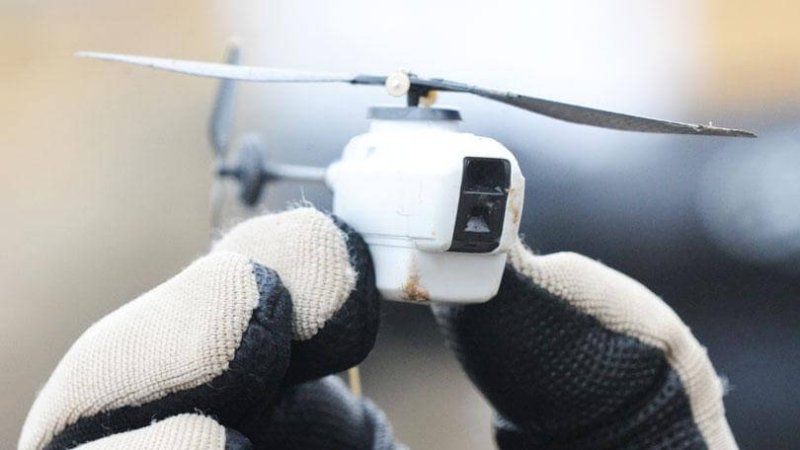
At Rutgers University … engineers are developing “skeetercopters” that can detect and map mosquito-infested sites from the air — and douse them with insecticide.
And now WeRobotics … has teamed up with the Insect Pest Control Lab of the International Atomic Energy Agency (IAEA) … to develop autonomous drones that will release millions of sterile male mosquitoes over areas where mosquito-borne illnesses like Zika fever are endemic.
…
The prototype drone is designed to distribute about 100,000 sterile A. aegypti mosquitoes over each square kilometer of terrain. The field trials will use arrays of mosquito traps throughout the target areas to check that the sterile bugs stay healthy during and after their drone flight.
…

The first field trials of the WeRobotics prototype drone will take place early next year in an as-yet-unidentified area of South or Central America that is affected by Zika fever.
The trials will use bugs sterilized at an IAEA lab in Vienna, but the release mechanism could also be used to distribute other disease-fighting mosquitoes by drone, such as bugs that have been genetically modified so their offspring die while still larvae, and mosquitoes infected with the bacterium Wolbachia, which blocks their ability to pass on diseases like dengue and Zika.
Read full, original post: How bug-delivering drones are helping defeat deadly diseases