EU countries failed on Wednesday [October 25] to vote on a license extension for weedkiller glyphosate, delaying again a decision on the widely used herbicide that critics say could cause cancer.
The European Commission said in a statement the relevant committee did not hold a vote at a meeting and that it would announce the date of the next meeting shortly.
It also failed to vote at a meeting earlier this month. The current license expires at the end of the year.
…
In anticipation of a vote, the European Parliament called on October 24 for the weedkiller to be phased out in the next five years, prompting the Commission to drop its proposal for a 10-year license extension.
The Commission then said it would seek to find a consensus around an extension of between five and seven years.
…
[Separate Reuters story:] France is prepared to accept a four-year license extension for controversial weedkiller glyphosate in order to reach a consensus among European Union countries, the government’s spokesman said on Wednesday.
The GLP aggregated and excerpted this article to reflect the diversity of news, opinion and analysis. Read full, original post: EU delays decision on herbicide glyphosate
The National Milk Producers Federation launched a “peel back the label” campaign this summer, aimed squarely at a growing list of [GMO-free] dairy products….
“It’s really trying to market a distinction without a difference,” said Jim Mulhern, president of the federation, whose members produce half the nation’s milk.
“It’s like unicorn-free milk,” said Alison L. Van Eenennaam, a UC Davis animal genomics scientist. “There aren’t any GMOs in milk anyway.”
…
That approach has resulted in non-GMO labels on kitty litter, Himalayan pink salt, waters (coconut, flavored and “alkaline,” in particular) and condoms.
Even Jeff Hollender, co-founder of Sustain brand condoms, found it hard to explain why his New York-based company’s prophylactics, made of latex derived from sap from a rubber plant, bear the seal of the Non-GMO Project.
“What we’re having certified is that neither the sap nor any of the 12 other ingredients, which are a variety of different chemicals, are GMO,” Hollender said.
Asked what chemicals are GMO, Hollender said, “I’m not a chemist.”
Researchers say they have found the “first direct biological evidence” of damage in Veterans with Gulf War illness to DNA within cellular structures that produce energy in the body.”
…
In blood tests, researchers observed more lesions and more mitochondrial DNA—that is, extra copies of genes—in Veterans with Gulf War illness, relative to controls without the illness, suggesting excess DNA damage. Lesion frequency gives a direct measure of DNA damage, while the increased number of mtDNA copies reflects a response to the damage. Both lesion frequency and the number of mtDNA copies vary in response to environmental toxins and together provide a reading of overall mitochondrial health.
…
[Dr. Mike Falvo] notes that everyone experiences some level of mtDNA damage, perhaps due to aging and environmental exposures, such as air pollution. In the study, the mtDNA damage was 20 percent greater in the Veteran group, compared with a control group that included three Veterans without GWI and four non-Veterans.
…
“Mitochondrial dysfunction among Veterans with GWI may help explain, in part, the persistence of this illness for over 25 years,” the researchers on Falvo’s study write. “For example, chemical and environmental exposures during deployment may have provided the initial [harm] to mtDNA and accumulation of damage.”
[Editor’s note: Aaron Dy is aPhD student in biological engineering at MIT.]
To most of us, the question for CRISPR is “when” not “will” it get a Nobel Prize. However, there are still questions over “when”, “who” will get the credit, and which Nobel Prize it will even be.
…
Another year and another year of wondering for CRISPR and a potential Nobel prize (let’s assume it doesn’t win for literature or peace later this week). Last year we were already getting stories about how it was missing out – “CRISPR loses Nobel to tiny machines” – and stories about this year’s award still mentioned CRISPR as a “an oft-cited contender during the Nobel award season”.
[H]ere’s a very-much-non-definitive list of people rumored to be up for a CRISPR Nobel (in alphabetical order): Emmanuelle Charpentier at Max Planck Institute for Infection Biology in Berlin (fomerly Umeå University), George Church at Harvard University and Wyss Institute, Jennifer Doudna at University of California, Berkeley, Virginijus Šikšnys at Institute of Biotechnology in Lithuania, and Feng Zhang at Broad Institute and MIT.
…
With the rule of three and possibility of different categories I have no idea how this one will actually end up. But maybe the real question is why we’re even giving out awards to three people for work that so many contribute to.
The GLP aggregated and excerpted this blog/article to reflect the diversity of news, opinion, and analysis. Read full, original post: When will CRISPR get a Nobel Prize?
[E]ye doctors based primarily at the Bascom Palmer Eye Institute in Miami had published a widelycoveredreport describing three eerily similar cases: Three elderly women with macular degeneration got stem cells derived from their own fat injected into their eyes at a different stem-cell clinic in Florida. The same thing happened: Their retinas became detached, and they went blind.
…
[T]he clinic should have known better. “It’s just not a professional thing to take an unproven intervention and inject it in both eyes,” says Leigh Turner, a bioethicist at the University of Minnesota, who tracks stem-cell clinics. Kuriyan says that injecting both eyes and asking patients to pay out of pocket for their treatment are both highly unusual for clinical trials. “Those are all big red flags,” he says. A better approach, he says, would have been to test the injections in animals for safety first.
It’s unclear exactly why the stem-cell injections caused such a bad reaction in these women. Perhaps the stem cells had differentiated into cells that formed a membrane and then contracted, peeling the retina away from the rest of the eye. Or perhaps there was scarring caused by immune cells, which are part of the mix of cells in fat that can be injected along with stem cells into the eye.
Cholera is an infectious disease of the small intestine caused by strains of the bacterium Vibrio cholerae. The classic symptoms of the disease include extensive bouts of acute diarrhea that can last several days and consequently lead to severe dehydration. This can lead to death if left untreated. Symptoms may start as little as two hours after ingestion of water contaminated with this bacterium. This short ‘incubation time’ is thought to be the reason for cholera being able to spread so rapidly through populations.
Researchers have estimated that there are up to 4 million cases of cholera every year and up to 140,000 deaths worldwide, so it is still very much a global health issue.
John Snow and the Broad Street water pump
The first cases of cholera in England were reported in 1831, around the same time an 18-year-old man called John Snow was completing his medical studies in London (he’d begun training as a medic at just 14 years old!). Over the next 20 years cholera caused a series of serious epidemics, killing tens of thousands of people in England alone.
Back then very little was known about how infectious diseases spread or even what infectious diseases were. At that time people believed that diseases like cholera and the Black Death were caused by breathing in miasma or ‘bad air’ coming from decomposing matter. However, the investigations of John Snow were about to challenge these ideas.
A magazine illustration from 1852 showing the unsanitary and crowded conditions of London slums. Image credit: Wellcome Library via Wellcome Images
Although he specialised in women’s health and pregnancy, Snow was interested in many areas of medical science. He was particularly fascinated with how infectious diseases, like cholera, were spread. Since beginning his medical training, he was always keen to investigate water as a vehicle for transmitting infectious disease. In the mid-1800s, people didn’t have running water or clean ways to dispose of or treat sewage. London was particularly bad, with sewage often being dumped into open pits called ‘cesspools’ or even directly into the River Thames. In addition to this, water from the Thames was commonly bottled and delivered to pubs and other businesses for consumption!
Snow recognized this and suspected that sewage could be contaminating the water supply and spreading cholera, and probably many other diseases, around the city.
In September 1854 a particularly severe outbreak of cholera hit the Soho area of London, close to where he lived. He took the opportunity to find the source of the outbreak, once and for all. He worked around the clock to track the infection by examining hospital and public records.
Snow constructed a map (below) showing the location of various water pumps around the city and where deaths from cholera were clustered. He showed the number of deaths at each address as a series of horizontal lines, stacked up like a pile of bodies in the street.
John Snow’s cholera map of Soho. Image credit: Wellcome Library via Wellcome Images
He reported that the map showed clearly that the outbreak was linked to the “much-frequented street-pump in Broad Street”. At that time the pump not only provided water to many households in the surrounding streets, but also supplied a number of businesses in the area.
Some groups of people in the area had managed to avoid cholera despite living and working near the pump so he investigated why this was. He found one group of men working in a brewery on Broad Street who had remained healthy by avoiding drinking water from the pump and instead sticking to their own beer. Although unbeknown to them at the time, the fermentation process kills the cholera bacteria so drinking beer and gin was actually much safer than drinking water back then!
John Snow’s cholera map focused on the broad street water pump. Image credit: Wellcome Library via Wellcome Images
John Snow’s cholera map is an important early example of data visualisation and represents a significant milestone in the birth of the field of epidemiology – the branch of medicine that investigates the incidence, distribution and control of diseases.
On 7th September 1854 Snow took his findings to the town officials and convinced them to take the handle off the Broad Street water pump. Although they initially refused his request, after removing the handle the outbreak of cholera almost immediately dissipated.
A few decades later, the German physician Robert Koch identified the cause of cholera, the bacterium Vibrio cholerae. Koch confirmed that the bacterium was indeed spread via unclean water or food, providing concrete support for John Snow’s theory. Snow is now widely credited with establishing the field of epidemiology. To mark the importance of his discovery, the Broad Street pump is on permanent display in the London School of Hygiene and Tropical Medicine.
A microscope image of Vibrio cholerae bacteria, the cause of cholera.
Still a disease in the modern era
Many people think that the cholera story ends there, but it is a still very much a major public health issue. Today, cholera causes millions of cases of diarrhea and hundreds of thousands of deaths every year. Even in the UK there are about 12 cases of cholera reported every year, although these are generally associated with overseas travel to developing countries. Since the 1880s, developed countries like the UK have built up a solid infrastructure for the distribution of clean water, as well as the disposal and treatment of sewage. This has prevented the transmission of water borne diseases such as cholera. But there are still many resource-poor areas of the world where sanitation remains a major problem.
Cholera is still relatively common in areas of the world where there are no clean water and sewage disposal systems such as in parts of Africa, Asia and South America. However, outbreaks of cholera can still occur in other parts of the world. For example, there was an outbreak of cholera in Haiti in 2010. This was after a devastating earthquake that struck the island of Hispaniola, which is made up of the Dominican Republic in the east and Haiti in the west. The earthquake killed more than 160,000 people and caused a loss of infrastructure to Haiti that led to political and social unrest. This loss of infrastructure contributed to a devastating cholera outbreak.
A little boy kneeling at the edge of a muddy pond in rural eastern Sudan, about to drink from this unsafe water source. Image credit: Theresa Roebuck, Centers for Disease Control and Prevention
Tracking cholera through genomics
In the past, scientists have used fairly blunt tools to investigate cholera, but with DNA sequencing? we can now gain a much deeper understanding of the bacterium by looking at its genome?.
There are many different types of cholera, but only a few that cause “pandemic” disease. This refers to the types of cholera that have spread rapidly across countries and continents. Six cholera pandemics have been recorded since 1816. The current, seventh pandemic is caused by a type of cholera bacteria named after the village where it was originally found, El Tor in Egypt. Pandemic types of cholera are of primary interest for DNA sequencing because they cause the most widespread and devastating disease.
A timeline showing the seven cholera pandemics throughout history. Image credit: Genome Research Limited
To track the spread of cholera across the globe, scientists can sequence the genomes of thousands of samples of cholera bacteria taken from different people from different regions of the world. These are called ‘isolates’. By comparing the genomes of these isolates, scientists can now say with confidence that different cholera bacteria from different countries are related to each other. They can also work out how closely related different isolates are and how recently they separated from each other. They can tell whether they separated from each other just a few days or weeks ago or whether they are more distantly related and separated by a few years or even decades.
This is useful information to know. If two people are found to be infected with cholera bacteria that are closely related, then it may suggest that they have both recently visited the same country or community and may even have drunk from the same contaminated water source. If that’s the case then it is clear where the origin of the cholera infection is and attention can be focused on eliminating that source of the disease.
Identifying outbreak origins
Sequencing a genome enables us to find out the exact order of DNA bases in a genome. If we sequence lots of genomes then we can then compare them side by side to find the similarities and differences. This is what scientists have done with cholera. Primarily they have been looking for single base differences in the genomes from different isolates. The fewer single base differences there are between two genomes, the more closely related those isolates are to each other.
By comparing lots of genomes in this way, scientists can draw a phylogenetic tree. Like a family tree, a phylogenetic tree shows how different individuals are related to each other. For example, comparing the genomes from isolates of cholera enables scientists to establish a tree of how these isolates are related to each other.
An illustration of a phylogenetic tree based on DNA sequences. The DNA sequence from closely related individuals is more similar than that from distantly related individuals. Image credit: Genome Research Limited
Scientists analysed the DNA from cholera isolates from 1930 up to the present day. From this they created a phylogenetic tree for cholera showing the relationships between the isolates causing the current pandemic. By analyzing the tree, they identified a single, evolving population of Vibrio cholerae that acts as the source of all cholera. All cholera outbreaks around the world can be traced directly back to this source population, but each local outbreak eventually dies out and isn’t seen again. However whilst these individual outbreaks die out, the source population persists and continues to evolve. So is this source population found in one place or is it moving around?
To answer this question, scientists at the Wellcome Trust Sanger Institute looked at where each isolate came from. What they saw was that the cases of cholera from South Asia all branch off directly from the main source population. In contrast, the outbreaks in other parts of the world like Africa and South America were linked to this source population but were slightly more distantly related to it. This suggests that the South Asian isolates are more closely related to the source population, pointing to the location of the source also being in South Asia. Further investigation identified this source location as being in the Bay of Bengal, positioned in the middle of India and Sri Lanka, Bangladesh and Myanmar (Burma). This stretch of water may well be the world’s equivalent of the Broad Street Pump identified by John Snow, from which the world’s cholera pandemics stem.
A map showing the spread of cholera in three waves out of the Bay of Bengal, based on genome sequence information (Data source: Mutreja et al. 2011; doi:10.1038/nature10392). Image Credit: Genome Research Limited
What next?
With this evidence scientists now know they need to focus their efforts on tackling cholera in the Bay of Bengal and essentially, take the handle off the theoretical water pump. By doing this they can hopefully prevent any further spread of cholera to the rest of the world and grasp a much stronger understanding of the current cholera pandemic.
However, this will require resources, funding, and lots of cholera samples. It will also take time to fully understand how the cholera is spreading and the nature of the water sources that are involved. This will ensure that any vaccination or drug campaign is carried out effectively, efficiently and gives cholera the knock-out punch.
Building on the foundation of John Snow’s work all those decades ago, we now have an extremely powerful tool using genomics to make high resolution maps to show how a whole host of infectious diseases spread. These maps can be used to understand outbreaks across regions, countries and continents but also in specific local communities and hospitals. Hopefully they will enable scientists and doctors to gain the upper hand when tackling infectious diseases like cholera in the future.
A version of this article was originally published on Your Genome’s website as “Science in the time of cholera” and has been republished here with permission.
Google’s artificial intelligence group, DeepMind, has unveiled the latest incarnation of its Go-playing program, AlphaGo – an AI so powerful that it derived thousands of years of human knowledge of the game before inventing better moves of its own, all in the space of three days.
…
“It’s more powerful than previous approaches because by not using human data, or human expertise in any fashion, we’ve removed the constraints of human knowledge and it is able to create knowledge itself,” said David Silver, AlphaGo’s lead researcher.
The program amasses its skill through a procedure called reinforcement learning. It is the same method by which balance on the one hand, and scuffed knees on the other, help humans master the art of bike riding. When AlphaGo Zero plays a good move, it is more likely to be rewarded with a win. When it makes a bad move, it edges closer to a loss.
Researchers in the United States say they have discovered how to genetically engineer corn to produce a kind of amino acid usually found in meat.
The result is a food with increased nutrition that could feed animals and people around the world. The new corn, also called maize, could reduce the cost of animal food.
…
The researchers say the process involves putting genetic material from a bacterium into corn.
Methionine is very important for humans and animals. It is one of nine necessary amino acids that humans get from food, according to the National Center for Biotechnology Information. It supports growth, helps repair skin injuries, improves hair quality and strengthens fingers and toenails. It also helps protect cells from pollution and slows the aging process.
Thomas Leustek is a professor of Plant Biology at Rutgers University in New Jersey and one of the writers of the study. He told VOA, “We improved the nutritional value of corn, the largest commodity crop grown on Earth.” He added, “Most corn is used for animal feed, but it lacks methionine — a key amino acid — and we found an effective way to add it.”
[Editor’s note: Read the full study (behind paywall)]
[Editor’s note: David Benatar is a professor of philosophy and head of the department of philosophy at the University of Cape Town, where he is also the director of the Bioethics Centre.]
Is it really necessary that children are born with congenital abnormalities, that thousands of people starve to death every day, and that the terminally ill suffer their agonies?
…
Asking whether it would be better never to have existed is not the same as asking whether it would be better to die. There is no interest in coming into existence. But there is an interest, once one exists, in not ceasing to exist.
…
Homo sapiens is the most destructive species, and vast amounts of this destruction are wreaked on other humans. Humans have killed one another since the origin of the species, but the scale (not rate) of killing has expanded.
…
If any other species caused as much damage as humans do, we would think it wrong to breed new members of that species. The breeding of humans should be held to the same standard.
…
Rearing children, whether one’s biological offspring or adopted, can bring satisfaction. If the number of unwanted children were to ever come to zero, anti-natalism would entail the deprivation of this benefit to those who accept the moral prohibition on creating children. That does not mean that we should reject anti-natalism. The reward of becoming a parent does not outweigh the serious harm procreation will cause to others.
The GLP aggregated and excerpted this blog/article to reflect the diversity of news, opinion, and analysis. Read full, original post: Kids? Just say no
Nearly a century ago, researchers discovered that cutting calorie intake was actually able to extend lifespan in various animal species. Although numerous studies have been conducted since to find out exactly why reducing calories can extend lifespan, scientists have been unable to pinpoint the answer. Now, a group of investigators at the Lewis Katz School of Medicine at Temple University (LKSOM) have uncovered an explanation to the longevity conundrum, something they call “age-related methylation drift.”
…
These findings may explain why certain animals live for shorter or longer periods of time. For instance, on average, mice live for two to three years, whereas rhesus monkeys live for 25.
…
Calorie restriction has been known to be one of the most powerful factors for increasing lifespan in animals. This occurs by reducing calories while also maintaining a healthy intake of essential nutrients. In our article 3 Pioneering Epigenetic Labs: Exploring the People and Discoveries that Transcend the Lab Walls, Dr. Tollefsbol shared with us his findings on glucose restriction and longevity.
In young mice, researchers cut calorie intake by 40 percent. For middle-aged monkeys, they cut calorie intake by 30 percent. Significant decreases in epigenetic drift were observed in both species. Age-related changes in DNA methylation in older, calorie-restricted animals were comparable to those of young animals.
A new paper claims that very intelligent people are more prone to mental illnesses and allergies. Mensans reported levels of illness higher than the ‘national average’:
…
Researchers Ruth I. Karpinski and colleagues surveyed the members of American Mensa, a society for people in the top 2% of IQ (IQ 130+). 3,715 Mensans responded to the survey, which asked them whether they were currently diagnosed with various diseases, from depression to asthma. Participants were also asked if they suspect that they might suffer from these conditions.
It turned out that the Mensans reported levels of illness higher than the ‘national average’:
…
First off, the disease prevalence data in this study were based on self-report of current medical diagnoses – the questions asked whether disorders had been “formally diagnosed by a medical professional.” The baseline, ‘national average’ comparison prevalence rates, however, were not gathered in this way.
…
Secondly, I have concerns about the sample. This wasn’t a study of high-IQ people. It was a study of Mensans, a self-selected subgroup of high-IQ people. 6.5 million Americans fall in the top 2% of IQ, and only 55,000 of them are members of American Mensa. In other words, Mensans make up about 0.8% of high-IQs, and Karpinski et al. have data from less than 10% of Mensans, so the sample is seriously unrepresentative.
The GLP aggregated and excerpted this blog/article to reflect the diversity of news, opinion, and analysis. Read full, original post: “Hyper Brains”? High Intelligence and Health
Health Canada will not be further regulating the use of dicamba herbicide sprayed on growing crops, as has happened in the U.S.
The government agency that regulates pesticides issued a statement to Glacier FarmMedia reiterating its support for the current Canadian labels.
The U.S. Environmental Protection Agency (EPA) last week increased restrictions on the use of dicamba sprayed over growing crops, after the first season of use of dicamba-resistant soybeans turned up about three million U.S. acres with crop damage.
There appeared to be a much lower level of damage in Canada, where there was a campaign to encourage farmers to only use the system with pre-plant and pre-emergent timing and where there are fewer herbicide-resistant weed challenges.
The dicamba-resistant system, called Xtend, is licensed and used by Monsanto.
For its part, Monsanto Canada said in an email its Canadian growers’ experience with the Xtend system in 2017 was “overwhelmingly positive,” with “very few” calls from growers, applicators and/or retailers about off-site herbicide movement.
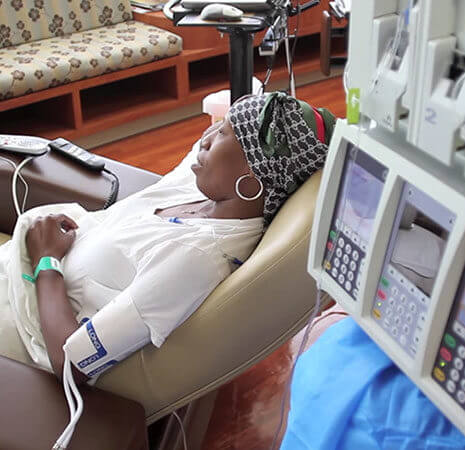
[T]here’s a reason CAR-T is reserved for [cancer] patients that fail to improve under front-line treatments: it comes with horrid side effects and can itself be fatal. We are slowly finding exciting treatments for formerly deadly diseases, but the pathway remains riddled with landmines.
…
CAR-T is not a drug; it’s a genetically modified cell therapy.
…
One of the ways T cells unleash havoc is by spraying out pro-inflammatory molecules, called cytokines, that recruit other immune cells to join the fray. If the CAR-T cells are too potent, or if there are too many of them, the patient is swamped in cytokines, resulting in a severe inflammatory condition called cytokine release syndrome (CRS). In the successful Novartis trial, nearly half of the patients experienced this side effect, though they all recovered. Most CRS sufferers experience a high fever that recedes in the two weeks following treatment. But in the worst cases of CRS, which get dubbed cytokine storm, that fever can lead to a fatal swelling of the brain.
…
The excitement around CAR-T may not yet be at its crescendo. As of this writing, nearly 400 CAR-T clinical trials are registered with the FDA, some even targeting brain tumors. But CAR-T is not some miracle cure. CRS is a potentially deadly side effect that many patients will suffer.
The team, based at the University of Bern, wanted to know if a protein called human leukocyte antigen, or HLA, is important to attraction-by-scent. HLA, which helps the immune system detect foreign invaders, also influences our personal scent and captures genetic differences between us.
The reason for focusing on HLA is to do with finding a mate that is different from us. A study from 2016 found that attraction and desire to mate was heightened between people whose cells, or genes, were different from their own. That makes sense: mating with someone genetically different from ourselves is advantageous in terms of survival. Because HLA encapsulates such genetic differences, it makes sense to ask whether the scents we find attractive are somehow tied to HLA.
…
The results add to the mystery of attraction. The researchers found that the scents men found appealing were completely unrelated to HLA. The men were definitely attracted to certain body odors and not others, but their preferences showed no tie to HLA. Meaning? Maybe finding women who are genetically different isn’t that important for men.
Consumers are confused between foods labeled as “organic” and “non-genetically modified,” according to a new study led by a University of Florida professor. In fact, researchers found that some consumers view the two labels as synonymous.
When Congress approved the National Bioengineered Food Disclosure Standard in June 2016, lawmakers allowed companies two years – until June 2018 – to label their genetically modified (GM) food by text, symbol or an electronic digital link such as a QR code. The QR code is a machine-readable optical label that displays information when scanned.
Besides QR codes, companies can label GM foods by adding words like: “contains genetically modified ingredients” in plain text on the packages, said Brandon McFadden, a UF/IFAS assistant professor of food and resource economics, and lead author of the study.
…
Participants’ responses led McFadden to conclude that consumers don’t distinguish definitions of the two food labels.
…
Study results showed consumers are willing to pay more for genetically modified food if the information is provided by a QR code.
[Editor’s note: Read the full study (behind paywall)]
Scientists have said the first batch of locally grown genetically modified potatoes will be on sale in Ugandan markets in 2020.
Alex Barekye, the director of Kachwekano Zonal Agriculture Research Institute in the western district of Rubanda, said agricultural biotechnology research on potatoes is underway to create a genetically modified variety that will be resistant to diseases.
Barekye said three trials have been conducted on the Victoria potato variety and so far, tests did not find any disease yet the yield is high.
…
This revelation comes barely two weeks after parliament passed the National Biotechnology and Biosafety Bill, in short christened the GMO bill.
Barekye explained that the next phase of the project is to test the transgenic potato in three different areas in Uganda, beginning in November this year, to establish whether the seed crop will thrive in the environment.
…
President Yoweri Museveni, in a speech read by the second deputy prime minister, Kirunda Kivejinja, pledged more funding towards research to find solutions to drought and diseases hindering productivity in the agricultural sector.
The GLP aggregated and excerpted this article to reflect the diversity of news, opinion and analysis. Read full, original post: Ugandans to eat GMO potatoes in 2020
In 2015 the International Agency for Research on Cancer (IARC) released a report declaring that the popular herbicide glyphosate is a “probable carcinogen.” The agency’s conclusion contradicts the view of every respected scientific body that has weighed in on the issue, and experts have long argued that IARC is sympathetic to anti-chemical activists who erroneously believe that glyphosate is toxic.
Just last week, it came to light that one of the experts on IARC’s glyphosate panel, Christopher Portier, was a paid consultant to lawyers who are suing Monsanto and is, in fact, not even an expert on glyphosate. Moreover, the 2015 report intentionally excluded research that contradicts IARC’s conclusion that the herbicide is carcinogenic, according to Reuters.
On this episode of the show, science writer Jon Entine joins me to discuss this example of what appears to be corruption and secrecy at IARC and what it means for the debate around biotechnology and agriculture. Entine is the founder of the Genetic Literacy Project, an effort “to promote public awareness and constructive discussion of genetics, biotechnology, evolution and science literacy.” He is also the author of two bestselling books, and his work has appeared or been profiled in the New York Times, Wall Street Journal, Financial Times and the Washington Post.
The European Commission will seek to extend the license of glyphosate — the active ingredient in Monsanto’s Roundup herbicide — for between five and seven years, a spokesman for the Commission said October 24.
The executive body of the EU backtracked from its initial proposal to renew the license in Europe for another decade, following mounting pressure from lawmakers in the European Parliament and several powerful countries.
National experts will meet in the Commission’s Standing Committee on Plants, Animals, Food and Feed on Wednesday to decide whether to endorse the new proposal for a shorter renewal.
Earlier on October 24,, the European Parliament voted in favor of phasing out the weedkiller in Europe by the end of 2022. [It was a non-binding resolution.]
Levels of the herbicide Roundup in human urine have increased dramatically among California residents in the past two decades, a new study reports.
Roundup (glyphosate) is used to protect genetically modified corn and soy crops from weeds and also is used on wheat and oats, said the study’s lead author, Paul Mills. He is a professor of family medicine and public health at the University of California, San Diego.
Urine collected from 100 Californians between 1993 and 2016 show that glyphosate levels have gone up with the advent of genetically modified crops, Mills said.
In the early samples, “there were very low levels — they were only detectable in 12 out of 100 people,” Mills said. “Then over the next 22 years, we found about a 1,000 percent increase in the levels found in the 100 people, on average.”
However, the study does not show that exposure to glyphosate directly caused any health problems in these people, noted Dr. Nima Majlesi, director of medical toxicology at Staten Island University Hospital in New York City.
“I think these studies have a huge flaw in that they really haven’t shown any adverse outcomes in human beings,” Majlesi said. “All you’re seeing is numbers.”
[Editor’s note: Read the full study (behind paywall)]