If you lose any of these 7 organs, you’ll probably be OK

organs

The human body is incredibly resilient. When you donate a pint of blood, you lose about 3.5 trillion red blood cells, but your body quickly replaces them. You can even lose large chunks of vital organs and live. For example, people can live relatively normal lives with just half a brain). Other organs can be removed in their entirety without having too much impact on your life. Here are some of the “non-vital organs”.

Spleen

This organ sits on the left side of the abdomen, towards the back under the ribs. It is most commonly removed as a result of injury. Because it sits close the ribs, it is vulnerable to abdominal trauma. It is enclosed by a tissue paper-like capsule, which easily tears, allowing blood to leak from the damaged spleen. If not diagnosed and treated, it will result in death.

The conversation xWhen you look inside the spleen, it has two notable colours. A dark red colour and small pockets of white. These link to the functions. The red is involved in storing and recycling red blood cells, while the white is linked to storage of white cells and platelets.

You can comfortably live without a spleen. This is because the liver plays a role in recycling red blood cells and their components. Similarly, other lymphoid tissues in the body help with the immune function of the spleen.

Stomach

The stomach performs four main functions: mechanical digestion by contracting to smash up food, chemical digestion by releasing acid to help chemically break up food, and then absorption and secretion. The stomach is sometimes surgically removed as a result of cancer or trauma. In 2012, a British woman had to have her stomach removed after ingesting a cocktail that contained liquid nitrogen.

When the stomach is removed, surgeons attach the oesophagus (gullet) directly to the small intestines. With a good recovery, people can eat a normal diet alongside vitamin supplements.

file xtnxvj

Reproductive organs

The primary reproductive organs in the male and female are the testes and ovaries, respectively. These structures are paired and people can still have children with only one functioning.

The removal of one or both are usually the result of cancer, or in males, trauma, often as a result of violence, sports or road traffic accidents. In females, the uterus (womb) may also be removed. This procedure (hysterectomy) stops women from having children and also halts the menstrual cycle in pre-menopausal women. Research suggests that women who have their ovaries removed do not have a reduced life expectancy. Interestingly, in some male populations, removal of both testicles may lead to an increase in life expectancy.

Colon

The colon (or large intestine) is a tube that is about six-feet in length and has four named parts: ascending, transverse, descending and sigmoid. The primary functions are to resorb water and prepare faeces by compacting it together. The presence of cancer or other diseases can result in the need to remove some or all of the colon. Most people recover well after this surgery, although they notice a change in bowel habits. A diet of soft foods is initially recommended to aid the healing process.

Gallbladder

The gallbladder sits under the liver on the upper-right side of the abdomen, just under the ribs. It stores something called bile. Bile is constantly produced by the liver to help break down fats, but when not needed in digestion, it is stored in the gallbladder.

file xhjb
Gallstones

When the intestines detect fats, a hormone is released causing the gallbladder to contract, forcing bile into the intestines to help digest fat. However, excess cholesterol in bile can form gallstones, which can block the tiny pipes that move bile around. When this happens, people may need their gallbladder removed. The surgery is known as (cholecystectomy. Every year, about 70,000 people have this procedure in the UK.

Many people have gallstones that don’t cause any symptoms, others are not so fortunate. In 2015, an Indian woman had 12,000 gallstones removed – a world record.

Appendix

The appendix is a small blind-ended worm-like structure at the junction of the large and the small bowel. Initially thought to be vestigial, it is now believed to be involved in being a “safe-house” for the good bacteria of the bowel, enabling them to repopulate when needed.

Due to the blind-ended nature of the appendix, when intestinal contents enter it, it can be difficult for them to escape and so it becomes inflamed. This is called appendicitis. In severe cases, the appendix needs to be surgically removed.

A word of warning though: just because you’ve had your appendix out, doesn’t mean it can’t come back and cause you pain again. There are some cases where the stump of the appendix might not be fully removed, and this can become inflamed again, causing “stumpitis”. People who have had their appendix removed notice no difference to their life.

Kidneys

Most people have two kidneys, but you can survive with just one – or even none (with the aid of dialysis). The role of the kidneys is to filter the blood to maintain water and electrolyte balance, as well as the acid-base balance. It does this by acting like a sieve, using a variety of processes to hold onto the useful things, such as proteins, cells and nutrients that the body needs. More importantly, it gets rid of many things we don’t need, letting them pass through the sieve to leave the kidneys as urine.

There are many reasons people have to have a kidney – or both kidneys – removed: inherited conditions, damage from drugs and alcohol, or even infection. If a person has both kidneys fail, they are placed onto dialysis. This comes in two forms: haemodialysis and peritoneal dialysis. The first uses a machine containing dextrose solution to clean the blood, the other uses a special catheter inserted into the abdomen to allow dextrose solution to be passed in and out manually. Both methods draw waste out of the body.

If a person is placed on dialysis, their life expectancy depends on many things, including the type of dialysis, sex, other diseases the person may have and their age. Recent research has shown someone placed on dialysis at age 20 can expect to live for 16-18 years, whereas someone in their 60s may only live for five years.

 is the director of the Clinical Anatomy Learning Centre and a senior lecturer in anatomy at Lancaster University. 

This article was originally published on The Conversation as “Seven body organs you can live without” and has been republished here with permission.
Video: How gene editing could help Kenyan farmers combat crop disease

women in agriculture o

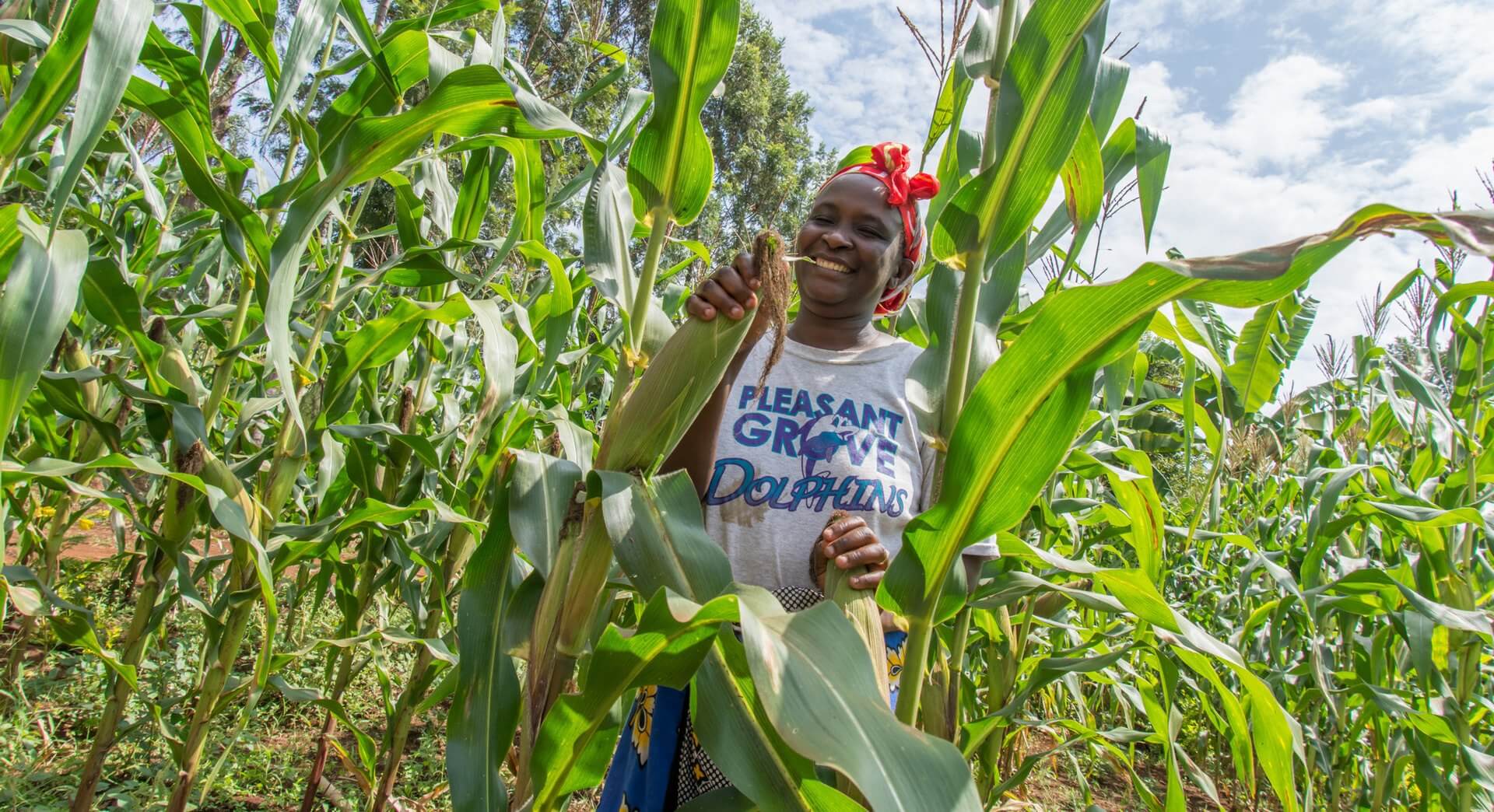
In Kenya, maize lethal necrosis disease (MLND) has plagued crops and affected yields to the point where food security has become a concern.

Scientists have traveled from all over the world to study this disease, and while certain experimental GMO crops have shown tolerance, no varieties are 100% resistant to the disease.

However, thanks to a partnership between Africa’s largest seed producer Dupont Pioneer and the International Maize and Wheat Improvement Center (CIMMYT), new genetically-engineered varieties may be the answer to crop failures.

https://youtu.be/0APXpFm1asU

The GLP aggregated and excerpted this article to reflect the diversity of news, opinion and analysis. Read full, original post: Food Friday: What is gene editing and why is it important?

Food industry aims to win public trust of CRISPR gene-edited crops and animals

pigs virusresistance

There’s a genetic technology that scientists are eager to apply to food, touting its possibilities for things like mushrooms that don’t brown and pigs that are resistant to deadly diseases.

And food industry groups, still reeling from widespread protests against genetically engineered corn and soybeans (aka GMOs) that have made it difficult to get genetically engineered food to grocery store shelves, are looking to influence public opinion.

The technology is called Clustered Regularly Interspaced Short Palindromic Repeats, or CRISPR. It’s a technique that Alison Van Eenennaam, an animal genetics professor at University of California,  Davis, says can de-activate a gene. Or, as she puts it: “It’s editing. It’s like going into a Word document and basically replacing one letter, maybe that instead of wind, you want it to say wine,” she says.

To get ahead of any criticism, a group of heavyweights in the food industry have joined forces to form the Coalition for Responsible Gene Editing in Agriculture, which is funded by members like the U.S. Pork Board, Monsanto, Syngenta and Bayer.

The board’s CEO, Bill Even, says the food industry missed a chance to do this when the earlier wave of genetically engineered food made it to the market.

The GLP aggregated and excerpted this article to reflect the diversity of news, opinion and analysis. Read full, original post: With GMO Struggle In Mind, Food Industry Vying For Public Trust With CRISPR Discussion

Growing cancer drugs in chicken eggs could lower costs by 90%

Eggs Chicken Fresh Table Eggs farm fresh

Researchers in Japan may have found a way to produce cheaper drugs that could be used to treat a range of diseases from chicken eggs. They have successfully genetically modified hens to produce eggs containing large amounts of interferon beta protein, a protein used to treat various illnesses, including multiple sclerosis and cancer. The protein is very expensive, costing between $300-$1000 for just one microgram, according to pharmaceutical company, Cosmo Bio who co-led the research.

According to Mika Kitahara, a spokesperson for Cosmo Bio, this technology will reduce the price of cancer drugs at least by 90% if proven successful in further trials.

“You’ll have to show (the drug) is exactly the same as the drugs that have gone through all the clinical trials,” said [Professor Helen] Sang, whose own team has been working on transgenic chickens for over a decade. As well as simply making the drugs in the eggs, they will also need to be purified and validated through additional research, she said.

The immediate hope is for the cancer-battling medicine to result in affordable medical products. The team is looking forward as well, with research underway to produce human antibodies using the same method.

The GLP aggregated and excerpted this blog/article to reflect the diversity of news, opinion, and analysis. Read full, original post: Cancer drugs grown in chicken eggs may lower their cost

Dow to sell new variety of GMO soy seeds in US despite no import approval from Europe, China

soy bean

Dow AgroSciences will launch a genetically engineered soybean seed that has been barred by major importers under tight controls in the United States next year, the company said … as it seeks to avoid roiling global trade while making sales to farmers.

Archer Daniels Midland Co, one of the world’s largest grain companies, will oversee the handling of the harvests to keep them out of Europe and China, which have not yet approved imports of the soybeans.

The arrangement shows the lengths that Dow, a division of DowDuPont Inc, is taking to get its Enlist E3 soybean seeds to market as it faces increasing competition for U.S. sales from Monsanto Inc.

Dow also is coping with long regulatory reviews by China and Europe, importers that have frustrated the U.S. seed sector for years with slow approvals for new GMO crops. The company first submitted E3 soybeans for clearance in Europe in 2012 and in China in 2013.

Getting new genetically engineered seeds to market quickly is important for seed companies because it can take up to 10 years and $150 million to develop products.

The GLP aggregated and excerpted this blog/article to reflect the diversity of news, opinion, and analysis. Read full, original post: Dow to sell GMO soy seed under tight U.S. controls, awaiting China approval

Could MRI brain scans prove you’re innocent?

IOTW

Lie detection using a functional MRI machine, which measures and creates an image of brain activity, is a topic of controversy among legal and neuroscience experts and has yet to land on the courtroom floor.

Daniel Langleben, out of the University of Pennsylvania, and Jonathan Hakun, of the Pennsylvania State University, are two that have run experiments using fMRIs for lie detection. The experiments suggest that the fMRI machines can detect lies, but this lie detection technique has not been properly tested outside of the lab, Langleben said.

Areas in the occipital lobes, which are toward the back of the brain, the parietal lobes, which are toward the middle of the brain, and the prefrontal cortex, at the front, will light up when someone tells a truth or lie. However, they show more activity for a lie, Hakun said. But the experiments use lies that are relatively simple, not something complicated like claiming innocence in a murder trial, Hakun said.

“For any kind of algorithm-based lie detection that could lead to conviction, for example, or acquittal, […] it should be an aid to conviction or acquittal, not the decider,” he said. “It should not take away the prerogative of judge and jury.”

The GLP aggregated and excerpted this blog/article to reflect the diversity of news, opinion, and analysis. Read full, original post: Could Brain Scans Determine Guilt or Innocence in Court?

Talking Biotech: Uganda farmer-scientist on benefits of GMO disease resistant bananas

blog photo of the week a boost to ugandas banana production e

Uganda is at an interesting precipice. They have invested in biotech solutions to solve problems in their central food staples, namely the matooke. The matooke is a starchy banana, and while a cornerstone of the diet, it is threatened by disease. Most people are farmers, and tend to ‘gardens’ of 2-3 acres, these are subsistence farmers that use the gardens to feed their families. Xanthamonas bacterial wilt can destroy entire stands of trees. But scientists in Uganda have used breeding and genetic engineering to generate genetic lines that stop major diseases. The sad part is that the improved plants are not allowed to be distributed due to the lack of a national biosafety law. The second part of the podcast is an interview with Clet Masiga. He is a trained crop scientist, but also a farmer, and I spoke to him on his farm about the needs of Ugandan farmers, changes in policy, and broken down cars.

Most of all, you need to understand that providing the best technology to people in need is simply justice. Justice.

Visit Kevin Folta’s Talking Biotech

Follow Talking Biotech on Twitter @TalkingBiotech

Follow Kevin Folta on Twitter @kevinfolta | Facebook: Facebook.com/kmfolta/ | Lab website: Arabidopsisthaliana.com | All funding: Kevinfolta.com/transparency

Stitcher | iTunes | Player FM | TuneIn

First alien life forms we encounter could well be robots

War of the Worlds e
[T]he first aliens we encounter are likely to be machines, and they’ll be almost unimaginably old.

Susan Schneider of the University of Connecticut and the Institute for Advanced Studies at Princeton says that alien AI may already be out there, and could be billions of years old. Schneider says, ‘I do not believe that most advanced alien civilizations will be biological. The most sophisticated civilizations will be postbiological, forms of artificial intelligence or alien superintelligence.’

Schneider said in a Daily Galaxy report, ‘all lines of evidence converge on the conclusion that the maximum age of extraterrestrial intelligence would be billions of years, specifically ranges from 1.7 billion to 8 billion years.’

Google’s Ray Kurzweil has predicted that man will merge with machine here on Earth in the year 2050.

Seth Shostak of the Search for Extraterrestrial Intelligence says, ‘Consider the fact that any signal we pick up has to come from a civilization at least as advanced as we are.

‘Now, let’s say, conservatively, the average civilization will use radio for 10,000 years. From a purely probabilistic point of view, the chance of encountering a society far older than ourselves is quite high.’

The GLP aggregated and excerpted this blog/article to reflect the diversity of news, opinion, and analysis. Read full, original post: Aliens are actually immortal robots, and they’re billions of years old, researcher claims

Plant growth genes identified that could lead to increased crop yields

gal MG

Scientists say the discovery of a group of hormones in plants could revolutionise food production by improving yields.

The Universities of Queensland and Sydney collaborated on the study, which has found about 130 CLE peptide hormones in legumes that were essential to growth and development.

Senior Lecturer at the Centre for Integrative Legume Research Brett Ferguson said while peptides were known to exist in plants, bacteria and animals, their role as signals to regulate development was little understood.

Unlike genetic modification (GMO), which adds new genes to an organism, Dr Ferguson said this work focussed on taking attributes already in the plant and manipulating them.

“Even a small increase in yield could be massively important to agriculture,” he said.

While the work has so far focussed on legumes, such as soy beans, Dr Ferguson said there could be applications for both animals and other plants.

[Read the full studies here and here (behind paywall)]

The GLP aggregated and excerpted this article to reflect the diversity of news, opinion and analysis. Read full, original post: Steroids for crops? Not quite, but peptides could revolutionize how food is grown

Genetics account for 83% of autism risk, re-do study finds

Diagnose Kids Autism Misdiagnosis Slideshow child playing with toys ts

A reanalysis of data from more than 2 million children in Sweden suggests inherited genetic factors account for 83 percent of autism risk. A 2014 study using the same dataset pointed to an equal contribution from genetics and the environment, but experts in the field were critical of the findings, citing flaws in the study’s methods. Then, to their surprise, the researchers came up with a heritability estimate of 85 percent using an overlapping dataset of nearly 800,000 Swedish children. That result prompted them to revisit their earlier work.

“I think it’s great that this group of researchers took the trouble, actually, to publicly acknowledge that their previous publication might have been suboptimal,” says Dorret Boomsma, professor of biological psychology at Vrije Universiteit in Amsterdam, who was not involved in the study.

They applied statistical models that account for the family relationships to estimate the heritability of autism. They calculated that genetics contributes 84.8 percent of autism risk. “I think it has been repeated several times now and we are converging to this number,” Sandin says.

He and his colleagues are also using the Swedish registries to study recurrence of autism within a family — the likelihood that a sibling of a child with autism also has the condition.

The GLP aggregated and excerpted this blog/article to reflect the diversity of news, opinion, and analysis. Read full, original post: Data do-over backs dominance of genetics in autism risk

Preserved fatty tissues found in 48-million-year-old bird fossil

oily bird the r x e
[R]esearchers have confirmed that fatty tissues were still identifiable in the partial fossil of a 48-million-year-old bird. The new research hints that similar soft tissues might be found in fossils sitting in museum archives around the world.

While skin, hair and feathers are the soft stuff these rare fossils are usually made of, researchers have thought that structures preserved in some bird fossils look an awful lot like uropygial glands. Also known as preen or oil glands, they sit near the base of the tail and secrete an oil that has, among other things, anti-bacterial properties.

Sampling what appeared to be the fossil’s preen glands as well as its feathers, the researchers also took samples from the oil shale sediment in which it had been found for comparison. They also collected a number of fresh gland samples from birds that were probably not too happy about that.

[T]he profile of the gland-like fossil structure was very different than that of the feathers or sediment, but much more similar to the modern bird gland samples.

[I]t is impressive, both that the tissues could be preserved for that long and that the team could identify them. It gives paleontologists another way to study these extinct animals.

The GLP aggregated and excerpted this blog/article to reflect the diversity of news, opinion, and analysis. Read full, original post: Fatty Tissues Preserved In Fossil for 48 Million Years

Viewpoint: Anti-pesticide activists exploit chemical testing technology to scare public

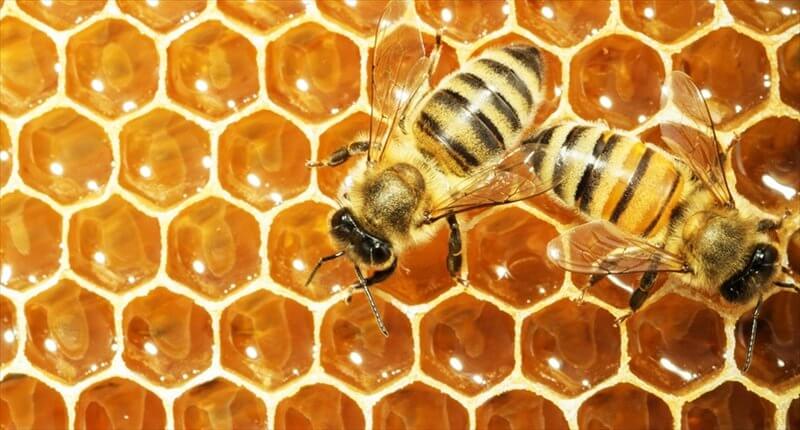
Working bees on honey cells Shutterstock x

One religious group forecast an apocalypse a few weeks ago. They used the Bible as their source. More recently, a newer religion warned of their apocalypse. And they used Science magazine.

In Science, a group of anti-neonic deacons discuss how they solicited honey samples from amateur volunteers. After an analysis of the samples, they searched for the presence of imidacloprid, clothianindin, thiamethoxam, acetamiprid and thiacloprid, they found that 75 percent tested positive for one of them; 45 percent tested positive for two, while 10 percent contained four or five.

Okay, that’s bad, right? No, more like expected given modern testing ability. And the concern is not presence, it is concentration. There, it showed no worry at all. A recent review found that in order to cause physiological or behavioral impairments, there needed to be 50 times the average total concentration the Science paper reported. In this new paper, detectable levels were actually lower than in studies years ago, which means these levels wouldn’t even have been noticed then.

The GLP aggregated and excerpted this blog/article to reflect the diversity of news, opinion, and analysis. Read full, original post: Not To Be Outdone, Pesticide Religion Now Has Its Own Doomsday Prediction

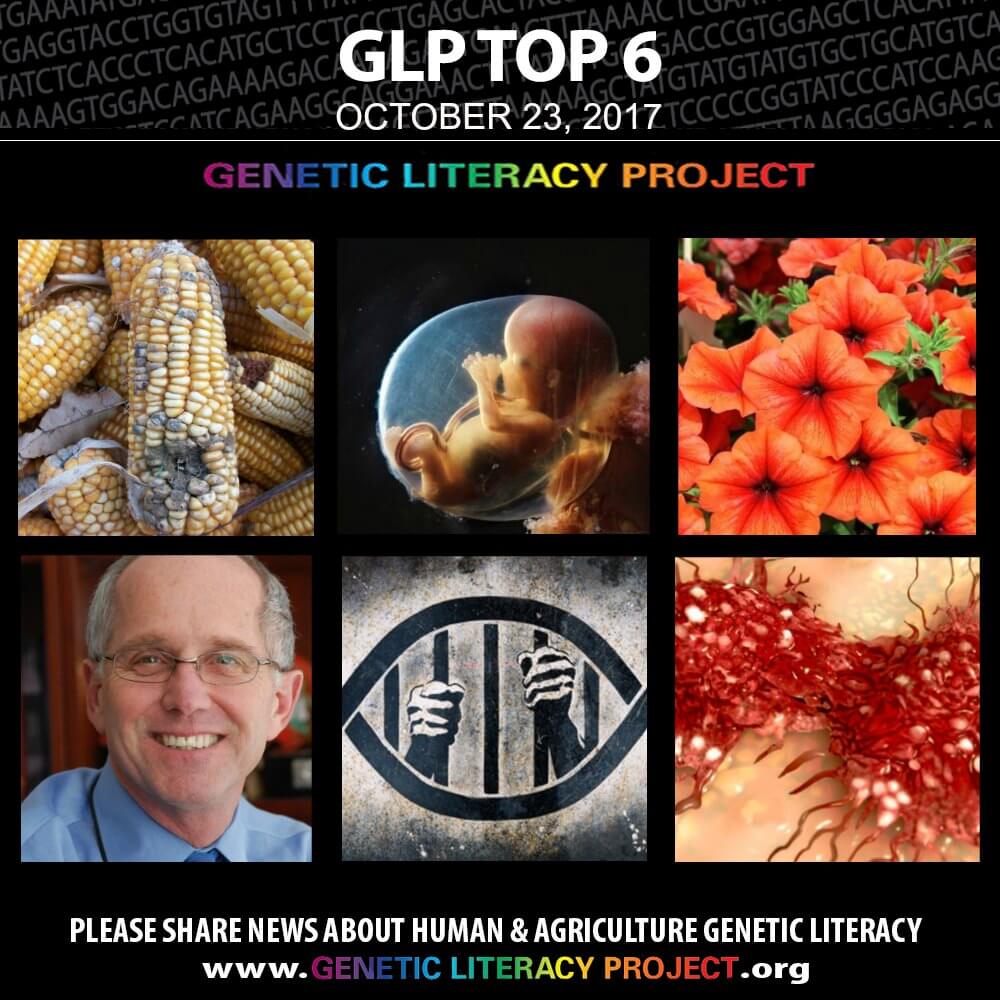
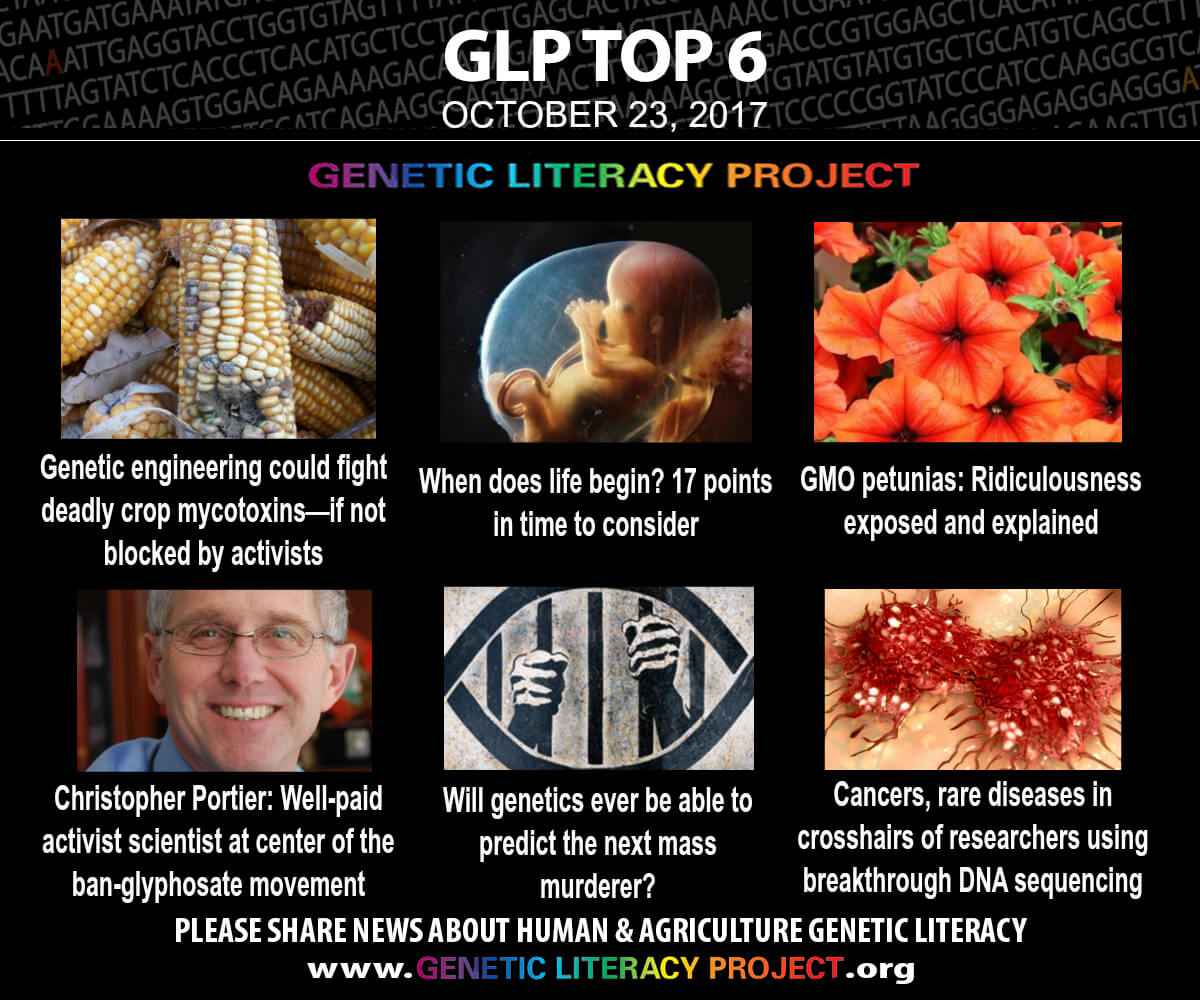
Genetic Literacy Project’s Top 6 Stories for the Week – Oct. 23, 2017

GLP Top Thumbnail Oct

GLP Top Oct

  1. Genetic engineering and gene silencing could fight deadly crop mycotoxins—if not blocked by activists | Andrew Porterfield
  2. When does life begin? Here are 17 points in time to considerRicki Lewis
  3. ‘GMO’ petunias: Ridiculousness exposed and explained | Giovanni Tagliabue
  4. Viewpoint: Christopher Portier—well-paid activist scientist at center of the ban-glyphosate movement | David Zaruk
  5. Will genetics ever be able to predict the next mass murderer? | Ricki Lewis
  6. Cancers and other rare diseases in crosshairs of researchers using breakthrough DNA sequencingPratik Kirve

To stay up to date on all the news in human and agricultural genetics, subscribe to our daily and weekly email newsletters in the top right corner of this page, and follow us on Facebook and Twitter.

Bipartisan group of 79 congressmen urge EPA, FDA to streamline agricultural biotech regulations

Depositphotos original x

In a letter to three federal agency heads on Tuesday, a group of 79 bipartisan members of the United States House of Representatives expressed concern about the direction being taken to regulate agriculture biotechnology.

In particular, in the letter to Scott Pruitt, administrator of the U.S. Environmental Protection Agency, Secretary of Agriculture Sonny Perdue and Scott Gotlieb, commissioner of the U.S. Food and Drug Administration, the lawmakers pointed to two regulations currently being re-drafted.

On Jan. 19, 2017, USDA’s Animal Plant and Health Inspection Service published a draft revision to its so-called Part 340 biotechnology regulations. Also, the FDA proposed expansion of the scope of guidance for industry to regulate gene-editing techniques.

The lawmakers urge the agencies to continue to work with stakeholders to improve the proposals.

American Farm Bureau Federation President Zippy Duvall said in a statement in response that farmers and ranchers need proper federal direction to continue to make technological gains.

Duvall urged the department and agency leaders to coordinate and advance timely reviews of advances in biotechnology and biology-based tools including gene editing. He said policies and strategies should embrace the review of innovation, domestically and internationally, through the president’s Interagency Task Force on Agriculture and Rural Prosperity.

The GLP aggregated and excerpted this blog/article to reflect the diversity of news, opinion, and analysis. Read full, original post: Lawmakers Urge Consistent Approach to Federal Regulation of Biotechnology

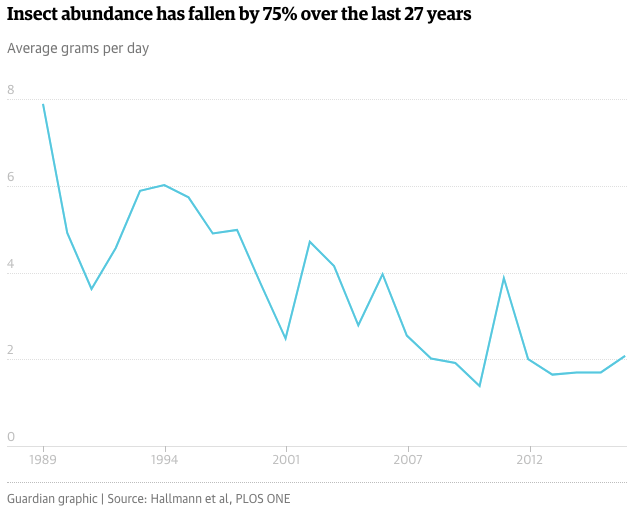
‘Ecological Armageddon’? Three-quarters of flying insects in Germany vanished in 25 years, study claims

insects midges over meadow anton shutterstock

The abundance of flying insects has plunged by three-quarters over the past 25 years, according to a new study….

Insects are an integral part of life on Earth as both pollinators and prey for other wildlife and it was known that some species such as butterflies were declining. But the newly revealed scale of the losses to all insects has prompted warnings that the world is “on course for ecological Armageddon”, with profound impacts on human society.

The new data was gathered in nature reserves across Germany but has implications for all landscapes dominated by agriculture, the researchers said.

The cause of the huge decline is as yet unclear, although the destruction of wild areas and widespread use of pesticides are the most likely factors and climate change may play a role. The scientists were able to rule out weather and changes to landscape in the reserves as causes, but data on pesticide levels has not been collected.

The research, published in the journal Plos One, is based on the work of dozens of amateur entomologists across Germany….

Screen Shot at AM

The GLP aggregated and excerpted this blog/article to reflect the diversity of news, opinion, and analysis. Read full, original post: Warning of ‘ecological Armageddon’ after dramatic plunge in insect numbers

IARC bombshell: WHO cancer agency ‘edited out’ draft findings glyphosate non-carcinogenic

IARC ques x

The World Health Organization’s cancer agency dismissed and edited findings from a draft of its review of the weedkiller glyphosate that were at odds with its final conclusion that the chemical probably causes cancer.

Documents seen by Reuters show how a draft of a key section of the International Agency for Research on Cancer’s (IARC) assessment of glyphosate – a report that has prompted international disputes and multi-million-dollar lawsuits – underwent significant changes and deletions before the report was finalised and made public.

[Editor’s note: Read the GLP’s profile of the IARC.] 

The edits identified by Reuters occurred in the chapter of IARC’s review focusing on animal studies. This chapter was important in IARC’s assessment of glyphosate, since it was in animal studies that IARC decided there was “sufficient” evidence of carcinogenicity.

One effect of the changes to the draft, reviewed by Reuters in a comparison with the published report, was the removal of multiple scientists’ conclusions that their studies had found no link between glyphosate and cancer in laboratory animals.

Reuters found 10 significant changes that were made between the draft chapter on animal studies and the published version of IARC’s glyphosate assessment. In each case, a negative conclusion about glyphosate leading to tumors was either deleted or replaced with a neutral or positive one. Reuters was unable to determine who made the changes. 

The GLP aggregated and excerpted this blog/article to reflect the diversity of news, opinion, and analysis. Read full, original post: In Glyphosate Review, WHO Cancer Agency Edited Out ‘Non-Carcinogenic’ Findings

Bayer to allow public access to pesticide safety information

Screen Shot at AM

[Editor’s note: Adrian Percy is the Global Head of Research and Development for Crop Science, a Division of Bayer.]

After many years involved in conducting research to evaluate the safety of our products, I’m still surprised that there are many people who not only don’t appreciate the incredible accomplishments of modern agriculture, but who also believe that its products and practices threaten people, wildlife and the environment. Where I see miraculous innovations that will help sustainably feed the world, they see a profit-driven industry with no regard to safety. Why do we view the world through such different lenses?

Much of this is due to a lack of trust. I recently explained how the general public has lost confidence in many of the institutions it once held in high regard. Conflicting accounts about the safety of food or technologies permeate social media, making it difficult for people to separate fact from fiction, especially when scientists themselves disagree over the same issues. Mistrust is amplified when the public doubts the integrity of privately-funded research studies, or if they think the industry is hiding something from them. In the mind of many consumers, what you don’t know may indeed hurt you.

Screen Shot at AM
Adrian Percy

That’s why I’m pleased to announce that Bayer plans to allow public access to safety-relevant crop protection study information. By sharing what was once confidential information, we hope to connect the public with our scientific community in a way that builds trust and shows our desire to create transparency.

Most people have no idea that, on average, about 1,200 registration studies are required before a new active ingredient product can be approved for use on crops, or that only one out of every 100,000 candidates screened will ever be commercialized. … The entire new product development process, from discovery to sale, averages 13 years to complete.

[I]f seeing is believing, we think you’ll be pleased with what you see.

The GLP aggregated and excerpted this blog/article to reflect the diversity of news, opinion, and analysis. Read full, original post: Demystifying Science – Seeing is Believing

Why ChemChina’s Syngenta takeover doesn’t mean China will quickly embrace GMO crops

Picture

The head of one of China’s biggest chemicals companies has played down expectations the country will become more open to genetically modified crops in the aftermath of ChemChina’s purchase of Swiss seeds and agrochemicals group Syngenta.

When the $43bn ChemChina deal was announced in early 2016, many suspected it would result in the swift approval of GM plantings in China, since Syngenta specialises in developing and researching GM.

That would be a turnround for a country where several GM grain strands can be imported, but only a few edible crops can be planted due to entrenched domestic fears that the technology poses a security threat.

But the issue got little attention at this week’s national congress of China’s Communist Party, despite calls by President Xi Jinping for more modern agriculture to ensure China’s food security.

Speaking on the sidelines of the gathering, Frank Ning, the head of ChemChina rival Sinochem, said the adoption of GM crops would only come “slowly, slowly”.

Mr Ning said the future of Chinese agriculture is the gradual improvement of seed quality and more targeted application of fertiliser and pesticides, which are big sources of soil and water pollution in China.

The GLP aggregated and excerpted this blog/article to reflect the diversity of news, opinion, and analysis. Read full, original post: China dashes hopes of GM boost after Syngenta deal

Why we shouldn’t be afraid of human gene editing

[Editor’s note: Dave Gammon is an associate professor of biology at Elon University.]

Many feel a visceral dread that scientists have awakened a monster – Move over, Frankenstein; designer babies are the future! To others the news triggers a raw fascination that humanity will now make a great leap forward – Scientists can stamp out all remaining human diseases, and we will inherit the keys to immortality!

Some human embryos possess a mutated version of the gene [MYBPC3 that controls heart muscle development]. Mutant sequences differ by just a handful of letters – like a long essay with a few spelling errors. Whoever inherits the mutant sequence develops abnormally thick heart muscles – a condition that forms the leading cause of death among young athletes.

Researchers also succeeded in modifying just the targeted MYBPC3 gene without any “collateral damage” to other genes. In addition to last week’s study, CRISPR research on human embryos is taking place in the U.K., Sweden, and China.

If you are one of those reacting with revulsion, you should ask yourself not only, “What might result?” but also “What is likely to result?” The history of technology is replete with discoveries that initially sparked fear and terror, but ended up becoming routine components of human society.

The GLP aggregated and excerpted this blog/article to reflect the diversity of news, opinion, and analysis. Read full, original post: Learn the science before judging human genetic modification