Rwandan scientists debate potential pros and cons of allowing farmers to grow GMO crops

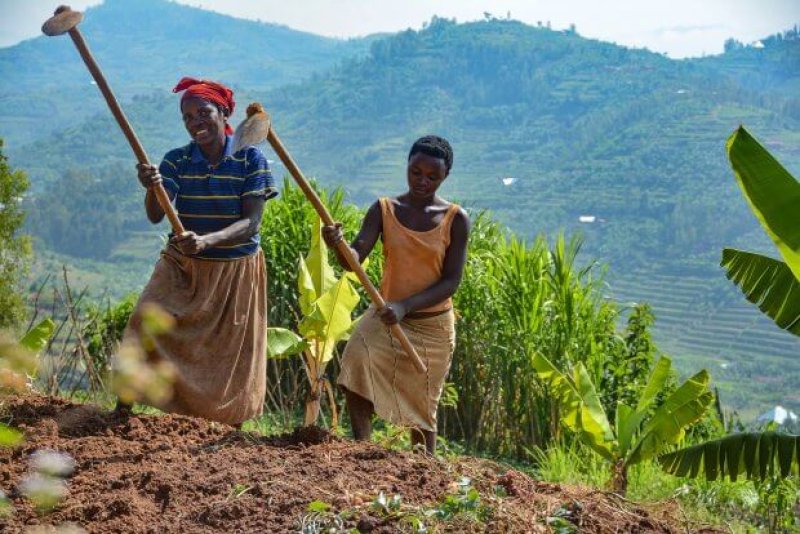
farmers rwanda
[G]enetically modified organisms (GMOs), which scientists argue are primed to revolutionise agriculture and livestock, have attracted criticism and skepticism from various circles.

In bid to boost food security, several countries around the world have embraced GMOs, while others remain skeptical about embracing the technology.

Rwanda is one of the latest countries to take early steps towards legalising GMOs.

An official at the Rwanda Environment Management Authority (REMA) [in January] told The New Times that the environment watchdog had drafted a law regulating GMOs.

The Minister for Agriculture and Animal Resources, Gรฉrardine Mukeshimana, has backed the move to adopt GMO technology, saying it would help feed the growing population.

Mukeshimana is a plant researcher and holds both a masterโ€™s degree and PhD in plant breeding, genetics, and biotechnology from Michigan State University in theย United States.

โ€œYou canโ€™t forever stick to crops and methods of farming that our forefathers practiced in 1900,โ€ she said.

[Martin Ntawubizi, a lecturer of applied genetics and animal breeding at the College of Agriculture, Animal Sciences and Veterinary Medicine at the University of Rwanda] warned that there are large multinationals in developed countries that actively promote GMOs in developing countries because of their business interests.

โ€œThey decide which seeds to give you,โ€ he said. โ€œItโ€™s a kind of slavery, a new form of colonialism.โ€

Read full, original post:ย Debate ensues over move to adopt GMOs

{{ reviewsTotal }}{{ options.labels.singularReviewCountLabel }}
{{ reviewsTotal }}{{ options.labels.pluralReviewCountLabel }}
{{ options.labels.newReviewButton }}
{{ userData.canReview.message }}

Related Articles

Infographic: Global regulatory and health research agencies on whether glyphosate causes cancer

Infographic: Global regulatory and health research agencies on whether glyphosate causes cancer

Does glyphosateโ€”the world's most heavily-used herbicideโ€”pose serious harm to humans? Is it carcinogenic? Those issues are of both legal and ...

Most Popular

ChatGPT-Image-Mar-27-2026-11_47_30-AM-2
FDAโ€™s expedited drug reviews are hailed in some quarters but other approval practices are problematic
Screenshot-2026-05-01-at-1.29.41-PM
Viewpoint: What happens when whole grains meet modern food manufacturing? Labels donโ€™t tell the whole story.
Farmers can talk to plants
Farmers are a major source of misinformationโ€”about farming
ChatGPT-Image-Apr-13-2026-02_20_22-PM
Viewpoint: Misinformation infodemic? Why assessing evidence is so challengingย 
S
As vaccine rejectionism spreads, measles may be taking a more dangerous turn
Screenshot 2026-05-06 at 2.19
Vaccine shootout at the CDCย 
Screenshot-2026-04-20-at-2.26.27-PM
Viewpoint โ€” Food-fear world: The latest activist scientists campaign: Cancer-causing additives
What explains Homo sapiensโ€™ huge brains? Ancient climate change played a role
Viewpoint: Internal White House documents detail administrationโ€™s strategy to undermine climate science
ChatGPT-Image-May-7-2026-11_28_04-AM-2
โ€˜Conflict entrepreneursโ€™ are driving disinformation and shaping public opinion
Screenshot-2026-05-06-at-2.07.43-PM
Manufacturing a conspiracy: The timeline of howย  the White House embraced the fringe claim that scientists are being mysteriously murdered
Screenshot 2026-05-06 at 2.56
Singularity crisis ahead? Can super babies save us from rogue AI geniuses?
ChatGPT-Image-May-6-2026-03_41_05-PM
โ€˜Protecting the integrity of scienceโ€™: Kennedyโ€™s FDA blocks release of taxpayer-funded studies finding COVID and shingles vaccines safe
bigstock opioids on chalkboard with rol
GLP podcast: 'Safe injection sites': enabling drug addiction or saving lives?
Screenshot 2026-05-06 at 12.49
Immortal dragons: The quest to โ€˜make death optionalโ€™
glp menu logo outlined

Get news on human & agricultural genetics and biotechnology delivered to your inbox.