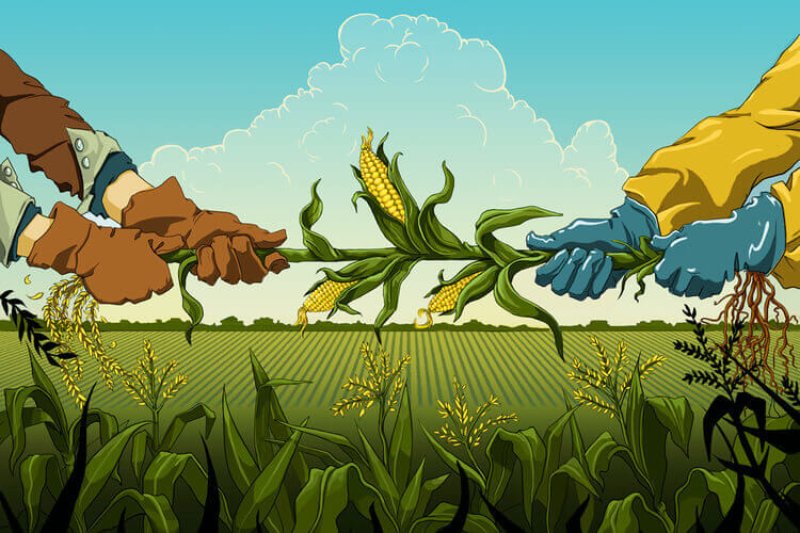
Will the noxious public debate over GMOs turn consumers against gene-edited crops?

GMO WEB e

Americans are easily riled about genetically modifying crops, animals and foods, even though research indicates they know little about how GMOs are produced. So, what about consumer understanding of a new and much different approach to precision breeding called gene editing?

There’s a big difference between what are usually referred to as GMOs and products produced through gene editing, but that has not stopped some activists from tying the two types of technologies together on social media and creating unnecessary fears.

Nina Fedoroff [a molecular biologist at Penn State University] isn’t all that optimistic. … She points to the 2016 National Academies of Science findings of no health or safety risks linked to biotech crops.

“[W]e know that the methods are not dangerous. People have been looking for problems associated with simply using molecular techniques for 30 or 40 years now and haven’t found them,” she declares.

She says she doesn’t know if the resulting tide of opinion against biotechnology leaves room for gene editing to advance in years ahead.

[Michael] Specter, the New Yorker writer, favors gene editing himself and generally agrees with Fedoroff that biotech in agriculture has suffered from campaigns of untruth.

“People are paid for, and attracted to, extremely engaging and horrifying stories. It’s cheap and it’s easy,” Specter says. His solution: “You have to fight misinformation and lies with the truth. I don’t know any shorthand for that.”

Read full, original post: Are consumers ready to accept gene editing?

{{ reviewsTotal }}{{ options.labels.singularReviewCountLabel }}
{{ reviewsTotal }}{{ options.labels.pluralReviewCountLabel }}
{{ options.labels.newReviewButton }}
{{ userData.canReview.message }}

Related Articles

Infographic: Global regulatory and health research agencies on whether glyphosate causes cancer

Infographic: Global regulatory and health research agencies on whether glyphosate causes cancer

Does glyphosate—the world's most heavily-used herbicide—pose serious harm to humans? Is it carcinogenic? Those issues are of both legal and ...

Most Popular

Screenshot-2026-04-22-at-12.21.32-PM
Viewpoint: Why the retracted Monsanto glyphosate study doesn’t change the science—the world’s most popular herbicide is safe 
Picture1
The FDA couldn’t find a vaccine safety crisis, so it buried its own research
ChatGPT-Image-May-1-2026-11_42_59-AM-2
Viewpoint: NAD is the wellness grifters latest evidence-lite longevity fad. At least the mice are impressed.
global warming
‘Implausible’: Top climate scientists reject worst-case scenario—soaring temperatures and fast-rising sea levels
Screenshot-2026-05-21-at-12.15.17-PM
UK gene-editing milestone: Livestock barley that increases ruminant value and reduces methane emissions is first-approved CRISPR crop
vax-misinformation-main
Facts & Fallacies Podcast: Limit free speech to blunt social media misinfo?
ChatGPT-Image-Apr-16-2026-02_56_53-PM
Financial incentives, over diagnosis, and weak oversight: Autism claims are driving up Medicare costs
Screenshot-2026-05-21-at-3.15.53-PM
Chiropractors may no longer be modern-day snake oil salesmen, but the benefits of their therapy are limited–at best
ChatGPT-Image-May-12-2026-11_27_01-AM-2
AI likely to improve health care, research shows—but not for blacks and ethnic minorities
Screenshot-2026-05-20-at-5.11.17-PM
Viewpoint: No, sugar doesn’t ‘feed’ cancer — common cancer myths, debunked

Sorry. No data so far.

glp menu logo outlined

Get news on human & agricultural genetics and biotechnology delivered to your inbox.