
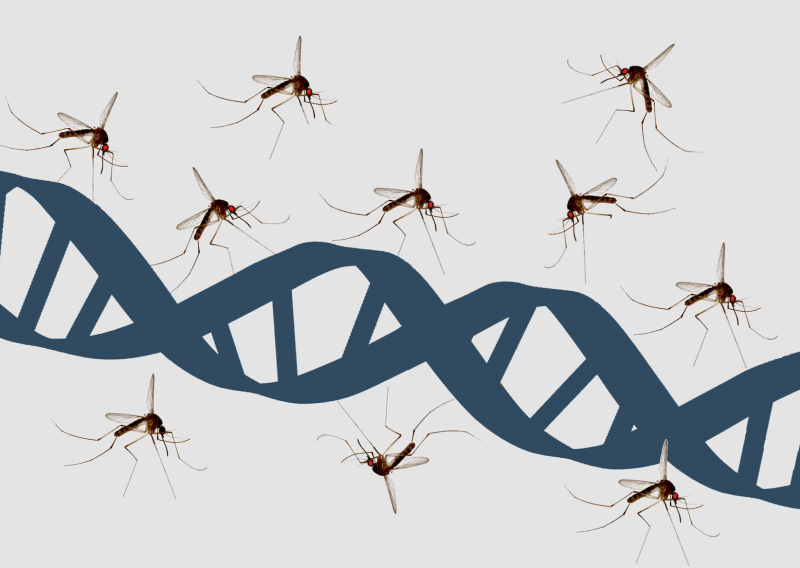
Battling malaria: Bill Gates backs gene editing of mosquitoes, acknowledges ethical concerns

Screen Shot at AM

Gene-editing technologies that alter mosquitoes’ DNA could prove critical in the fight against malaria, Bill Gates said on [April 18], and ethical concerns should not block progress in such gene-modifying research.

Speaking at the Malaria Forum conference in London, the billionaire Microsoft co-founder and philanthropist said that while gene editing raised “legitimate questions”, these should not jeopardise exploration of tools such as clustered regularly interspaced short palindromic repeats (CRISPR) gene editing and so-called “gene-drive technologies”.

…

The techniques are being explored across science — from human medicine to livestock-and crop-breeding. In mosquitoes that transmit malaria, genetic alterations can be used to induce infertility to reduce populations, or alter the insects’ ability to carry and pass on the malaria parasite.


The technologies can be extremely powerful, but they are also controversial, since such genetically engineered organisms released into the environment could have an unknown and irreversible impact on the ecosystem. Asked in a interview with Reuters about that controversy, Gates said there were understandable concerns about safety and efficacy that would need to be addressed in research and trials.

However, he countered: “Malaria itself is quite controversial — it kills about 400,000 kids a year. So we’re definitely not on the side of malaria.” He also noted that at their summit in January, leaders of the African Union (AU) endorsed gene-drive research as part of the fight against a disease that continues to kill their people.

Read full, original post: Gene-editing’s ethical concerns should not hold back malaria research, says Bill Gates


Related Articles

Infographic: Global regulatory and health research agencies on whether glyphosate causes cancer

Infographic: Global regulatory and health research agencies on whether glyphosate causes cancer

Does glyphosate—the world's most heavily-used herbicide—pose serious harm to humans? Is it carcinogenic? Those issues are of both legal and ...

Most Popular

Weed Killer, Gavel, and Cash on Wood Table
Who were the biggest winners in Bayer’s $7.25 billion glyphosate settlement? The tort lawyers, natch
Donkey Symbol Meets Speaking Politician
Democrats’ bid to win over MAHA voters faces a hard limit: Their loyalty to RFK Jr.
ChatGPT-Image-Mar-10-2026-01_39_01-PM
Viewpoint—“Miracle molecule” debunked: Why acemannan supplements don’t work
PFAS Molecules and Hazard Icons
Viewpoint: $$$ Billions of reasons why environmental activists are trying to slap a ‘killer PFAS’ label on many safe and essential ‘forever chemicals’
Screenshot-2026-11-24-at-11.07.44-AM
Here's a sure way to increase testosterone levels and jack up your sex drive
Neon-AI-Globe-Network
Viewpoint: The three biggest threats posed by AI hyper-intelligence
Screenshot-2026-11-16-at-2.37.32-PM
30 years of GMO farming: Is the boom in glyphosate and glufosinate use harming the environment? Data show they’re the most sustainable choice
Pastel Breakfast Pedestals with Yogurt Bowl
RFK Jr. is about to issue an edict defining ultra-processed foods. What could go wrong?
Screenshot 2026-11-23 at 11.51
Calley Means’ demonization of glyphosate is ‘just craziness’. Farmers are responding with science.
Screenshot 2026-11-24 at 1.51
Viewpoint: Embrace aging and reject the longevity industry’s eternal-life delusion
glp menu logo outlined

Get news on human & agricultural genetics and biotechnology delivered to your inbox.














