New GMO cotton variety turns fertilizer into nutrition and weed killer

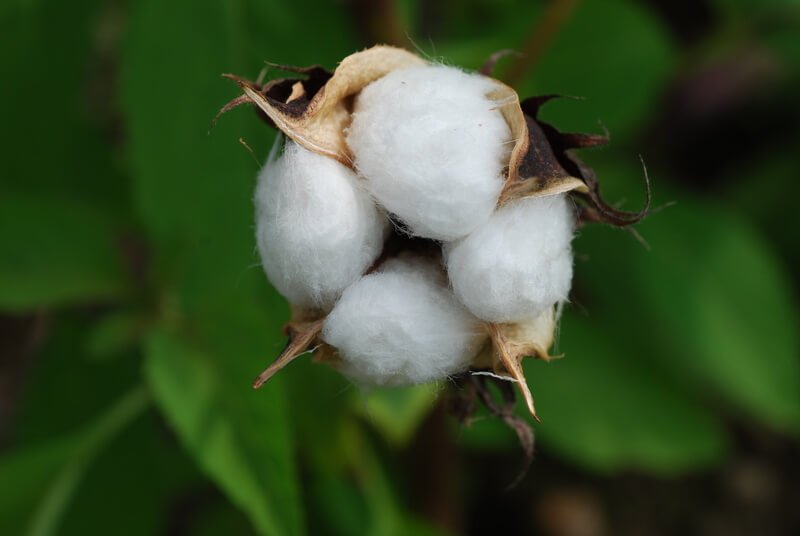
gossypium hirsutum baumwollfeld bontioli porembski cd
Credit: Stefan Porembski/West African Plants

A newly developed fertilizer system will provide nutrition to engineered cotton crops worldwide and a deadly dose to weeds that are increasingly herbicide resistant, according to a Texas A&M AgriLife Research study.

The new system applies phosphite to cotton crops engineered to express a certain gene — a gene that makes cotton able to process the phosphite into nutrition while the same compound suppresses weeds that are unable to use it, researchers said.

“Our researchers here at Texas A&M AgriLife have addressed an issue that costs producers billions of dollars,” said Dr. Patrick Stover, vice chancellor of agriculture and life sciences at Texas A&M in College Station and AgriLife Research acting director. “This is an economical, environmentally safe and sustainable solution.

“We have determined ptxD-expressing cotton plants can utilize phosphite as a sole source of phosphorus while weeds cannot, thus making it effective at suppressing weed growth,”[Keerti Rathore, an AgriLife Research plant biotechnologist in College Station] said.

The transgenic plants expressing the bacterial ptxD gene gain an ability to convert phosphite into orthophosphate, he said. Such plants allow for a selective fertilization scheme, based on phosphite as the sole source of phosphorous for the crop, while offering an effective alternative to suppress the growth of weeds that are unable to utilize this form of phosphorus.”

Editor’s note: Read the full study

Read full, original post: Engineered cotton uses weed-suppression chemical as nutrient

{{ reviewsTotal }}{{ options.labels.singularReviewCountLabel }}
{{ reviewsTotal }}{{ options.labels.pluralReviewCountLabel }}
{{ options.labels.noReviewsLabel }}
{{ options.labels.newReviewButton }}
{{ userData.canReview.message }}

Related Articles

Infographic: Global regulatory and health research agencies on whether glyphosate causes cancer

Infographic: Global regulatory and health research agencies on whether glyphosate causes cancer

Does glyphosate—the world's most heavily-used herbicide—pose serious harm to humans? Is it carcinogenic? Those issues are of both legal and ...

Most Popular

Screenshot-2026-07-09-at-1.09.25-PM
Anti-vaccine myths rattle health care
ChatGPT-Image-Mar-10-2026-01_39_01-PM
Viewpoint—“Miracle molecule” debunked: Why acemannan supplements don’t work
Screenshot 2026-07-28 at 3.22
Hidden hunger: Climate change is speeding up the decline of important nutrients in our food
Screenshot 2026-07-22 at 1.38
Viewpoint: Are the U.S. and Europe headed towards a repudiation of agricultural biotechnology red tape?
Screenshot 2026-07-28 at 3.03
What is cyberchondria?
Screenshot 2026-07-28 at 2.04
Viewpoint: How AI supercharges conspiracy theories and oversimplifications to distort online health information
organic scaled
Facts & Fallacies podcast: Organic food cuts pesticide exposure? A response to Dr. Rhonda Patrick
ChatGPT-Image-Jul-9-2026-11_33_49-AM
Viewpoint: High-dose resveratrol supplements to extend health and life? Don’t waste your money.
png-terrace-Farm-asia
Europe’s tentative embrace of agricultural gene editing could revolutionize food production and health in Asia
Screenshot 2026-07-28 at 3.43
Fat cat? GLP-1 weight loss drugs for animals are on the horizon
ChatGPT-Image-May-26-2026-11_51_01-AM
Viewpoint: RFK, Jr.’s depressingly misguided (and litigator-funded) crusade against antidepressants
Screenshot-2026-07-27-at-3.23.14-PM
Prioritizing AI, robotics, and nuclear energy: Trump administration is guiding research funding away from independent universities to private companies

ChatGPT-Image-Jun-25-2026-12_23_17-PM
No, Bill Gates did not secretly engineer ticks to promote veganism
glp menu logo outlined

Get news on human & agricultural genetics and biotechnology delivered to your inbox.