Limiting brain damage in stroke patients by controlling inflammation

bigstock CT brain
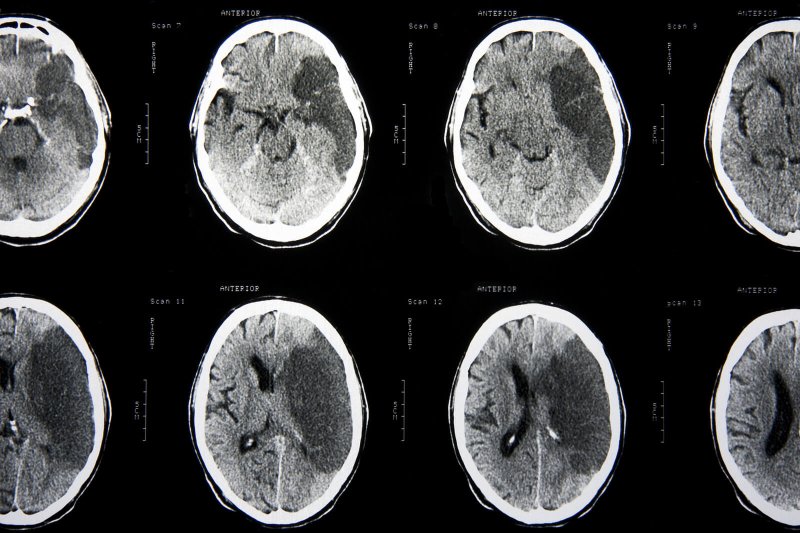
CAT scan of ischemic stroke. Image credit: Net Health Book

In an ischemic stroke a clot blocks a blood vessel to the brain, depriving oxygen and nutrients to part of the crucial organ. Without immediate treatment this can cause irreversible tissue damage.

Even after successful clot removal, however, the rush of blood back into the brain and the dying tissue left behind can lead to additional complications such as inflammation.

But now, armed with guidelines for more rigorous animal studies and a better understanding of the processes that occur after stroke, researchers believe they are closer to finding compounds that can effectively reduce brain damage and lessen long-term effects on neurological function. Recent investigations in mice reveal that addressing the immune response—by inhibiting its harmful effects immediately after stroke or promoting its ability to aid recovery—may indeed lead to better outcomes.

By combining Crry, a molecule that inhibits the complement system, and B4scFv, an antibody fragment engineered to identify stressed and injured cells, they were able to create a drug that could locate the stroke site and stop immune cells from attacking brain issue only there.

Animals treated up to 24 hours after stroke had significantly less brain damage and fewer neurological problems, such as impaired movement and memory, than the untreated animals.

Read full, original post: Targeting Inflammation May Protect and Restore the Brain after Stroke

{{ reviewsTotal }}{{ options.labels.singularReviewCountLabel }}
{{ reviewsTotal }}{{ options.labels.pluralReviewCountLabel }}
{{ options.labels.newReviewButton }}
{{ userData.canReview.message }}

Related Articles

Infographic: Global regulatory and health research agencies on whether glyphosate causes cancer

Infographic: Global regulatory and health research agencies on whether glyphosate causes cancer

Does glyphosate—the world's most heavily-used herbicide—pose serious harm to humans? Is it carcinogenic? Those issues are of both legal and ...

Most Popular

Screenshot-PM-24
Viewpoint: The herbicide glyphosate isn’t perfect. Banning it would be far worse.
d-b
Blocked arteries, kidney stones, nausea, constipation, fatigue: Long list of health problems caused by too much vitamin D 
Screenshot-2026-04-27-at-12.22.38-PM
Running ‘wild’: Last year, RFK, Jr. was given a green light to ‘reform’ chemical policies. Glyphosate illustrates how Trump now has him on a tight leash, and MAHA is furious
ChatGPT-Image-Apr-22-2026-11_06_18-AM
Wellness influencer nonsense: No, nicotine does not boost cognition and productivity, but it can damage your health 
bayer-supremecourt-lt
EPA concludes glyphosate is not carcinogenic. Missouri courts say Monsanto failed to warn it might be. SCOTUS weighs in.
ChatGPT-Image-Feb-16-2026-01_57_31-PM
Viewpoint: ‘Science-as-Satan’ unites the MAHA—MAGA movements. Is a breakup in the works?
Screenshot-2026-04-27-at-1.40.55-PM
With federal funding for scientific research already reeling, Trump fires the entire apolitical National Science Board
Screenshot-2026-04-13-at-3.54.04-PM
AI disinformation stress test: Challenges and response strategies
Screenshot-2026-04-12-135256
Bixonimania: The fake disease scam that AI swallowed whole
Screenshot-2026-04-27-at-12.41.50-PM
How pediatricians are navigating America’s surge of health misinformation
glp menu logo outlined

Get news on human & agricultural genetics and biotechnology delivered to your inbox.