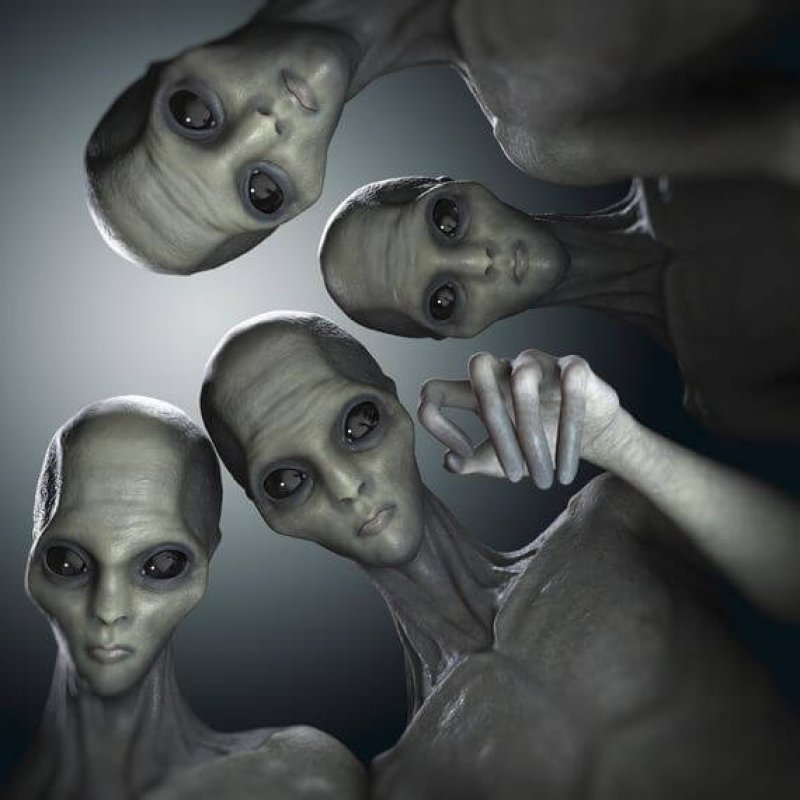
What are the odds that aliens might actually look similar to us?

aliens
Image credit: Science Picture Co.

In his new book, Equations of Life: How Physics Shapes Evolution, Charles Cockell from the University of Edinburgh makes the argument that physical laws limit the diversity of life on Earth and, we might expect, elsewhere in the universe. The book uses many examples of living things on our own planet, most convincingly the ladybug, to explain eloquently why everything from microbes to large animals are the way they are.

Having shown that physical factors limit the solutions for life on this planet, Cockell extends the argument to extraterrestrial life. He expects us to find only carbon-based life elsewhere in the universe, which, he contends, is likely to use water as a solvent and have only a limited set of available nutrients and building blocks for biology. We should not be surprised, therefore, to find on some other planet an animal that reminds us of, say, a cow, or a raven, or even a human.

I see a danger in being overly confident that our type of biology on Earth is the only game in town. Environmental conditions on our planet fall within a very narrow range, and there may be other possibilities of which we are not yet aware.

Perhaps the Martian lake recently discovered beneath a mile of ice would make a great testing ground.

Read full, original post: How Fundamental Physics Shapes the Diversity of Life

{{ reviewsTotal }}{{ options.labels.singularReviewCountLabel }}
{{ reviewsTotal }}{{ options.labels.pluralReviewCountLabel }}
{{ options.labels.newReviewButton }}
{{ userData.canReview.message }}

Related Articles

Infographic: Global regulatory and health research agencies on whether glyphosate causes cancer

Infographic: Global regulatory and health research agencies on whether glyphosate causes cancer

Does glyphosate—the world's most heavily-used herbicide—pose serious harm to humans? Is it carcinogenic? Those issues are of both legal and ...

Most Popular

Screenshot-2026-05-01-at-1.29.41-PM
Viewpoint: What happens when whole grains meet modern food manufacturing? Labels don’t tell the whole story.
ChatGPT-Image-Apr-13-2026-02_20_22-PM
Viewpoint: Misinformation infodemic? Why assessing evidence is so challenging 
ChatGPT-Image-Mar-27-2026-11_47_30-AM-2
FDA’s expedited drug reviews are hailed in some quarters but other approval practices are problematic
S
As vaccine rejectionism spreads, measles may be taking a more dangerous turn
bigstock opioids on chalkboard with rol
GLP podcast: 'Safe injection sites': enabling drug addiction or saving lives?
Screenshot-2026-04-20-at-2.26.27-PM
Viewpoint — Food-fear world: The latest activist scientists campaign: Cancer-causing additives
circular-bioeconomy-should-focus-on-sustainable-wellbeing
GLP podcast: What's wrong with 'doomsday' environmentalism? It's false.
Screenshot-2026-03-13-at-12.14.04-PM
The FDA wants to make many popular prescription drugs OTC—a great idea. Here’s why it’s unlikely to happen

Sorry. No data so far.

glp menu logo outlined

Get news on human & agricultural genetics and biotechnology delivered to your inbox.