What happens if we make AI more humanlike?

mercedes benz mwc barcelona avatar sarah dfs x
Digital avatar Sarah. Image credit: Daimler

When people interact with each other face to face, emotional and intellectual engagement both heavily influence the interaction. What would it look like for machines to bring those same emotional and intellectual capacities to our interactions with them, and how would this type of interaction affect the way we use, relate to, and feel about AI?

[Greg] Cross [chief business officer of New Zealand-based AI company Soul Machines] and his colleagues believe that humanizing artificial intelligence will make the technology more useful to humanity, and prompt people to use AI in more beneficial ways.

“What we think is a very important view as we move forward is that these machines can be more helpful to us. They can be more useful to us. They can be more interesting to us if they’re actually more like us,” Cross said.

It is an approach that seems to resonate with companies and organizations. For example, in the UK, where NatWest Bank is testing out Cora as a digital employee to help answer customer queries. In Germany, Daimler Financial Group plans to employ [humanized avatar] Sarah as something “similar to a personal concierge” for its customers. According to Cross, Daimler is looking at other ways it could deploy digital humans across the organization, from building digital service people, digital sales people, and maybe in the future, digital chauffeurs.

Read full, original post: What We Have to Gain From Making Machines More Human
Related Articles

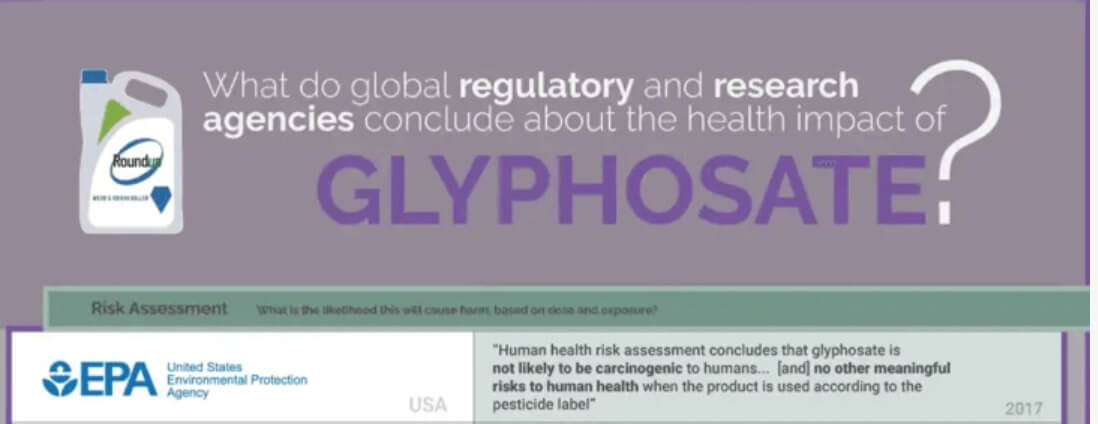
Infographic: Global regulatory and health research agencies on whether glyphosate causes cancer

Infographic: Global regulatory and health research agencies on whether glyphosate causes cancer

Does glyphosate—the world's most heavily-used herbicide—pose serious harm to humans? Is it carcinogenic? Those issues are of both legal and ...

Most Popular

Screenshot-2026-11-16-at-2.37.32-PM
30 years of GMO farming: Is the boom in glyphosate and glufosinate use harming the environment? Data show they’re the most sustainable choice
ChatGPT-Image-Mar-10-2026-01_39_01-PM
Viewpoint—“Miracle molecule” debunked: Why acemannan supplements don’t work
Soybean Harvest in Cupped Hands
30 years of GMO farming: Defying cynics, we’ve had larger harvests, lower costs, and $385 billion in added global farmer income
Stormlit Portrait Over Golden Mountains
Searching for life where no one thought to look: A renowned astrophysicist’s seemingly quixotic quest to explore Venus’s clouds
Screenshot-2026-11-19-at-7.23.23-PM
Viewpoint: After a yearlong hiatus, the U.S. Preventive Services Task Force is back in business—gutted by RFK Jr. and promoting junk science
Screenshot-2026-11-19-at-7.54.57-PM
European General Court sides with scientists, dismisses activist claims that glyphosate is toxically dangerous
Screenshot-2026-11-17-at-12.18.09-PM
Challenging glyphosate fear-mongering: Statewide Nebraska study finds no link between weedkiller use and non-Hodgkin lymphoma
Nurturing Care Beneath the Crunchy Moms Logo
Crunchy Moms disinformation flood: Zuckerberg's Facebook has opened floodgates on measles and vaccines
Nicotine Products on Gray Marble
Comparing vaping, nicotine patches and cigarettes: Not ‘safe vs. dangerous’  but ‘less harmful vs. more harmful’
glp menu logo outlined

Get news on human & agricultural genetics and biotechnology delivered to your inbox.