Epigenetic changes in plants could help produce food crops better suited to harsh environments

web
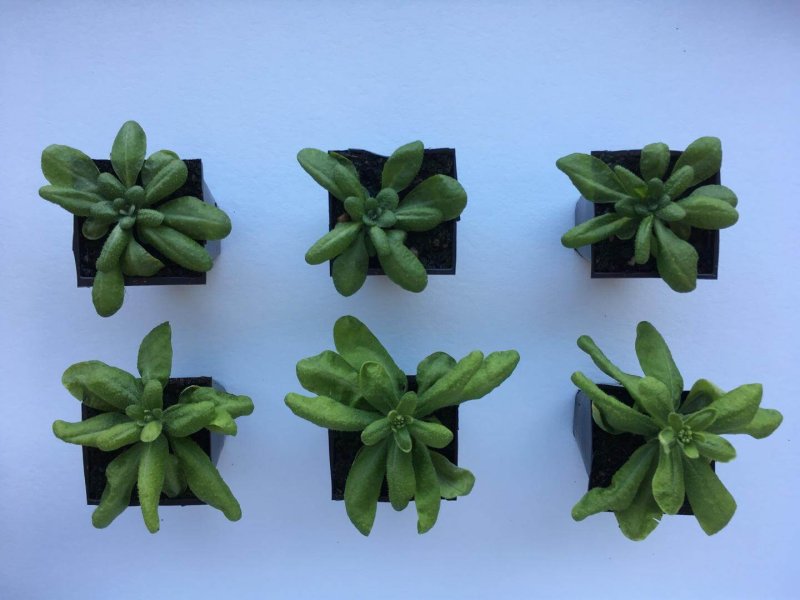
Comparison of growth differences in wild-type (left) and growth-repressor mutant (right) Arabidopsis plants.

The sequence of genes passed on to daughter cells or offspring isn’t the only factor that determines the traits of cells and organisms. Chemical changes in the genetic material that do not alter the underlying DNA sequence also play a role in controlling which genes are active or inactive. Methylation is one such epigenetic mark, which involves the addition of small chemical groups to specific bases in the DNA.

Plant biologists at the University of Zurich have now demonstrated that naturally occurring epigenetic variation in mouse-ear cress (Arabidopsis thaliana) is subject to selection. The team of Ueli Grossniklaus at the Department of Plant and Microbial Biology also showed that newly selected traits – which are important for seed dispersal – are passed on for at least two to three generations even without selection. “Epigenetic variation thus contributes to the ability of plants to quickly adapt to changes in the environment without sequence changes in the genome,” explains Grossniklaus.

Since the genetic basis of crops is often very limited, epigenetics could be used to expand the material for plant breeding,” emphasizes Grossniklaus. Climate change is likely to alter the environmental conditions in many of the world’s regions within a short period of time. Plant species that can quickly adapt to changes are thus becoming increasingly important.

Read full, original article: Exploiting Epigenetic Variation for Plant Breeding

{{ reviewsTotal }}{{ options.labels.singularReviewCountLabel }}
{{ reviewsTotal }}{{ options.labels.pluralReviewCountLabel }}
{{ options.labels.newReviewButton }}
{{ userData.canReview.message }}

Related Articles

Infographic: Global regulatory and health research agencies on whether glyphosate causes cancer

Infographic: Global regulatory and health research agencies on whether glyphosate causes cancer

Does glyphosate—the world's most heavily-used herbicide—pose serious harm to humans? Is it carcinogenic? Those issues are of both legal and ...

Most Popular

ChatGPT-Image-Jul-7-2026-12_01_35-PM
Viewpoint: 21 worthless wellness trends inspired by RFK, Jr.’s ill-informed MAHA followers that can harm or even kill you.
ChatGPT-Image-Jul-1-2026-03_33_49-PM
‘Alternative’ cancer treatments that could kill you
Screenshot-2026-07-06-at-12.30.23-PM
2,300 endangered species: Controversial de-extinction company Colossal Biosciences joins U.S. effort to preserve their DNA
ChatGPT-Image-Jun-30-2026-10_27_31-AM
Viewpoint: Europe clears the way for gene-edited crops — but fear-driven restrictions still slow their full potential
ChatGPT-Image-Jul-9-2026-10_36_24-AM
Deeply-flawed ivermectin study revives scientifically unsupported miracle cancer drug myth
ChatGPT-Image-Mar-10-2026-01_39_01-PM
Viewpoint—“Miracle molecule” debunked: Why acemannan supplements don’t work
d a ca e c c beb x
Facts & Fallacies podcast: The 'woke' crusade against anthropology? Dr. Elizabeth Weiss
Screenshot-2026-07-09-at-9.48.49-AM
Do cold plunges and contrast therapy work?
ChatGPT-Image-Jun-25-2026-12_23_17-PM
No, Bill Gates did not secretly engineer ticks to promote veganism
Screenshot 2026-07-08 at 10.13
What happens when a pro-life congresswoman needs an abortion?
ChatGPT-Image-Jul-7-2026-11_19_20-AM
Signal or noise? Study links GLP-1 drugs to slowing the aging process

ChatGPT-Image-Jul-1-2026-12_37_08-PM
Viewpoint: Trump poised to politicize all U.S.-supported science research
ChatGPT-Image-Jul-8-2026-04_10_51-PM-1
Kennedy-founded Children's Health Defense doubles down on support for Idaho mother charged by a grand jury with murdering her twins last year after claiming vaccines killed them
glp menu logo outlined

Get news on human & agricultural genetics and biotechnology delivered to your inbox.