Let’s approach the GMO conversation with ‘cooler heads’ in 2019

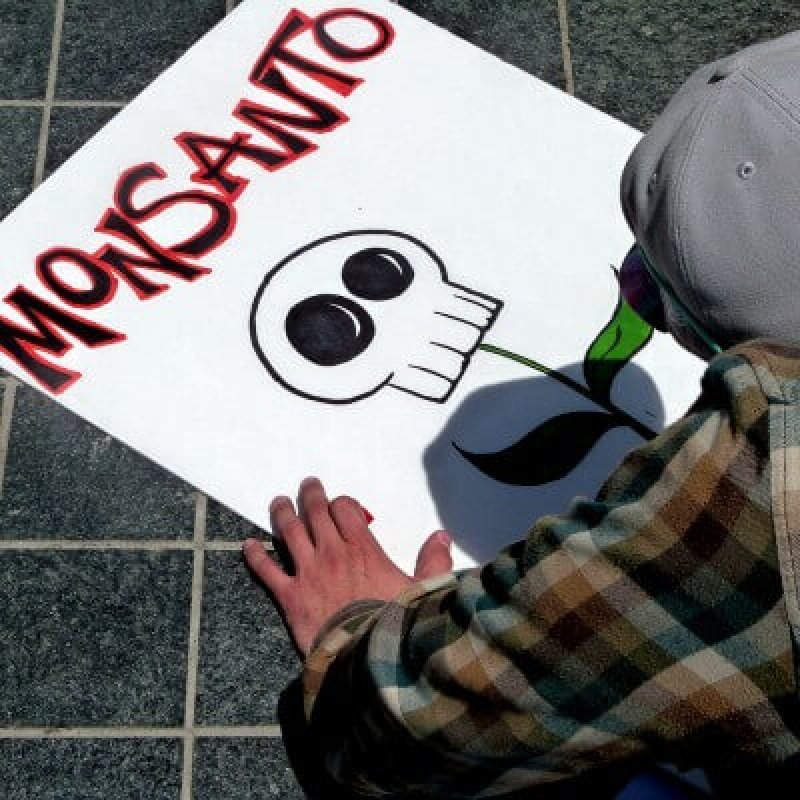
March Against Monsanto San Francisco e
March Against Monsanto protest sign (Credit: Donna Cleveland via Wikimedia Commons)

As consumers strive to become more aware of food-production terms and practices, they often bludgeon farmers with a body of opinions based on quippy distillations of complex research …. and nothing more than a reactionary response to terms such as GMO. Those who live and work in this arena wrestle with how to give them the space to learn — to catch up — like my farm did.

[Editor’s note: Toban Dyck is a farmer in Manitoba, Canada.]

The agriculture industry needs the public to understand what it is, what it does and how it operates, before it makes itself vulnerable to a group that seems ready to pounce. If 2018 was the public’s intro to agriculture class, 2019 will require more from its students.

I would think twice about offering my opinion on whether I think Monsanto had its hand in and/or attempted to steer pro-glyphosate research submitted to the [Canadian government] until I’m certain my reading public understands that research projects are usually funded through a variety of sources …. And that the researchers accepting these funds do not traditionally allow their credibility to be jeopardized by allowing others to determine outcomes.

In 2019, let’s commit to cooler heads prevailing and tackling agricultural issues with the open minded, philosophical and scientific rigour they require.

Read full, original article: Agri-Culture: Let’s commit to having cooler heads next year

{{ reviewsTotal }}{{ options.labels.singularReviewCountLabel }}
{{ reviewsTotal }}{{ options.labels.pluralReviewCountLabel }}
{{ options.labels.newReviewButton }}
{{ userData.canReview.message }}

Related Articles

Infographic: Global regulatory and health research agencies on whether glyphosate causes cancer

Infographic: Global regulatory and health research agencies on whether glyphosate causes cancer

Does glyphosate—the world's most heavily-used herbicide—pose serious harm to humans? Is it carcinogenic? Those issues are of both legal and ...

Most Popular

Screenshot-2026-04-22-at-12.21.32-PM
Viewpoint: Why the retracted Monsanto glyphosate study doesn’t change the science—the world’s most popular herbicide is safe 
Picture1
The FDA couldn’t find a vaccine safety crisis, so it buried its own research
ChatGPT-Image-May-1-2026-11_42_59-AM-2
Viewpoint: NAD is the wellness grifters latest evidence-lite longevity fad. At least the mice are impressed.
global warming
‘Implausible’: Top climate scientists reject worst-case scenario—soaring temperatures and fast-rising sea levels
Screenshot-2026-05-21-at-12.15.17-PM
UK gene-editing milestone: Livestock barley that increases ruminant value and reduces methane emissions is first-approved CRISPR crop
vax-misinformation-main
Facts & Fallacies Podcast: Limit free speech to blunt social media misinfo?
ChatGPT-Image-Apr-16-2026-02_56_53-PM
Financial incentives, over diagnosis, and weak oversight: Autism claims are driving up Medicare costs
Screenshot-2026-05-21-at-3.15.53-PM
Chiropractors may no longer be modern-day snake oil salesmen, but the benefits of their therapy are limited–at best
ChatGPT-Image-May-12-2026-11_27_01-AM-2
AI likely to improve health care, research shows—but not for blacks and ethnic minorities
Screenshot-2026-05-20-at-5.11.17-PM
Viewpoint: No, sugar doesn’t ‘feed’ cancer — common cancer myths, debunked

Sorry. No data so far.

glp menu logo outlined

Get news on human & agricultural genetics and biotechnology delivered to your inbox.