There is a borderland between waking life and the uncharted wilderness of sleep that we all traverse each night, but we rarely stop to marvel at the strangeness of this liminal world… Usually we pass through this state of half-wakefulness on our way to deep sleep within minutes.
…
[Adam] Horowitz and his colleagues at the MIT Media Lab have developed a relatively simple device called Dormio to interface with this unique stage of sleep.
…
Horowitz tested the first version of Dormio on six volunteers from MIT… As they were falling asleep, the Jibo robot would prompt them with one of two phrases: “remember to think about a rabbit” or “remember to think about a fork.” When the Dormio system detected the participants were falling asleep, the robot would say their name and “you are falling asleep.”
…but the aim of Dormio is not to wake up the sleeper entirely. Instead, the system is meant to prevent the user from falling deeper into sleep, effectively suspending them in an extended state of hypnagogia. Once the volunteers were in a state of hypnagogia, the Jibo robot would ask them what they are thinking about and record their answers.
…
[A]lthough not all of the subjects remembered what they said to the robot, all of them “remembered and reported seeing the prompt word during their dream state, showing successful inception and recall of stimuli into said dream state.”
Pakistan has tightened grip on international rice trade with a view to getting rid of any impression of involving in the trade of tainted genetically modified (GM) rice, officials said….
Federal government, [in April], issued instructions to Department of Plant Protection, Ministry of Food Security & Research (MFS&R) for strict regulation of inbound and exporting rice consignments.
This move was initiated following serious concerns raised by Rice Exporters Association of Pakistan (REAP) about incidence of detecting GM rice from some shipments, resulting in rejection of exporting consignments from European Union.
Echoing similar concerns, Punjab government on April 10, 2018 wrote a letter to express strong reservations about tainted trade of GM rice.
“We do not produce GM rice nor do we import it. Hence, there is no possibility of any involvement of local companies in the processing of GM rice,” a government official said. “If at all it is detected from some consignments, it could have sourced from outside country, which needs to be checked thoroughly.”
As a result of the tight regulation, Pakistan blocked entry of a Chinese rice seed shipment….
Running phenomenon Caster Semenya of South Africa and some other top females runners will likely have to reduce their body’s natural testosterone levels under new rules to continue to compete in top international races.
The new rules issued Thursday [April 26] by the International Association of Athletics Federations set strict limits on testosterone levels for women and “intersex” athletes in women’s races.
…
For now, beginning in November, the blood testosterone level must be 5 nanomoles per liter for a continuous period of at least six months for an athlete to compete in a women’s event under the new IAAF track rules. The new levels, down from 10 nmol/L, will apply to all athletes with a “difference of sexual development” designation and will include only female or “intersex” athletes, not athletes designated as male, who would be barred from women’s competition. The levels will apply to athletes competing in international women’s events from 400 meters to the mile.
The IAAF had defended its decision by saying the typical range among elite female athletes is 0.12 to 1.79 nmol/L, according to NPR.
If athletes the IAAF refers to as “hyperandrogenous women” don’t lower their testosterone to the new levels, they will only be allowed to compete with men or intersex athletes…
“The revised rules are not about cheating. They are about leveling the playing field to ensure fair and meaningful competition,” IAAF President Sebastian Coe said in a statement Thursday.
The available evidence supports consumers’ belief that organic food production and consumption result in lower pesticide exposure, are more environmentally friendly, and may be better for animal welfare. However, the impact on human health of the actual low-level pesticide exposure from conventionally produced foods is not clear.
Some studies indicate better nutritional profiles in organic foods than in conventional foods, but the differences are mostly small and may not be of practical relevance in well-nourished populations. Few studies have investigated the possible health benefits of organic food consumption in humans. While providing some indications, the available evidence is limited and therefore insufficient to conclude whether organic food is healthier.
The beneficial health effects of vegetables and fruits and other foods recommended in a balanced diet are well documented, but the jury is still out and not ready to conclude whether choosing the organic alternatives would provide additional benefits. The current dietary guidelines, which recommend more fruit, vegetables, and plant foods and less meat, are based on a large number of studies and are valid regardless of whether the produce is organic.
Millions of years ago, digestion consumed most of the calories we ate. These days, our brain takes 20 times more energy than any other organ in the body. So for our brain to develop, we needed a higher density food. Meat—obtained from hunting and killing other animals—fit the bill.
…
The ability to run long distances and sweat—so as not to overheat, allowed our ancestors to wear out other animals. Sweating was the key factor. Consider a gazelle running over long distances and being chased by our progenitors. The fact that they can sweat and the gazelle can’t means they can last far longer in the heat of the African Savannah.
…
Sweating, in addition to being a highly advanced cooling system, may have also acted as a defense mechanism. Anyone who’s ever played shirtless tackle football in the summertime knows how hard it is to catch someone who’s slick and sweaty. So the next time you’re sweating bullets in some social situation, take a moment to calmly reflect on the fact that despite the awkwardness of your perspiration, this biological function is the main reason why you’re able to suffer such indignities in the first place.
The NFU has called the decision to ban the use of neonicotinoids to all outdoor crops as a “regrettable decision not justified by evidence”.
On [April 27] member states in the European Commission voted to extend the ban on the use of neonicotinoids to all outdoor crops.
The restrictions were imposed after a previous report by European Food Safety Authority (EFSA) concluded that they posed a “high acute risk” to honey bees.
However, the NFU has called the decision “regrettable”. Guy Smith, NFU Deputy President, said: “This decision doesn’t change the fact that farmers will continue to face challenges to maintain sustainable and productive cropping systems and the pest problems that neonicotinoids helped farmers tackle have not gone away.
“Most agronomists agree that without neonicotinoids many crops grown in the UK will become less viable and a ban could simply mean we import more crops from parts of the world where there is no political desire to ban these key insecticides.
…
The NFU believes a risk-based approach should be taken, where the impacts of potential changes are fully understood and recognised as providing genuine opportunities to improve bee and pollinator health.
Mr Smith said there is a real risk that these restrictions will do nothing measurable to improve bee health, while compromising the effectiveness of crop protection.
This is the first in a three-part series making the case that the development of biotech traits for insect resistance and herbicide tolerance are the most substantial innovations in sustainable agriculture in the last three decades. Here, I lay out the context in which I believe they should be assessed relative to other innovations competing for the crown. In part two, I lay out the data and evidence of their overall environmental impacts. And in part three, I’ll make my closing argument after looking at the impacts on China, India, Pakistan and South Africa.
If you haven’t watched the new documentary Well Fed yet, I highly recommend it. Dutch film-maker Karsten de Vreugd has standard issue lefty/urban attitudes about organic and pesticides and he and his friends think GMOs are a bad idea. Except for one friend, his best friend. Hidde Boersma is a science journalist with a PhD in molecular biology who challenges de Vreugd to rethink his views.
The film follows them around the world as they seek a balanced look at the issue, with Boersma doing a fantastic job of making the science of genetics and plant breeding accessible to the rest of us. After making stops to interview a local representative of Greenpeace and some other anti-biotech advocates, they travel to Bangladesh to track the success of Bt Brinjal in reducing insecticide use and increasing yields and profits for smallholder farmers. Then it’s on to the Philippines to track the progress of Golden Rice and understand the potential it holds for reducing the devastation caused by vitamin A deficiency. Greenpeace has been vehement and aggressive in its opposition to Golden Rice, which the organization sees as a Trojan horse to bring GE crops into the developing world.
These encounters are effective in bringing de Vreugd around in seeing genetic engineering in agriculture outside of the typical, narrow criticisms around industrial agriculture and monocrops, corporate control and profit. I have to admit I got a bit frustrated with what I see as an all too common strategy of persuasion regarding the benefits of biotech in ag. Playing up the potential of virtuous, NGO-style biotech crops for the Global South is an important, but incomplete strategy in making the case for biotech. It’s something I’ve seen over and over, distancing from industrial agriculture in order to get someone to see the issue in a different light. I get it. It works. It worked on me. But it’s not enough. Biotech advocates also need to make the case for herbicide tolerance and insect-resistant commodity crops instead of deflecting away from the issue. They need to sing the praises of Bt corn and Roundup Ready soybeans. I don’t mean to criticize the film, which I loved, and that probably wasn’t the place for it, but somebody has to make the case for the role biotech has played in industrial agriculture. That’s what we’re going to do now.
Industrial agriculture isn’t going anywhere. The question is what sort of industrial agriculture are we going to have?
There are over 7 billion people living on this planet, most of them in cities. In the US we have over 330 million mouths to feed with less than 2% of the population engaged in farming. For better or for worse, we live in an industrial society. Barring some top-to-bottom reorganization of our economy, we are going to have an industrial food system. If there is a set of political reforms that would enable an economically viable mass form of neo-peasant farming in developed countries, I haven’t heard anyone make the case for what they would be.
Should there be vibrant, regional systems of small and mid-sized farms producing the freshest, most delicious fruits and vegetables, wines, meats and cheeses serving farmers’ markets, farm-to-table restaurants and local grocers? Absolutely! But they are never going to displace production ag in a substantial way.
The Pioneer Valley in Western Massachusetts is about as well poised for locavorism as any place in the US. They have tons of wonderful farms in a fertile valley cut by the Connecticut River. They have two college towns with exactly the kind of demographic of citizens dying to support local farms — including commitments from university and college dining commons to source local food. A recent estimate put their local consumption at 12%. That’s only about a half million people under ideal conditions. How you would get as high as 12% in Boston or New York is unclear to me.
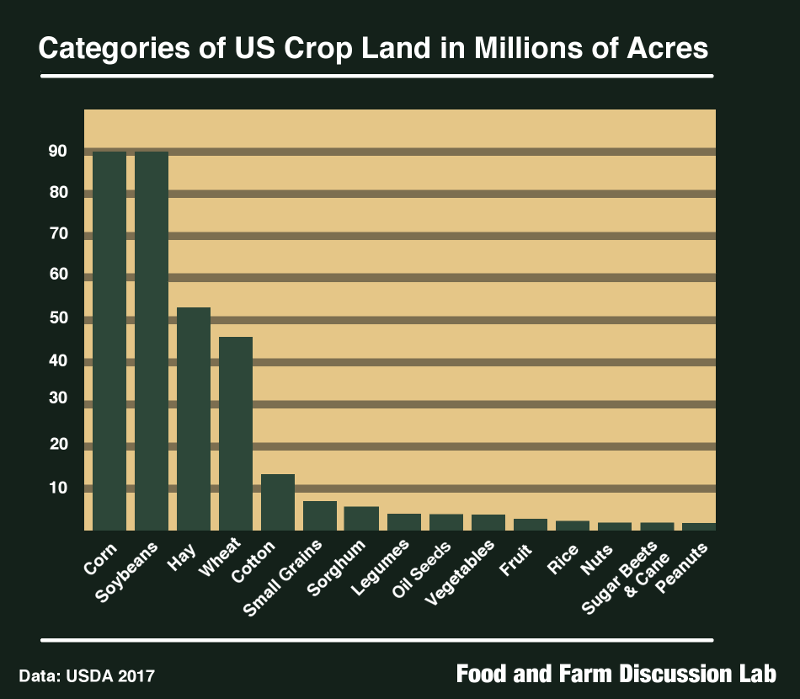
Maybe that’s looking at a goal that’s a little too bespoke. Let’s zoom out to a simpler problem. One of the central criticisms of our current industrial food system is that it relies too heavily on just two crops — corn and soy. It would be better for our health and the environment if we had a more varied diet and more diverse crop rotations. The food system would be more resilient with greater diversity, and we’d need less synthetic fertilizer planting more legumes. Doubling production of the next top eight grains and pulses would be a worthy reform of our industrial food system.
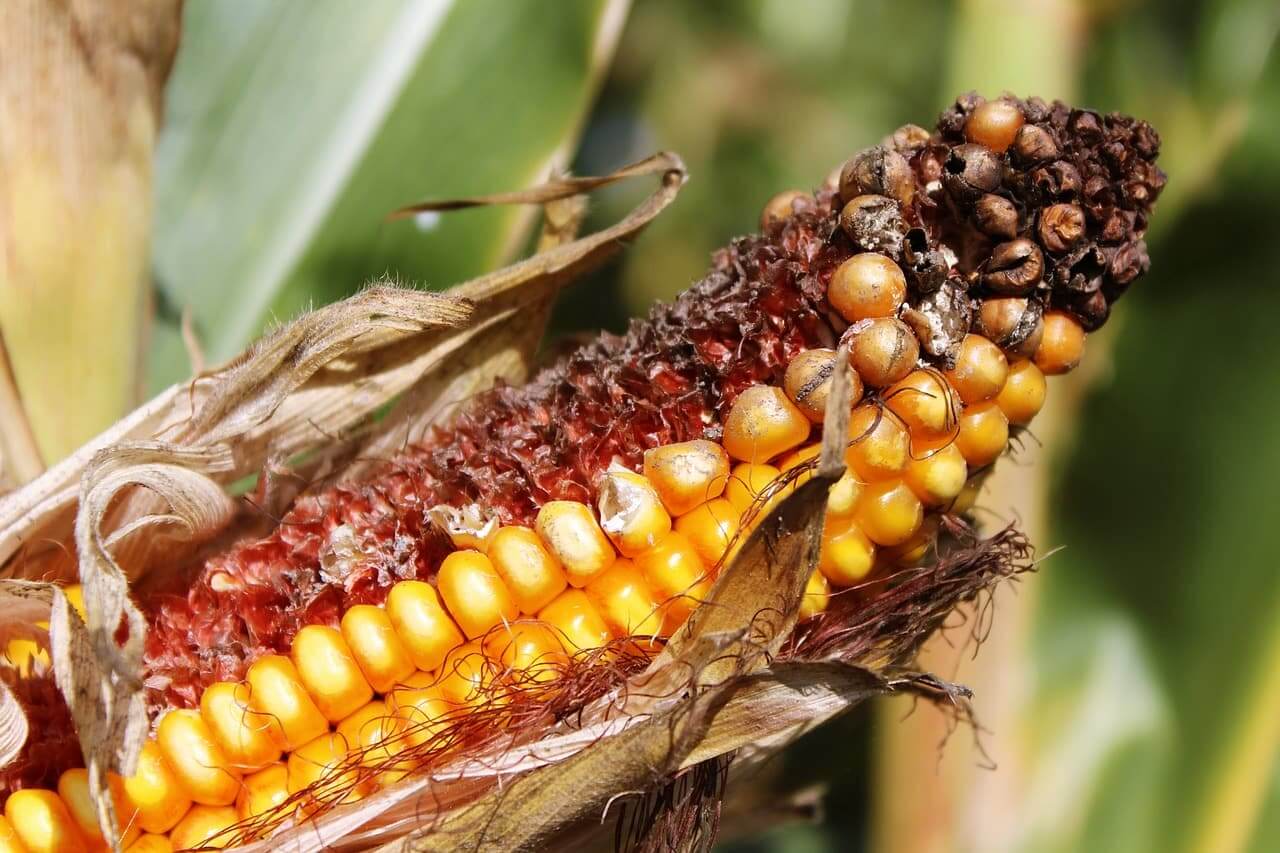
Corn damaged by the fall armyworm.
Here’s a little back of the envelope math – 2016/17 averages of acres planted for grains and pulses that could most easily displace corn and soy in rotations:
Dry edible peas and beans: 2.9 million acres
Oats: 2.7 million acres
Rye: 2.0 million acres
Lentils: 1 million acres
Millet: 500,000 acres
Chickpeas: 400,000 acres
Barley: 270,000 acres Total – 9.8 million acres
So if you could double demand for these crops, you could ostensibly displace a whopping 5 million acres each from the 90 million acres each of corn and soybeans.
Which would be no small feat.
So now we would only be producing 85 million acres of corn and 85 million acres of soybeans.
Mis- and disinformation are distorting science and public policy. Subscribe to our Daily and Weekly Digests for incisive coverage of ‘disruptive’ innovations in AI, agricultural biotechnology, food, chemicals, nuclear energy, vaccines, and other disruptive innovations.
We’ll put aside any lack of viable plan for doubling consumption of oats, rye, dried beans, dried peas, lentils, millet, chickpeas and barley. Wave a magic wand getting rid of ethanol and maybe we’d get corn production down to 60 million acres.
So, even after two giant magic wand reforms (and to be clear, I’d love to see both happen, but I don’t see a clear path to get there), if you want to make farming in the United States more sustainable, outside of livestock production, making corn and soy production more sustainable is still where the most leverage is.
Chart by the author.
In any effort to making farming more sustainable, staple crops are where the action is, especially the four crops on the left hand side of the chart above.
Consider the words of Mark Lynas, speaking at the Oxford Farming Conference earlier this year:
Although I don’t want to get into the glyphosate debate here, it is also clear that the adoption of herbicide-tolerant crops has helped shift farming away from more toxic herbicides and facilitated no-till and conservation agriculture.
But as a contribution to global sustainability these improvements have been marginal, trivial even. Genetic modification has not yet reduced fertiliser use, contributed significantly to higher yields, or done anything to address world hunger.
Compared to revolutionary changes that we all hope are on the way — in the speech he mentions nitrogen fixation in non-pulse crops and the biofortified crops in the pipeline to address major nutritional deficiencies — I suppose the contributions of insect resistance and herbicide tolerance could be considered marginal.
Nevertheless, compared to any other innovations over the last three decades, I would propose that the Bt trait in corn and cotton, and the Roundup Ready trait in corn, soybeans, alfalfa, canola and sugar beets are two of most consequential innovations in making agriculture more sustainable. The only thing I would rate ahead of the Bt and Roundup Ready traits is the wide adoption of no-till and conservation tillage during this period. And of course, Roundup Ready crops played a significant role in reducing tillage — a major reason RR was has been so consequential.
Soybeans in no-till field. Image credit: Wikicommons
To underline a key component in this judgement, it’s only innovations in the major staple and commodity crops that can scale to major significance. The only other arena where breakthroughs could be as consequential is in meat production. When Bt in corn reduces insecticide use, in the US that’s happening across something close to 90 million acres, and on nearly 13 million acres for Bt cotton. When Roundup Ready displaced tillage and other more impactful herbicides in soybeans, that’s happening on nearly 70-90 million acres of soybeans depending on the year. Roundup Ready crops account for nearly 200 million acres of US cropland. In one paper that tried to model the impact of Roundup Ready soybeans on reductions in tillage found “the adoption of conservation tillage and no-tillage have been about 10% and 20% higher, respectively, due to the advent of glyphosate tolerant soybeans.” That’s several million acres of no-till and conservation soybean production. For comparison, in 2016 there were 124,591 acres of organic soybeans in production, with the vast majority in conventional tillage. If organic farming researchers could finally figure out how to make no-till in organic soybeans viable with the roller crimper, that new innovation might be applied up to something like 100,000 acres. Over two decades after the adoption of Roundup Ready crops in conventional no-till systems, they are still struggling to make no-till viable in organic production at scale.
Beyond the shifts in tillage, the improved profile of herbicide use, the large reductions insecticide use across hundred of thousands of acres of farmland, there are the less talked about reductions in fuel use that follow from reducing tillage and fewer tractor passes for spraying along with the carbon savings from lower fuel use and carbon sequestration from no-till. But the most overlooked benefit and perhaps the most consequential is the reduction in pesticide poisonings for smallholder cotton farmers in developing countries. Those reductions in illnesses number in the millions and we’ll try to quantify that at some length. I also include impacts on farm income for the middle-income country of Argentina and the developing nations of China, Pakistan, India and South Africa because sustainable farming costs money. It’s much easier when you can invest in the right infrastructure, better seed, and plan on a longer time horizon.
Marc Brazeau is the GLP’s senior contributing writer focusing on agricultural biotechnology. He also is the editor of Food and Farm Discussion Lab. Follow him on Twitter @eatcookwrite.
The concept of scientists growing “mini-brains in dishes” might sound like the plot of a movie. However, this is exactly what scientists – like me – are doing. In the lab, these conceptual “mini-brains” are called organoids. They’re cultivated from stem cells in an artificial environment outside the body and self-organize to form 3D structures which, in part, resemble organs within the body. Lungs, pancreas, fallopian tubes, even taste buds – you name it, an organoid can be made to resemble it.
The fact that they’re easy to make and behave a lot like the organs they resemble make them an exciting tool in the scientific study of health and disease. And, while they are still in their infancy in terms of development, organoids have a lot of potential in investigating the cause of neurodevelopmental disorders that haven’t yet been cracked using more well-established methods, such as studying mice or two-dimensional cell cultures.
We have mice to thank for much of what we know about neurodevelopmental diseases. You may not think you have much in common with a mouse, besides a love of cheese, but we are quite similar at the genetic level. When common genes get messed up in mice, they end up with diseases that look similar to the way they do in people. However, this type of study doesn’t work as well when looking at diseases that are caused by more than one genetic mutation – diseases like schizophrenia or autism, which are caused by multiple genes, are almost impossible to fully model in mice.
Enter organoids. Made out of stem cells, in their first incarnation (back in 2001) scientists figured out how to turn them into neural progenitor cells, self-renewing cells that can develop into the cells that make up the brain, like neurons and glia, but are not yet committed to one fate. These neural progenitor cells self-organized in 2D structures called rosettes that displayed features of the embryonic neural tube, the precursor to the nervous system. Ten years later, scientists found a way to go a step further: it became possible to create structures that look somewhat like the developed brain as a whole – or distinct regions of the developed brain, which could be fused together.
Making organoids
To make these 3D structures, you basically have to recreate the same environment within which the brain develops. We don’t fully understand all the processes involved in neurodevelopment but, based on what we do know, it has been possible to recreate some important aspects of the process. For example, the protein SMAD, which is responsible for muscle and skin formation, can be inhibited, while the WNT signaling pathway, which involves numerous molecules responsible for regional patterning, can be carefully controlled, giving rise to different anatomical brain parts.
With that technological know-how, and the ability to turn a patient’s cells back into pluripotent stem cells, it’s possible to turn cells from patients who have complex diseases like schizophrenia into brain organoids, in a dish. We’ve been reprogramming and culturing patient-derived cells into pluripotent stem cells – with the kind of idiosyncratic genetic composition that is true to the nature of the genetic basis of schizophrenia – for years. But the ability to do this together with organoid technology is a step forward.
New models for psychiatric study
This technology provides an incredible opportunity for us to better model diseases, as the more complex tissue structure offers new possibilities for cellular and molecular analysis. It hasn’t been extensively used to study neuropsychiatric disorders yet. But the few studies that have been done, like one in which organoids were generated from four patients with Austism Spectrum Disorder to reveal genetic abnormalities, are promising. Scientists speculate that self-patterning 3D brain organoids will allow for more accurate study of the cell-to-cell interactions that are involved in the formation of synapses, myelination (wrapping up nerve cells in a fatty white substance, which is crucial for proper signaling) and circuit maturation, all of which have been implicated in schizophrenia.
Mis- and disinformation are distorting science and public policy. Subscribe to our Daily and Weekly Digests for incisive coverage of ‘disruptive’ innovations in AI, agricultural biotechnology, food, chemicals, nuclear energy, vaccines, and other disruptive innovations.
It’s not just psychiatric diseases that could be better understood with the help of organoids. They are also being used to investigate the underpinnings of neurodevelopmental disorders. Because organoids resemble early stages of development, they have a lot of potential for studying developmental diseases that manifest in early embryonic fetal stages.
In fact, organoids have been useful following the outbreak of Zika virus in 2016. Zika caused birth defects in babies born to infected pregnant mothers, including microencephaly, where babies are born with smaller-than-average heads and brain damage. Using organoids, it was possible to identify a causal relationship between Zika infection and the destruction of neural progenitor cells; one study showed that organoids exposed to Zika underwent growth reduction, consistent with the observation of microencephaly in affected infants. Another reported reductions in the number of neural progenitor cells and neurons as a result of cell death.
Organoids are also being used to explore the mechanisms behind human cortical expansion and surface folding, which give brains their funny convoluted, appearance and cannot be properly explored in mice, which have smooth, simple brains. Gyrification, the process of forming folds, can be partially achieved in human brain organoids.
The biggest question facing researchers when it comes to organoids is how well they model human development. The answer, at present, is: not quite. But they are getting better.
Limits of mini-brains
The brain continues to develop after birth. While organoid development resembles the prenatal period quite well, many aspects of brain development, including the maturation of cortical circuits, takes years to develop in growing humans, making it impractical to model these processes in organoids. There also remains much work to be done in terms of achieving more complex aspects of cortical organization, such as gyrification, establishing proper neural connections, and proper cortical layering.
On a more intricate level, genes are not expressed in exactly the same way in brain organoids as they are in human brains. The fact that the genetic identity of the different cell populations in brain organoids do not perfectly reflect the genetic identity of the different cell populations in the human brain needs to be addressed before organoids can be considered an airtight way to research human diseases. The difficulty is that during development, genes are turned on and off in an extremely controlled manner, both temporary and spatially, to create the brain as we know it, and these patterns are difficult to achieve artificially, because the complicated processes involved are not yet fully understood.
Despite their current limitations, organoids represent the next generation in artificial cell-based models of the human brain. These “mini-brains”offer a complex system for studying the neurobiology of countless brain disorders – in a dish. Over the coming years, more and more scientists are likely to adopt these 3D mini-brains, expanding their application and in the process giving rise to improvements in current methods.
I cannot wait to see where the field goes. I work on a stem cell project which aims to cure a rare, genetic childhood neurobiological diseases called Sanfilippo syndrome Type B by supplying the brain, which lacks a particular protein, with neural stem cells that can provide a long-term supply of that protein. These neural stem cells have the potential to differentiate into different neuronal cell types. By injecting organoids into the brains of experimental models, it may be possible to provide the brain with a useful combination of already-differentiated cell types, increasing the therapeutic potential of our stem cell therapy. Not only are mini-brains helping scientists find answers to intractable genetic questions – they may also help to solve them.
Yewande Pearse is a Research Fellow based at LA Biomed. She is working on stem cell gene therapy using CRISPR-Cas9 to treat Sanfilippo Syndrome.
In a survey of 1,330 people in England, published in the European Journal of Cancer, most people correctly said smoking was a cause.
But increasing numbers are getting the risk factors wrong.
…
Researchers at University College London and the University of Leeds carried out the survey and found that more than 40% wrongly thought that stress and food additives caused cancer.
One-third incorrectly believed that electromagnetic frequencies (35%) and eating genetically modified (GM) food (34%) were risk factors, while 19% thought microwave ovens and 15% said drinking from plastic bottles caused cancer, despite a lack of good scientific evidence.
…
Dr Samuel Smith, from the University of Leeds, said: “It’s worrying to see so many people endorse risk factors for which there is no convincing evidence.
“Compared to past research, it appears the number of people believing in unproven causes of cancer has increased since the start of the century, which could be a result of changes to how we access news and information through the internet and social media.”
He added: “It’s vital to improve public education about the causes of cancer if we want to help people make informed decisions about their lives and ensure they aren’t worrying unnecessarily.”
[W]e are only beginning to understand is why women are more susceptible [to Alzheimer’s]. What factors differentiate women from men, specifically as we reach middle age?
…
It turns out that menopause affects far more than our childbearing potential. Symptoms like night sweats, hot flashes and depression originate not in the ovaries but largely in the brain. These symptoms are all caused by an ebb in estrogen. The latest research, including my own work, indicates that estrogen serves to protect the female brain from aging. It stimulates neural activity and may help prevent the build up of plaques that are connected to the onset of Alzheimer’s disease. When estrogen levels decline, the female brain becomes much more vulnerable.
…
The good news is that as women mature into their 40s and 50s, there seems to be a window of opportunity when it is possible to detect early signs of higher Alzheimer’s risk — by doing a brain-imaging test, as we did — and to take action to reduce that risk.
There is increasing evidence that hormone replacement therapies — mainly, giving women supplemental estrogen — can help to alleviate symptoms if given before menopause. We need much more research to test the efficacy and safety of hormone therapy, which has been tied to an increased risk of heart disease, blood clots and breast cancer in some cases.
The elusive dream is that a simple blood test could detect a small tumor growing in your body, giving doctors time to cure you before it’s too late.
…
Using full-genome sequencing to analyze DNA shed into the blood by dying tumor cells, the widely watched company [GRAIL] saw evidence of cancer in 65% of a group of patients already known to have early disease.
The results are similar to those published recently by other research teams. Together, they show that there is “tremendous promise” for finding cancer early using these assays, known as liquid biopsies, says cancer researcher Daniel Haber.
…
GRAIL is cataloging cancer-related mutations in cell-free DNA in the blood of people with 20 types of cancer and others who are apparently cancer-free.
…
GRAIL performed three different kinds of assays that analyzed DNA across the entire genome. One looked for mutations in about 500 known cancer genes, a second detected abnormal numbers of copies of genes, and the third analyzed patterns of methylation, which are chemical tags on DNA that turn genes off or on.
…
[I]t may never be possible to detect more than about 65% to 70% of early cancers because many small tumors don’t shed enough DNA into the blood.
If a Los Angeles Superior Court judge has his way, California businesses will have to put similar warnings on something else that can be addictive, coffee. His ruling, which is being challenged by coffee producers, is harder to justify in terms of health — if it can be justified at all.
…
Like many other substances, acrylamide causes cancer in rats — when they are pumped full of huge doses in ways that don’t approximate real life.
In humans, the data are far less clear. The American Cancer Society (which does not shrink from saying things cause cancer) reports on its website that “there are currently no cancer types for which there is clearly an increased risk related to acrylamide intake.”
Other organizations, such as the International Agency for Research on Cancer, have warned that acrylamide is a “probable human carcinogen.” But this is based almost entirely on animal studies, and the agency has backpedaled in recent years. It’s also worth pointing out that of the nearly 1,000 substances the agency has classified, it has ruled almost none to be non-carcinogenic.
…
If Americans slap a label on every substance that has the potential to cause cancer, eventually those labels will stop having any meaning.
A one-time, experimental treatment for an inherited blood disorder has shown dramatic results in a small study. It’s a major milestone for the company that created it, Bluebird Bio, and the latest in a string of successes for gene therapies, which aim to modify a person’s DNA to treat disease.
About 288,000 people worldwide have beta thalassemia, a genetic disorder in which the body does not make enough hemoglobin, the iron-rich, oxygen-carrying protein in red blood cells. But in an international clinical trial of Bluebird’s treatment, 15 out of 22 patients with the disease were able to stop blood transfusions entirely after receiving the therapy. The other seven patients, the majority of whom had the most severe form of the disease, now need transfusions less often.
…
A transfusion can take four to six hours, and frequent transfusions can cause iron to build up in the blood, leading to serious side effects. A 2016 study conducted in the UK estimated that the cost of treating a patient with severe beta thalassemia tops $720,000 over 50 years.
…
[Lead author Alexis] Thompson says the effect on patients has been remarkable. “They have been tied to this ongoing medical therapy that is burdensome and expensive for their whole lives,” she says. “Gene therapy has allowed people to have aspirations and really pursue them.”
The European Union will ban the world’s most widely used insecticides from all fields due to the serious danger they pose to bees.
The ban on neonicotinoids, approved by member nations on Friday [April 27], is expected to come into force by the end of 2018 and will mean they can only be used in closed greenhouses.
Bees and other insects are vital for global food production as they pollinate three-quarters of all crops. The plummeting numbers of pollinators in recent years has been blamed, in part, on the widespread use of pesticides. The EU banned the use of neonicotinoids on flowering crops that attract bees, such as oil seed rape, in 2013.
In one of the final actions of the outgoing Barack Obama administration, the Food and Drug Administration announced it would regulate CRISPR technology as a drug. CRISPR edits DNA, not adding genes from other organisms, but rather using genes already present in an animal or plant. The new rule will slow down approval of gene editing techniques in livestock and increase the cost of receiving approval.
…
Regulating CRISPR as a drug is a body blow to researchers all across the U.S., and will guarantee that we’ll fall behind other countries that are doing a tremendous amount of research on CRISPR techniques.
…
CRISPR technology is more precise than traditional methods, and results can be achieved much more quickly. In fact, both polling and resistance to viruses like PRRS can and have been developed with traditional methods, but using the new gene editing techniques is quicker, cheaper and safer. Regulation should evaluate risk and even ethical questions, but when the results are as risk free and as beneficial to both animals and humans as these two examples, approval should be quick, certain, and affordable. The last-minute rule written by the outgoing administration is nearing the end of the comment period, and the Donald Trump administration should withdraw the rule and adopt a more streamlined, risk-based approach to regulating gene editing techniques.
Editor’s note: Blake Hurst is a farmer and president of the Missouri Farm Bureau
The Bioethics Advisory Committee (BAC) is reviewing its current stand against genetic modification with regards to genetic disorders passed on to children by their mothers.
The committee, set up by the Government to deal with issues arising from biomedical sciences research in Singapore, said on Thursday (Apr 19) that it is seeking public feedback and views on whether emerging technology should be allowed to be used to prevent mitochondrial disorders.
…
[A public consultation paper] looks at the ethical, legal and social issues arising from Mitochondrial Genome Replacement Technology (MGRT).
MGRT, which involves germline modification, a type of genetic modification, has so far not been permitted in Singapore. The BAC recommended against it in 2005 due to the lack of sufficient scientific evidence of its feasibility and safety.
However, “in light of recent scientific developments and international debates” the committee is reviewing its position, it said in its paper.
…
The three techniques the committee is looking at involve replacing the abnormal mitochondria in the egg or early embryo with healthy mitochondria from the egg or early embryo of a separate healthy donor. Fathers are not able to pass on such disorders.
BAC chairman Mr Magnus said: “MGRT may help enable women who suffer from mitochondrial disorders to have healthy genetically related children of their own.”
Read full, original post: Bioethics committee reviewing stand on genetic modification for mitochondrial disorders
[T]he startle reflex might be an evolutionary point of origin for many of our most common human emotional expressions. When you look at still frames of a startle reaction, two features stand out: the pursing of skin around the eyes and the flashing of teeth.
…
The startle has a side effect that has nothing to do with self-protection: It broadcasts personal information well beyond the simple fact that you are startled. The reason is that your moods and thoughts strongly influence how your startle reflex manifests itself in any given moment.
…
Another creature, watching your startle reaction, could in principle learn a great deal about your inner state—and use that information to its advantage. Are you confident or anxious? More likely to run away, or more likely to go on the attack? Are you dominant over the people around you, or do you feel frightened by them?
…
The startle reflex is not, itself, a social gesture. It’s not a smile, a laugh, or a frown. It’s simply a reflex that evolved to protect the body. But it puts you at risk, too. By leaking signs about your inner state to the rest of the world, it becomes an exploitable data breach.
Opponents of the use of genetic engineering are hailing a recent [New Zealand] Environment Court decision as “a victory for common sense”.
On April 12, the Environment Court ruled in favour of the Whangarei District Council’s case against the wording of the Northland Regional Council’s genetically modified organisms policy in its Regional Policy Statement (RPS).
The court said the policy required a precautionary approach towards introducing genetically engineered organisms generally to the environment – not just plants, as the RPS stated.
…
“The court’s decision is a victory for common sense and for the interests of all Northlanders concerned about the possible introduction of GMOs into the environment, whether they be plants, animals, insects or microorganisms,” Soil & Health chair Graham Clarke said.
…
However, Northern Regional Council regulatory services policy development manager Ben Lee said the Environment Court decision does not effectively ban genetically modified organisms in Northland.
“It directs councils, when considering the management of GMOs, to adopt a precautionary approach. At this stage we don’t know what the outcome might be – a ban is one possible outcome.”
The council was currently in the process of developing a new regional plan for Northland which would set policies and rules for managing GMOs as part of that process.
Chemicals changed the course of agriculture. They became available. Then they became affordable. And then they started to keep their promises, reducing input costs, improving weed/pest management and, ultimately, increasing production and profitability.
Genetics did the same. Advancements in breeding heralded the dawn of what many now colloquially refer to as GMOs, which have increased yields and protein content in crops and allowed food production to take place in previously infertile areas around the globe.
I appreciate the chemistries that allow me to grow high-yielding crops on clean, weed-free fields. I appreciate the science that allows me access to plant varieties suited to my region.
…
For the public to rebuke farmers for their widespread use of pesticides and GMOs, calling those things unhealthy and environmentally harmful is inaccurate and merciless. For farmers to say that today’s agricultural practices are the only way is also inaccurate and, possibly, insulting.
…
I will use chemicals on my farm this year. I am setup for that. To choose otherwise would be to actively pursue crop failure.