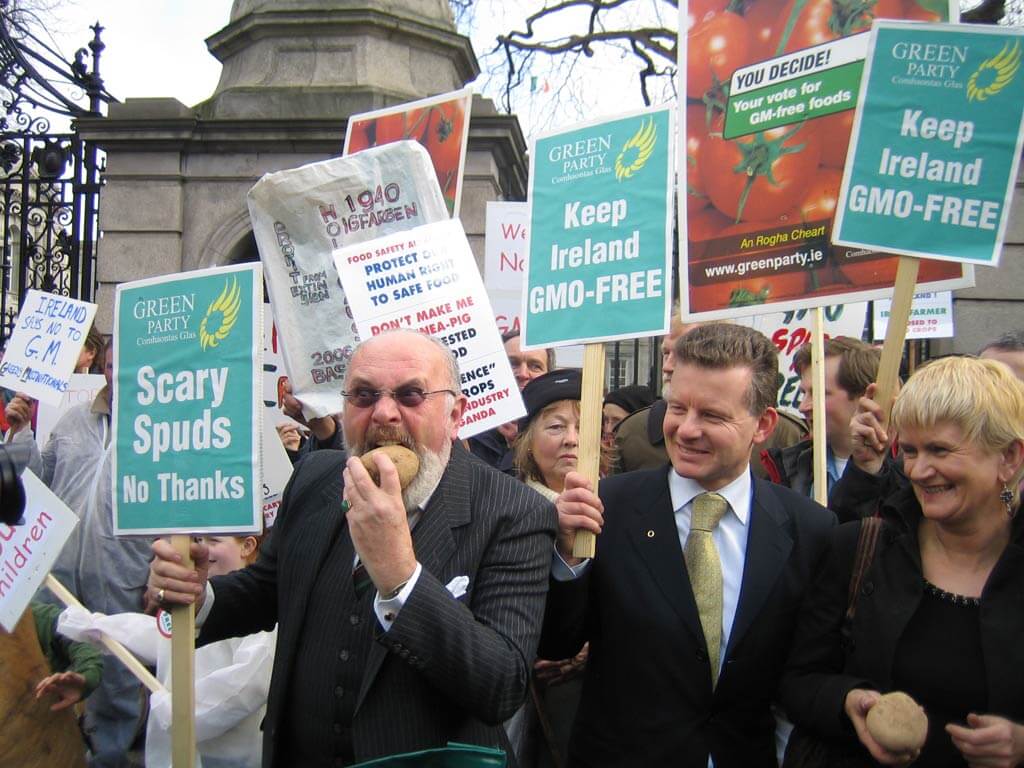
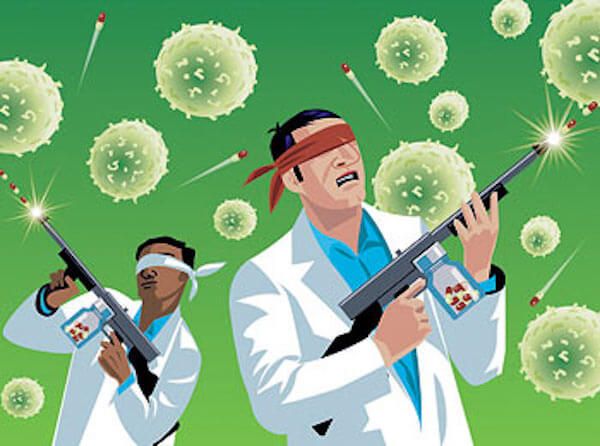
The USDA just ended their public comment period on their proposed execution of the terrible Federal GMO labeling law passed in 2016. The public comments reflect the mess this law is, and why it is a bad idea.
…
What do people really want to know about their food? They want to know that it is safe to eat. The [USDA’s] label will give them precisely zero information about this. All GMOs currently on the market have been demonstrated to be both safe and essentially equivalent to their non-GMO counterparts. Further, foods which are not [bioengineered] (to use the new term invented by the USDA) may be harmful. They may contain allergens, contaminants, or naturally-occurring toxins.
…
If the label gives consumers no actual information that they want, what is the purpose of mandatory labeling? That is quite clear – the purpose is to create a false dichotomy, an artificial category of food that can be demonized. Consumers are then handed a list of false fears and concerns, and they are all attached to the demonized category. The push for labeling is to help with this demonization…The apparent purpose of all of this is to promote a competing brand, organic.
When Monsanto first tried to introduce GMO seeds into Europe there was a backlash by the Green parties and their political allies, who feared that American agro-business was about to take over their food supply. Thus began a massive campaign not against the true target, Monsanto and the large agro-businesses, but rather against the surrogate target, GMOs. This has had disastrous consequences for one of the most promising technologies ever developed for improving food supplies.
…
I will use Golden Rice as a clear example of the costs of these shortsighted policies. Millions of children have died or suffered developmental impairment because of a lack of Vitamin A in their diet. Golden Rice could reverse this, but has become a target of the Green parties because it is a GMO. This is foolish and dangerous. How many more children must die before this is considered a crime against humanity?
[Editor’s note: In 2016 Sir Richard Roberts spearheaded a campaign of 133 Nobel Laureates to counter Greenpeace’s inaccurate claims about the nutritional benefits of golden rice, a genetically engineered crop designed to treat vitamin A deficiency in southeast Asia. Greenpeace maintains that there is no evidence to suggest that golden rice is a solution to fight malnutrition. In the video below, Roberts presents his case in favor of golden rice, and GMOs more broadly, to an audience of undergraduates, PhD students, and post-doc researchers from all over the world at the 68th Lindau Nobel Laureate Meetings in Germany.]
Depression is more common among autistic people than it is among the general population, based on both clinical experience and research evidence. Some researchers argue that it is actually the most common mental-health condition in autistic people.
…
When screening for depression, clinicians typically use clinical interviews or questionnaires validated in the general population. The tools reflect criteria outlined in manuals such as the “Diagnostic and Statistical Manual of Mental Disorders” (DSM-5) or the “International Classification of Diseases” (ICD-10).
However, growing evidence indicates that mental-health difficulties such as anxiety and depression may take a different form in autistic people than they do in other people.
…
Autistic adults have reported that their low moods are often accompanied by increased or decreased responses to sounds and other sensory stimuli, or by a change in repetitive behaviors. Traditional depression measures would not pick up on these signs. As a result, depression may be poorly recognized at the individual level and underestimated at the group level.
We propose that researchers work toward establishing a clear picture of the ways in which depression presents in autistic people. This might involve the use of statistical methods and direct consultations to explore how well the items in existing depression measures work in autistic people.
Who’s a good dog? The very first dogs, apparently, as a new genetic study reveals the sequence of events, begun thousands of years ago, that morphed wild wolves into (eventually) couchwarmers and ball catchers.
…
So far we know that Eurasian gray wolves were domesticated into dogs more than 10,000 years ago, and possibly as early as 40,000 years ago. But the big questions — how, why and exactly where — remain open to debate. A leading theory about how this happened is that wolves were selected for specific behavioral traits which, over time, led to changes in physical traits as well. And new research out today [June 27] appears to both confirm that hypothesis and explain why.
…
Dogs, [like] most other domesticated animals, exhibit a suite of traits — both physical and behavioral — generally called domestication syndrome…In the past few years, geneticists and evolutionary biologists have focused on neural crest cells (NCCs) as the catalysts for domestication syndrome.
…
The range of activities that NCCs do is enormous: the adrenal and pituitary systems, which are involved in aggression, fear and other behaviors, are derived from NCCs, but these cells are also involved in regulating physical traits such as pigmentation of skin and hair.
…
[Some] believe wolves self-domesticated by following the humans in search of edible scraps. Truth be told, we’ll probably never know how wolves became the first dogs.
China is facing a number of growing pains, but one in particular has proved more taxing than most: How can China feed its rapidly growing population as the land suitable for cultivation disappears?
The country’s agriculture industry has long been rife with inefficiency, but now the government is doing something about it, ploughing billions into agricultural technology, or AgTech, as a means of maximising resources –and a raft of private-sector companies are following this lead…And if China, the world’s biggest agricultural producer, can manage to produce more with less, they can help teach the rest of the planet how to feed itself long into the future.
One of the most recent developments in the AgTech field came earlier this month, when China’s answer to Amazon, Alibaba, launched the ‘ET Agricultural Brain’ –a digital tool that…lets farmers digitally record information about their yields in order to better leverage the entire production cycle, raising efficiency and capacity.
…
[T]he government is also supporting new automation tools for the agriculture sector. This month, Beijing launched a seven-year autonomous agriculture pilot programme in Jiangsu Province to test…unmanned combine harvesters or robotic tractors…[T]he initiative aims to turn tasks that were once done by hand or with heavy machinery – such as pesticide application or irrigation – into a seamless, automated process.
Like AI-driven farming technology, automated agriculture could help…improve efficiency, raise yields, and…it will also help make these operations more sustainable.
Read full, original article: China Is Spearheading the Future of Agriculture
A majority of patients who receive CAR-T cell therapy react [with] varying degrees of severity. Those same T cells that are outfitted to attack the cancer can send the immune system into overdrive by instigating a surge of proteins called cytokines into the bloodstream, triggering inflammation. Cytokine release syndrome, as it’s called, can cause high fevers, make patients’ hearts race out of control and send blood pressure plummeting.
…
These side effects are one reason why both therapies are approved for only a narrow range of patients.
…
Many oncologists are convinced, however, that someday CAR-T cells could be used on a much wider group of patients and for a broader spectrum of cancers. Researchers are designing new forms of the treatment, changing the way that patients’ T cells are engineered to make the therapy less risky. Scientists are installing safety switches that can turn off CAR-T cells on command and designing T cells that activate only under certain conditions. Others are adding features that help the T cells more specifically target cancer cells but ignore healthy cells, or reduce collateral damage from T cell–boosting drugs.
…
David Maloney, a physician and CAR-T cell researcher at the Fred Hutchinson Cancer Research Center in Seattle [says that] CAR-T cell technology is rapidly improving, and “our job is to do this safely and make it even more effective.”
The International Service for the Acquisition of Agri-biotech Applications (ISAAA) and PG Economics Ltd. released new studies highlighting the continued social, environmental and economic benefits of the global adoption of biotechnology in agriculture.
…
Biotech crops offer enormous benefits to the environment, health of humans and animals and contributions to the improvement of socioeconomic conditions of farmers and the public,” ISAAA chair of the board Paul S. Teng said. “The recent production of next-generation biotech crops – including apples and potatoes that are not likely to spoil or become damaged…combined with the commercialization approval for an insect-resistant sugarcane – provides more diverse offerings to consumers and food producers.”
…
The ISAAA report shows that the global biotech crop area increased in 2017 by 3%, or 4.7 million hectares. This increase is due primarily to greater profitability stemming from higher commodity prices, increased market demand both domestically and internationally and the presence of available seed technologies…In fact, developing countries now account for 53% of the global biotech area planted.
…
From 1996 to 2016, biotech crops provided $186.1 billion in economic gains to some 17 million farmers, many of whom are female, smallholder farmers solely responsible for the livelihood of their families and communities, PG Economics reported.
…
The PG Economics study also noted that great strides have already been made to reduce the footprint of agriculture and in mitigating and adapting to climate change. The latest study highlighted how biotech use in agriculture continues to contribute to reducing greenhouse gas emissions.
Editor’s note: both studies are available online.
Graham Brookes & Peter Barfoot(2018)Farm income and production impacts of using GM crop technology 1996–2016,GM Crops & Food,DOI: 10.1080/21645698.2018.1464866
Graham Brookes & Peter Barfoot(2018)Environmental impacts of genetically modified (GM) Crop use 1996–2016: Impacts on pesticide use and carbon emissions,GM Crops & Food,DOI: 10.1080/21645698.2018.1476792
I think of stories I’ve been told about my grandmother in 1945 Japan.
…
It feels plausible, and poetic, to think that the horrors she endured, the courage she summoned in the face of these challenges while protecting my aunt and uncle, were passed onto my father when he was born, and then to me, becoming “seared” into my own being at a kind of molecular level, as Carmen Maria Machado alludes to in her haunting short story, “A Brief and Fearful Star.” My grit may be linked to my grandmother’s experiences, or my angst.
It’s this kind of psychoanalytical thinking that makes a nascent, uneven, and controversial scientific field known as epigenetic inheritance so alluring.
…
Early research, such as studies suggesting the existence of epigenetic imprints of trauma in the descendants of Holocaust survivors and famine victims, have already gripped the public with questions and possibilities. Could certain epigenetic “memories” of slavery, genocide, poverty, or abuse be inherited too?
…
Machado’s story thematically unwinds these ideas in a way that science, so far, cannot. Memories lived by a mother reverberate within her daughter’s body, even as they remain unknowable to her. “I know it feels like we are the first people on this land,” Machado’s protagonist daughter tells the reader, echoing these ideas, “but we have been preceded by monsters and men alike.”
Civilians often clump the alternative meat companies and labs together in some kind of big meatless meatball, but, just like different kinds of self-driving car systems, they’re quite distinct…I see six levels of cellular agriculture.
…
Level 0: Just Be Vegan
Some plants…taste great just the way they are.
Level 1: Go Alternative
This kind of protein substitute is a meat alternative—a plant-based protein that starts to mimic the experience of eating meat. Veggie burgers fall into this category.
Level 3: Post-Vegan
Foods at this level are made of plant-based ingredients combined with cultured animal cells (as opposed to the products of bacterial fermentation). In other words, cells as ingredient, plants for mass.
Level 4: That’s a Spicy Meatball
Level 4 alternatives are pure cultured animal cells…most of the mass here is animal cells.
Level 5: Tastes Like Chicken
Now we get something actually like a chicken thigh or T-bone steak…It is very much the goal of the alternative meat effort, and no one has achieved it yet.
Level 6: ZOMG What Is This?
Tasty fake meat is exciting, but not nearly as exciting as the idea of a completely new food system with a diversity of inputs and completely new outputs…in other words, instead of just trying to recreate meat, scientists develop completely new ingredients that are actually “post-meat.”
Historically, bacteria, parasites, and viruses have been considered dangerous because they spread infectious diseases. But scientists have started to try to harness pathogens for beneficial purposes. Researchers have discovered ways bacteria in our gut help us digest food, and are even trying to develop certain bacteria and parasites as medicines for a range of disorders.
But unlike bacteria and parasites, viruses aren’t actually living cells. They must infect and exploit a living cell to stay alive and reproduce, so it’s hard to imagine how to turn them from foe to friend. But recently, researchers from Umeå University in Sweden identified a virus that is very choosy about what types of cells it invades. As it turns out, it prefers cancer cells.
Adenovirus
It’s an adenovirus, which are a common group of viruses composed of a clump of DNA encased in a protein coat. Decorating the coat are fiber proteins that the virus uses to attach to specific molecules on its cellular target. Once attached, the host cell ingests the virus and ruptures its protein coat, expelling the viral DNA inside the cell. The viral DNA then supplants the cell’s previous genetic program, instructing it to manufacture more viruses. Eventually, these cause the bulging infected cell to burst, unleashing freshly-minted adenoviruses that seek out other cells and spread the infection.
Adenoviruses at large
What makes this particular adenovirus, called HAdV-52, special is its two distinct fiber proteins. Most adenoviruses have one type of fiber that recognizes protein receptors found on many cells throughout the body. As a result, they can infect cells relatively indiscriminately. But HAdV-52 also has a second, shorter fiber that doesn’t bind a protein at all. In 2015, the Swedish researchers reported that this second fiber binds to sialic acid, a type of carbohydrate that adorns many cell surface proteins.
Many forms of sialic acid are found throughout our cells, but certain forms are particularly rare. Like other carbohydrates, sialic acid exists in polymer chains of varying length and shape. The shape of these chains is important: Consider starch and cellulose, two common polysaccharides of glucose. Our bodies can easily break down starch into useful glucose units our muscles can use, but cellulose passes through our digestive tracts unaltered. The critical difference between them lies in which linkages are recognized by our proteins.
Mis- and disinformation are distorting science and public policy. Subscribe to our Daily and Weekly Digests for incisive coverage of ‘disruptive’ innovations in AI, agricultural biotechnology, food, chemicals, nuclear energy, vaccines, and other disruptive innovations.
The researchers wondered if HAdV-52′s short fiber could likewise discriminate between different forms of sialic acid on cell membranes – in their 2018 study, they took the short fiber protein and exposed it to a synthetic array of different forms of sialic acid in order to identify which form it prefers. They found the strongest interaction with a single unique linkage of five or more sugar units called polysialic acid (polySia).
During human brain development, polySia is abundant in neural cells, and after maturation, it’s only found in regions undergoing the formation of new synapses. But it turns out that some lung and brain tumors also express polySia – and its detection is associated with a poor prognosis. To confirm the finding from the array in a cellular context, the researchers exposed the short fiber protein to two different cell lines from a single cancer patient. Both cell lines had sialic acid on their membranes, but only one had polySia. The cells which had polySia bound to the short fiber more than five times more strongly than the cells lacking polySia.
An electrostatic whip
PolySia is like an electrostatic whip that can disrupt nearby membrane proteins, such as those involved with anchoring the cell in place. Cells throw negatively charged polySia on their membranes for a specific reason: to detach from a rigid matrix of cells and migrate somewhere else. This explains polySia’s function in regions of the brain that are rearranging to form new neural architecture, as well as in metastatic cancer cells that are detaching from their primary tissue. Ironically, HAdV-52’s short fiber forms a tight interaction with polySia, a molecule that repulses pretty much everything else.
When the researchers examined how the virus’ short fiber and polySia interacted using a technique called nuclear magnetic resonance, they found the explanation for why HAdV-52 prefers this form of the sugar. Only the last sialic acid unit fits into a binding pocket on the short fiber, while the other units in the chain stick out along a positively-charged surface of the viral protein. Molecular modeling simulations suggest the other sialic acid units form electrostatic interactions with this surface, stabilizing the link.
Virologists appreciate the new atomic-level understanding of HAdV-52’s affinity for polySia, but almost everyone else cares more about its applications: can it be repurposed as a cancer-fighting tool known as an oncolytic virus? A tumor-targeting virus has already been FDA-approved for the treatment of melanoma, but it required genetic manipulation of the virus’s fiber protein to direct it at tumor cells. In contrast, HAdV-52 could potentially be used as is, although further research is needed to prove its safety and efficacy in lab animals before being tested as a human cancer treatment.
Other recent advances in cancer treatment have similarly used technologies that exploit particular features of cancer tissue. For instance, the recently-approved immunotherapy CAR-T is proving to be transformative for patients with aggressive blood cancers. But solid tumors pose larger obstacles for CAR-T, in part because they cloak themselves in sugar molecules that shield them from drugs and immune cells. Therapies based on HAdV-52 could turn those sugars against the cancer – a potential game changer for treating the kinds of cancer with the worst outlooks.
As cancer treatment paradigms evolve from small molecule drugs to more exotic processes, keep an eye out for this kind of cancer-fighting virus.
Kevin Pels is a science writer with a PhD in chemical biology from the The Scripps Research Institute. Follow him on Twitter @kcpels
The Minister for Communications, Climate Action and Environment, Denis Naughten, has secured Cabinet approval to enable Ireland to prohibit or restrict the cultivation of Genetically Modified Organisms (GMOs) in Ireland.
The decision was announced [Tuesday, July 10], after Minister Naughten proposed the EU directive to [the] Cabinet.
Announcing the Cabinet’s decision [Tuesday, July 10], Minister Naughten said:
This is a very significant development; I believe it is critically important that Ireland takes whatever steps are necessary to maintain our GMO cultivation-free status, which is a key element of our international reputation as a green, sustainable food producer.
…
Commenting on business sectors where the use of GMOs is vitally important, the minister said:
It is important to note that the transposition affects only the cultivation of ‘live’ GMOs in this country. It has no implications for other sectors of our economy where GMO products play a vital role, such as in the bio-technology and pharmaceutical sectors and in food and feed.
When social scientists examined messaging in new media around GE crops, a few trends became apparent. Surprising evidence emerged that showed that the Russian Federation is actively participating in a campaign, here in the USA, to malign GE crops with a goal of influencing public opinion. In this week’s episode Dr. Shawn Dorius from Iowa State University talks about the recent findings. He describes a literal propaganda campaign designed for English-speaking countries. The apparent goal is to erode public trust in American agriculture, and influence opinion away from technology that Russia does not have. Hosted by Paul Vincelli (@pvincell).
In Darwinian evolution, organisms that are well-adapted to their environments flourish and crowd out those that aren’t. My colleagues and I believe that much the same thing happens with cancer in a process we call adaptive oncogenesis.
A key component of this theory is that normal, healthy cells are best adapted to their normal, healthy environments. They have a competitive advantage over cells that develop cancer-causing mutations.
…
Anti-cancer therapies that damage healthy tissues, like chemotherapy and radiation therapy, can promote the emergence of more aggressive cancer cells and even new types of cancer.
…
Adaptive oncogenesis attributes that in large part to the tissue damage induced by what is supposed to be a beneficial therapy. This creates conditions that favor the selection of cancer cells that are both resistant to the therapy and better adapted to the therapy-damaged environment.
…
In the cancer ward, the instinct has long been to eliminate the enemy; success has typically been measured as the destruction of a cancer. But that doesn’t always yield a long-term solution, in good measure due to the failure to properly consider the impact of therapy on the whole body, which can be left heavily damaged. Controlling cancer requires thoughtful manipulation to direct cellular evolutionary trajectories, not brute force.
Long before Neanderthals or Homo erectus wandered the Earth, there lived an early human species called Australopithecus afarensis. Most famously represented by the specimen known as Lucy, these ancient hominins lived around 3 million years ago in Eastern Africa and survived for more than 900,000 years. Lucy looks quite different to modern humans, but a new study on the cranium of one of her kin suggests that the two species are more alike than we realized, suggesting it’s time to reconsider our evolutionary tree.
In a paper published in the May edition of the Journal of Human Evolution, a team of South African scientists re-evaluate a four-million-year old Australopithecus skull that was originally found in 1995 in the Sterkfontein Caves, a paleoanthropological treasure trove north-west of Johannesburg, South Africa.
…with a new technology called X-ray microtomography, the team was able to take a very revealing look at the ancient skull.
…
Sure enough, their analysis affirmed that the specimen met the taxonomic qualifications to be an Australopithecus and, importantly, demonstrated that this ancient hominin had a cranium that was thick and composed of spongy (or cancellous) bone — much like living humans. The presence of spongy bone indicates that the blood flow in the brain of Australopithecus may have been comparable to ours.
A genetically modified polio virus improved the longer-term survival of patients with a lethal type of brain tumor, according to the results of an early-stage clinical trial published [June 26].
Twenty-one percent of the patients treated with the virus — all with disease that had recurred — were alive after three years, compared with just 4 percent of those who had undergone standard chemotherapy.
…
Glioblastoma, a difficult-to-treat disease that is the most common of all malignant brain tumors, can cause seizures, headaches, blurred vision and confusion. Even with aggressive treatment, people who are newly diagnosed typically survive less than 20 months, while those with a recurrence usually die within a year.
Duke researchers opened the Phase 1 trial in 2012 to test the safety of the modified-virus treatment and try to determine the right dose. After surgeons implanted a catheter in each patient’s brain, a small amount of a genetically modified form of the polio virus was infused directly into the tumor. The virus is designed to target the tumor cells and trigger a response by the immune system.
…
The polio treatment is one of several “oncolytic viruses” being investigated as anti-cancer agents. While researchers have long viewed such viruses as potential tools for directly killing cancer, they now suspect that the viruses might be more effective at marshaling the body’s immune system against malignancies.
Experts believe that multiple factors must be at play in the bees’ plight. The main suspects are referred to as the four Ps: parasites, poor nutrition, pathogens and pesticides. The parasites include tiny Varroa mites that feed on bees’ body fluids. The Asia natives have spread through international trade in bees and beekeeping equipment, and now afflict hives in every beekeeping country outside Australia, which has held them off through strict controls. Poor nutrition reflects a widespread loss of flowers in rural landscapes because of the rise of industrial farming practices over the past 60 years; varied farms have given way to vast monocultures that are efficient for growing crops but only provide bee-sustaining flowers for a few weeks a year.
The list of pathogens carried by bees includes fungal infections and wing-deforming viruses, many of which get moved around with international trade. Pesticides have gotten the most attention of the four Ps, and the European Union cited bee concerns in their recent ban of a popular class known as neonicotinoids—but with hundreds of chemicals on the market, it’s nearly impossible to tease out individual effects. Products that pass “bee safe” tests in a laboratory can become unsafe when mixed with the fungicides or herbicides often sprayed on the same fields.
This essay is adapted from Thor Hanson’s book ‘Buzz: The Nature and Necessity of Bees,” released on July 10th.
For some farmers and weed scientists, puckered leaves on certain crops and other plants have become a familiar summertime sight — one that can suggest vapor from the weedkiller dicamba has moved through the air.
What many now refer to as “the D-word” is once again a topic of conversation…A question at the heart of the debate is whether dicamba — a decades-old chemical that has a tendency to evaporate, or volatize, and move off-target — can coexist on a broad scale with plants that are not genetically modified to tolerate it, without inflicting harm.
…
The debate has grown steadily since 2015, when a new variety of cotton kicked off Monsanto’s rollout of its “Xtend” seeds engineered to withstand dicamba — a herbicide lauded by the company and many farmers as a much-needed tool in the fight against Roundup-resistant “superweeds.” But new, less-volatile forms of dicamba spray had not yet been approved for use with the Xtend crops, creating a situation where some farmers are accused of illegally using older varieties of the chemical — a choice that…left surrounding farmers vulnerable to crop damage if volatization or physical drift occurred.
…
The University of Missouri Division of Plant Sciences…says that as of mid-June, estimated damage affects more than 383,000 acres of soybeans across at least 10 states, including Missouri and Illinois. Trees, vegetables and specialty crops are also showing signs of injury this year.
The ability to detect life on distant worlds still eludes us, but a new project coordinated by NASA now takes us a significant step closer to achieving that goal.
Six new papers published in the science journal Astrobiology are providing a launching point for scientists on the hunt for signs of life on planets outside our Solar System. The new papers outline various ways in which extraterrestrial “biosignatures” could be detected using current and future technologies, and what scientists should be looking for in the data. Encouragingly, the scientists say it’s entirely possible that we’ll detect atmospheric biosignatures of potentially habitable planets by the year 2030.
…
This project [is] called Nexus for Exoplanet Systems Science, or NExSS.
…
The point of the project and the six new papers is to provide a comprehensive overview of what we know so far about life and how it gets started in the Universe, as well as how we might be able to detect biosignatures from Earth using current and future technologies.
…
Scientists are finally formalizing the search for extraterrestrial life, while providing entry points for scientists from different fields to come together. The strategies proposed in these papers require rigorous due process and sound science, but not at the expense of allowing scientists to think creatively about what other kinds of life might exist elsewhere.
Our word for a diagram of the lines of descent—pedigree—is probably derived from the French pé de grue, or “crane’s foot,” evoking an image of a pencil-like leg ending in straight, splayed toes.
Yet linear thinking doesn’t begin to do heredity justice, and in his sprawling, magisterial new book, the science writer Carl Zimmer shows why. “She Has Her Mother’s Laugh: The Powers, Perversions, and Potential of Heredity” brims with rich stories and colorful actors—some sinister, some brilliant, some both—and delves into scientific research, history, and ideas made intimate through the author’s personal experiences. The result explodes any unitary idea of heredity.
…
Step by measured step, Zimmer walks us deep into the thickets of genetics and genomics, revealing complications and exceptions that challenge what we think we know about heredity.
…
Engineering the global genome could save millions of lives—or produce a chimeric hybrid of Gattaca and Jurassic Park. We could alter the gene pool of the future in ways we cannot yet even imagine, let alone understand. Zimmer is excited about the possibilities, but in a world where headlong innovation always trumps careful contemplation, he urges scientists and the public to learn from history. “We would do well,” he writes, “to look back at how the tools we’ve already invented have altered our ecological inheritance over the past ten thousand years.”