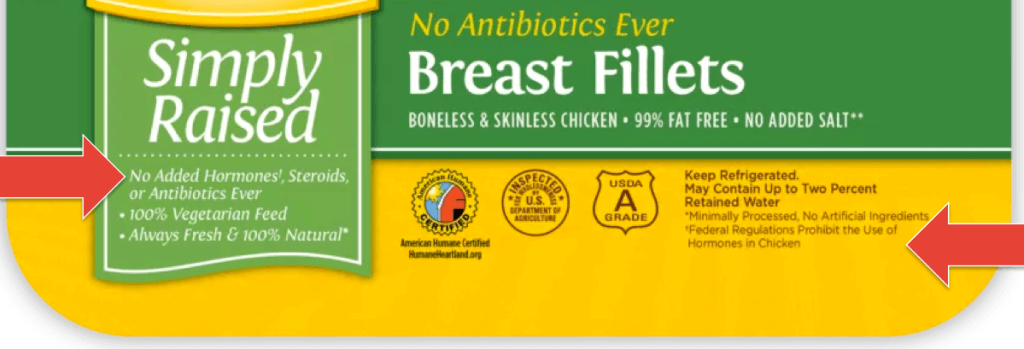
I live in a super tiny town, about 1,000 people with no stoplight in the whole county…Therefore, it may sound silly to the average city person, but I usually buy chicken breast at the gas station.
…
But I may have to start buying that grocery off brand since the kind carried at the gas station recently switched their labeling, marketing, and packaging to bombard consumers with misleading claims that I just can’t support and won’t purchase.
…
1: Non-GMO. GMO or GE grains allow farmers to be more sustainable by growing more crop on less land while using less pesticides, tillage, etc. Furthermore, everything we eat has been modified in some way, so the term “GMO” is somewhat scientifically meaningless. GMOs do great things for farmers and the planet though, so this is just a marketing ploy used to mislead and sell a product which is generally worse for the earth.
…
2: Raised with no antibiotics ever. OK, that’s admirable and commonplace nowadays. However, antibiotics can play a very important role in animal health and shouldn’t really be demonized. Would you withhold medicine from a sick pet or child? No, and we shouldn’t be cruel to livestock either.
…
Anyway, it’s a shame that I will no longer by this brand of chicken, because I do think it’s tasty. If only they focused on quality, price, flavor, etc. as opposed to inflammatory language.
The case of the unapproved genetically modified wheat plants showing up alongside an oil well access road in Alberta is baffling on many levels, but the reality of Japan halting Canadian wheat imports could not be more clear.
It is also clear that the rapid advance of genetic science will make obsolete the legal frameworks built up around the world over the past 30 years to regulate plant genetic research.
There is no legitimate evidence of health risks associated with GM crops, but in a abundance of caution associated with something new, governments around the world set up elaborate regulations controlling how and where genetic research on crops could be done and under what circumstances any approved GM crops could be sold and internationally traded
…
New gene editing methods, coupled with other technologies such as quantum computing and artificial intelligence, the pace of innovation could quicken even more, making it virtually impossible for regulation to keep up.
And so at some point the whole system that so tightly envelopes agricultural innovation might become unworkable, forcing a transition to a new system that still protects us against unreasonable risk but does not stop international trade because of something like finding a small patch of herbicide tolerant wheat plants in a ditch where they should not be.
Read full, original article: New technology will force rethink on GM regulations
A new, large-scale breast cancer study of women who had not yet reached menopause produced a surprising result: as body fat increased, their cancer risk decreased.
The finding runs directly counter to what we know about breast cancer risk in postmenopausal women, where the risk increases as a woman’s body mass index, or BMI, climbs.
But for younger women it was the opposite.
…
Dr. [Hazel] Nichols and her team collected and analyzed data from 19 different studies that encompassed nearly 760,000 women younger than age 55. Researchers determined an inverse weight-risk relationship for those in this group.
…
[Y]ounger women should not take these findings as encouragement to gain weight as a protective measure.
“This study is not a reason to try to gain weight to prevent breast cancer,” she stated. “Heavier women have a lower overall risk of breast cancer before menopause, but there are a lot of other benefits to managing a healthy weight that should be considered. What it does do is help us to try to understand what contributes to breast cancer risk in younger women.”
Theorizing about the connection, Dr. Nichols says several factors could be contributing to the link: breast density, or hormone differences – including estrogen – where premenopausal levels are different from those measured after menopause occurs.
Scientists around the world are increasingly turning to the promise of CRISPR gene editing to tackle any number of problems facing humanity.
These efforts may have started in the US, Europe and Asia, but they have since spread to African nations. South African scientists are exploring the technology’s use in human health, while Ugandan researchers are focused on plant breeding efforts, particularly with cassava in a bid to overcome the deadly Cassava Brown Streak Virus.
As in other nations, these efforts are accompanied by debates among politicians and regulators over how to the regulate the research and any products that might be developed for the market.
Regulatory dilemma
The use of CRISPR-Cas9 editing in humans has drawn considerable interest since a Chinese research group, led by Junjiu Huang at Sun Yat-sen University in Guangzhou, used it to eliminate the human globulin gene from the germline of a non-viable human embryo. The promise of using human gene editing to cure diseases and other health problems has sparked research efforts around the world.
Not surprisingly, those efforts have raised ethical concerns, particularly when the research goes beyond somatic changes – those that cannot be passed along to offspring.
Joanne van Harmelen, a South African patent attorney, examined the nation’s handling of this issue in a May 2017 article:
The biggest, but not the only, concerns over the use of this technology as a therapy are the possible off-target mutations that might arise during the use of the editing method, which would then be passed on to the patient’s progeny.
These issues are particularly important in cases of germline editing, in which the modified traits can be transferred to offspring and passed on to subsequent generations. These edits also raise legal issues, according to van Harmelen:
The National Health Act prohibits the manipulation of genetic material of human gametes, zygotes or embryos and activities such as nuclear transfer or embryo splitting for the purpose of the reproductive cloning of a human being. The minister of health may permit research on stem cells and zygotes which are younger than 14 days old, on a written application for research purposes, so long as the applicant undertakes to document the research and the donor’s prior written consent is obtained.
There is certainly debate among the scientific community over such editing, with some scientists calling for a moratorium on human gene editing and others offering a cautious approval in some instances. Some argue that we should not limit ourselves when we have the potential to cure some of the diseases that plague us.
Mis- and disinformation are distorting science and public policy. Subscribe to our Daily and Weekly Digests for incisive coverage of ‘disruptive’ innovations in AI, agricultural biotechnology, food, chemicals, nuclear energy, vaccines, and other disruptive innovations.
In an article published by Cletus Tandoh Andoh, from the Philosophy Department at the University of Yaounde, in the International Journal of Health Economics and Policy, he states that the use of Crisp-Cas9 technology for germline modification of human embryos is creating challenges for existing legal frameworks and for responsible use in the world including Africa.
He argues that genome editing and the technology are not easily accommodated by current laws within individual jurisdictions nor under wide regulatory instruments and under international law.
He notes that today, many countries in the Western world are addressing the ethical challenges and dilemmas in through regulation, guidelines and national laws. But many African nations need to do more, he said.
Andoh argues that genome editing is plagued by poor regulation, laws, policies and guidelines for scientific and ethical research, as well as the absence of safeguards to protect the dignity and rights of vulnerable populations. From his paper:
The absence of robust oversight and ethical control mechanisms to prevent technologies from being misused is a serious challenge for Africans to develop regulatory safeguards. There is still a huge lack of study to establish evidence if gene editing technologies would be used to foster the eugenic agenda of the gene rich of the West over the gene poor of Africa, or promote the common good. Work further identifies the need for African governments to formulate new guidelines for genome editing technologies and build appropriate regulatory structures to identify, anticipate and respond to public concerns on embryo gene editing for reproduction.
While gene editing opens up new avenues of promising research, he said the tools also give critics reason to worry about things like designer babies, invasive mutants and bio-weapons.
Without guidelines on the ethics of gene editing, scientists are now crossing a controversial legal and ethical line to tailor-make a human being.
To him the consensus holds that genetic-engineering tools may be applied, with appropriate care and safeguards, to treat an individual’s medical condition, but should not be used to modify gametes or early embryos and so manipulate the characteristics of future children.
Dr John Odiopi at a GM cassava field trial and green house at the National Crop Resources Research Institute in Kampala, Uganda. Image credit: Lominda Afedraru
Plant breeding in Uganda
Dr. John Odipio is an agricultural scientist from the National Crop Resources Research Institute currently pursuing his PHD in gene editing while working at the Donald Danforth Plant Science Center in St Louis, Mo. He sees in a gene editing a way to address any challenge in plant breeding.
His own research involves the study of cassava and the brown streak virus threatening farms in Uganda. He is using CRISPR to study the genes in cassava responsible for a variety of traits, including those that help resist pests and diseases.
In his preliminary study, he developed a process that he can later use in the laboratory in Uganda. This is because most scientists carry out research whose process can be executed in laboratories in Europe and USA. He explained:
I obtained a gene in cassava and edited it to cause change in the color of cassava leaves. For CRIPSR to work you need an enzyme called Cas9 and guided RNA. I obtained RNA within cassava to perform the bioinformatics process. Then I combined Cas9 with RNA to clone the edited cassava for growth. This is only possible after introducing it into a cell at the laboratory. From a single cell I have cloned cassava which is growing into a whole plant but has changed color to whitish. This way I am able to know that the editing process has worked.
Dr. Odipio contends that previous methods used in genetic modification to solve the challenge of CBSV were random, but gene editing is specific. He is now exploring way to use CRISPR to help the plants resist the disease or to help fight off the flies that help spread the virus from plant to plant.
He is optimistic that African countries will borrow from US policies to allow a friendlier regulatory environment for agriculture products.
Lominda Afedraru is a freelance science journalist in Uganda who specializes in agriculture, health, environment, climate change and marine science. Follow her on the Daily Monitor web site www.monitor.co.ug, Facebook or Twitter @lominda25
Kenyan Farmer: On Cusp of a Biotech Revolution, Africa Faces Resistance from Europe and Anti-GMO Activists
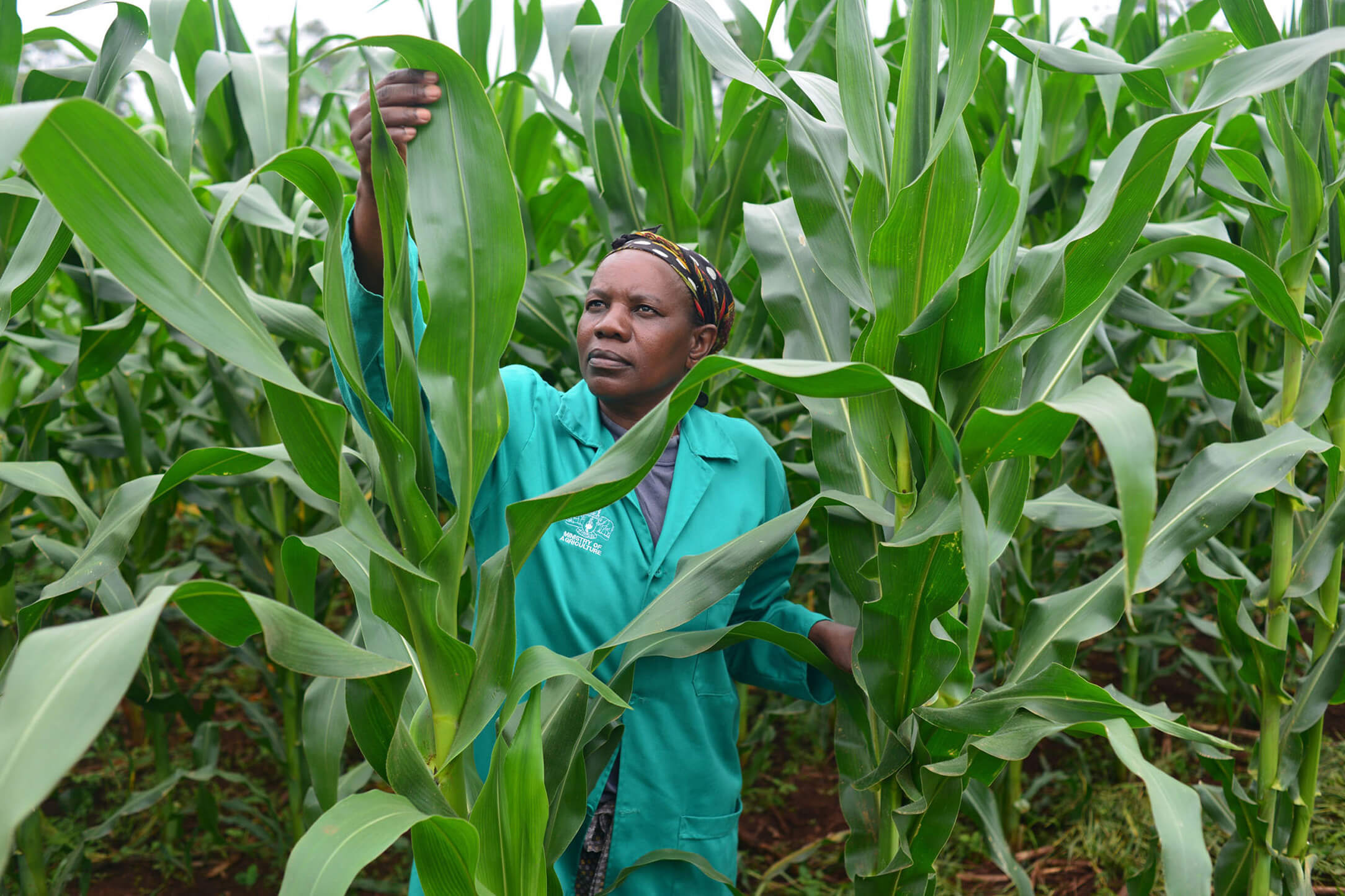
Gilbert arap Bor,Small-Scale Farmer in Kenya, University Lecturer, Kleckner Award Winner | July 11, 2018
Highlights:
Kenya and much of Africa have been denied the tools of modern crop technology available in more industrialized countries mostly because of political opposition, often linked to European activists
GMOs developed or in the pipeline to contain diseases like armyworm and climate change related challenges such as drought and flooding, but are stalled
For Africa to fulfill its potential, feed its fast-growing populations, and perhaps even emerge as a global bread basket, crop biotechnology is essential
Farmers have good years and bad years. Here in Kenya, however, the good years never seemed quite as good as they could have been and the bad years have felt worse than necessary.
Why?
It’s because we can’t take advantage of tools that farmers in much of the developed world take for granted: genetically engineered crops, often referred to as GMOs. In many countries, they’ve transformed farming, helping farmers contend with weeds, pests and drought. In my country, Kenya, we’re still languishing in the 20thcentury, waiting for the arrival of this 21st-century technology.
We may in fact be on the brink of embracing innovative technology for agriculture, but the long and winding road to this welcome destination has been full of frustration and false starts. We’ve been at it for an entire generation. Africa already faces plenty of problems: poverty, climate change, a poor infrastructure, political instability, corruption and more. So the failure of Kenya and most other African nations to take up GMOs is especially painful because this problem is almost entirely self-imposed.
Like 80 percent of Kenya’s farmers, I’m a small-scale producer. My farm is near the city of Eldoret in Uasin Gishu County in the North Rift part of the country, I grow maize on five of my 25 acres. Another three acres are improved pasture. Vegetables, trees, free-range grazing, livestock barns, and homestead take up the rest of my farm.
I enjoy farming because it contributes to my family’s nutritional and economic security. Throughout the year, we can take carbohydrates, protein and vitamins from our own land. We also sell a portion of our crops as well as milk and eggs from our livestock. This is not my only job, but it’s a big part of my life. Farming provides me with a sense of satisfaction that few other professions can match.
Farming also poses challenges. That was especially true in 2017, the year when everything went wrong. First, after planting in the final week of March, a dry spell struck our region. My crops failed to germinate. I had to replant in the middle of April. Yet our troubles persisted, and extended into 2018 Experts say that Kenya suffered its worst drought in six decades. It was certainly the worst of my lifetime.
Next came the pests. The armyworms—moth larvae that attack with military ferocity—feasted on my maize throughout the summer. I tried to control these bugs with insecticides supplied by my county government, but the numbers of armyworms overwhelmed me. Because of their relentless assault, I lost more than half of my crop. This was a national infestation: Reports are that the armyworms destroyed more than 200,000 acres of crops.
So 2017 already was a very bad year for farming. Then things went from bad to worse. In September and October, pounding rains washed out more of my crops. At harvest time, almost nothing was left—and what little was left was badly damaged.
When Kenya’s breadbasket doesn’t produce, people go hungry. They hurt in other ways as well. I’m convinced that my country’s recent turmoil, including corruption and cartels that frustrated farmers’ marketing efforts will in due course undermine our food insecurity situation.
President Kenyatta’s Big 4 Agenda has food security as one of its four pillars. Under this pillar, the government envisions a gradual increase in the acreage under maize, the country’s staple food. The plan looks towards increases in annual crop harvested between now and 2022 to meet the demand from a rising population.
Did things have to be this way?
I won’t claim that innovative crop technology tools would have prevented the catastrophe of 2017. I doubt that technology ever will trump Mother Nature. But now, we are in the middle of the 2018 production season and the notorious armyworm is back with a vengeance. Acres upon acres of maize plantations have again been devastated.
Yet GMOs might have made things a little better on my farm and for my country, and could yet in the future. If Kenya had adopted GMO technologies when so much of the rest of the world was taking them up, we probably could have cut our losses. Crops with drought-resistant traits might have survived the dry spell in the spring. And crops with pest resistance might yet beat back the summer armyworms. Crops with flood resistance might have survived the drenching rains in the fall.
But we may never know because we haven’t tried, in large measure because of resistance from anti-GMO advocacy groups which have greatly influenced politicians who have the final say in such matters.
There’s a flip side to this as well: GMOs not only have the potential to make bad years a little less terrible, but also the power to turn good years into great ones, especially as we grapple with climate change and other problems.
Around the globe, farmers know this. They’ve planted billions of acres of GMO seeds and harvested billions of acres of GMO crops. For them, this technology is nothing special. It’s recognized as conventional agriculture on their farms. They have learned from first-hand experience that these crops are worth the effort.
Unfortunately, the same can’t be said for Africa. Among the 46 sub-Saharan nations, only three permit GMO crops: Burkina Faso, South Africa, and Sudan. This is a dismally small number.
Europe deserves some of the blame. Because Africa exports so many farm products to Europe, our governments have allowed European resistance to GMOs to dictate our own planting policies. For Europe, of course, GMO resistance is a luxury it can afford. Its wealthy nations might benefit from GMOs and the new gene-editing technology that will soon be here, but they don’t need them the way Africa needs them. Europeans might pay a little more than they must for their next meal, but at least they’ll eat. They don’t know food insecurity the way Africans know food insecurity.
But pointing a finger at Europe is not enough. Anti-GMO sentiment in Africa, often based on scientific illiteracy, had led to obscene choices. Much of the resistance traces to lobbying by anti-GMO advocacy groups, most with deep European connections. Zimbabwe and Zambia, pressured by anti-biotech NGOs, for example, refused to accept famine relief in the form of food that contains GMO ingredients. This ban on GMO imports sends an ugly message: Better dead than fed.
Much of the world sees Africa as backward—the home of the least developed countries on the planet. Global food production over the last couple of decades has increased, thanks in large part to innovative crop technology in the hands of many of the world’s farmers. In Africa, however, food production actually has declined.
Our countries should be breadbaskets. Instead, we look like basket cases.
The good news is that many African governments, including Kenya’s, are moving in the right direction, often pushed by farmers. They’re allowing field trials of Bt maize and cotton, with an eye toward permitting their commercialization in the next few years. If the trials go well, we could be able to access GMO cotton as soon as 2019 if not 2020, with maize soon to follow and hopefully, GMO cassava and bananas as well.
These innovations can’t arrive soon enough. We needed them a generation ago, a decade ago, and last year. If we must, we’ll wait a little longer. Yet with each new delay, African agriculture falls a little further behind.
It’s time for our continent to catch up, get off the brink, and accept the world’s best technologies for the sake of its farmers and consumers, and embrace a better future for everybody.
Gilbert arap Bor grows corn (maize), vegetables and dairy cows on a small-scale farm of 25 acres in Kapseret, near Eldoret, Kenya. He also lectures at the Catholic University of Eastern Africa, Eldoret campus. Dr. Bor is the 2011 Kleckner Award recipient and a member of the Global Farmer Network.
Global Farmer Network (GFN) is a non-profit advocacy group led by farmers from around the world who support free trade and farmers’ freedom to choose the tools, technologies and strategies they need to maximize productivity and profitability in a sustainable manner. Established in 2000, the Global Farmer Network is committed to inserting the worlds farmers voice in the global dialogue regarding food and nutritional security. The Global Farmer Network identifies, engages and supports strong farmer leaders from around the world who can work with others to innovate, encourage and lead as full stakeholders in the work that is being done to fill the world’s food and nutrition security gap in a sustainable manner.
The Genetic Literacy Project is a 501(c)(3) non profit dedicated to helping the public, journalists, policy makers and scientists better communicate the advances and ethical and technological challenges ushered in by the biotechnology and genetics revolution addressing both human genetics and food and farming. We are one of two websites overseen by the Science Literacy Project; our sister site, the Epigenetics Literacy Project, addresses the challenges surrounding emerging data-rich technologies.
In a recent Nature Sustainability paper, a team of scientists concluded that the Earth can sustain, at most, only 7 billion people at subsistence levels of consumption (and this June saw us at 7.6 billion). Achieving ‘high life satisfaction’ for everyone, however, would transgress the Earth’s biophysical boundaries, leading to ecological collapse.
…
In fact, we have been engineering our environments to more productively serve human needs for tens of millennia. … What the palaeoarcheological record strongly suggests is that carrying capacity is not fixed. It is many orders of magnitude greater than it was when we began our journey on this planet.
…
There is no particular reason to think that we won’t be able to continue to raise carrying capacity further. Nuclear and solar energy are both clearly capable of providing large quantities of energy for large numbers of people without producing much carbon emissions. Modern, intensive agricultural systems are similarly capable of meeting the dietary needs of many more people. A planet with a lot more chickens, corn and nuclear power might not be the idyll that many wish for, but it would clearly be one that would be capable of supporting a lot more people consuming a lot more stuff for a very long time
Opening statements began in federal court in San Francisco on [July 9] in the trial for the first of thousands of lawsuits against Monsanto alleging its weed killer product Roundup causes cancer.
The plaintiff’s opening argument focusing on choice — attorney Brent Wisner telling the jury Monsanto took away his client’s ability to choose by not disclosing the potential dangers of Roundup weed killer.
“If you don’t give someone a choice and somebody gets hurt or, God forbid, gets cancer, then I personally believe and I think you will as well that you should be responsible for the consequences of that,” Wisner said.
Lee Johnson worked for Benicia School District in 2012, becoming the integrative pest manager. Wisner says a large part of Johnson’s job was to spray Roundup — often 50 to 60 gallons at a time. After two years, Johnson developed lesions on his body — later diagnosed as Non-Hodgkins Lymphoma.
…
The defense says Johnson’s cancer developed long before he used Roundup.
“The scientific evidence is overwhelming that Glyphosate-based products do not cause cancer and did not cause Mr. Johnson’s cancer,” said Monsanto’s defense attorney, George Lombardi.
…
The single most relevant study, best study, study of human beings who, like Mr. Johnson, are licensed pesticide applicators concluded glyphosate is not associated with Non-Hodgkin’s lymphoma, Mr. Johnson’s cancer,” said Lombardi.
Researchers in the UK have developed the first ‘switchable’ gene drive system, potentially addressing fears that the use of gene drives to control malaria [carried by mosquitoes] or eliminate invasive species might run out of control and have devastating unintended consequences.
Gene drives work by…ensuring that virtually all offspring inherit the intended gene, spreading it rapidly through the entire target population.
…
The new study…published in the Nature journal Scientific Reports, demonstrates the effectiveness of a gene drive on-off switch delivered by the presence of a cheap and environmentally-friendly amino acid.
…
In other words, the gene drive will only work if [the amino acid] BOC is ingested by the target organism so that it is present in the cells. This would theoretically allow scientists to regulate a gene drive in the wild merely by adding or withdrawing the amino acid BOC from the environment.
…
However, campaigners against genetic engineering have warned of the “dangers of irretrievably releasing genocidal genes into the natural world” and called for a moratorium on gene drive development.
…
More research will be needed to demonstrate how deployable it might be at the scale needed to control a gene drive targeting a wide geographical area.
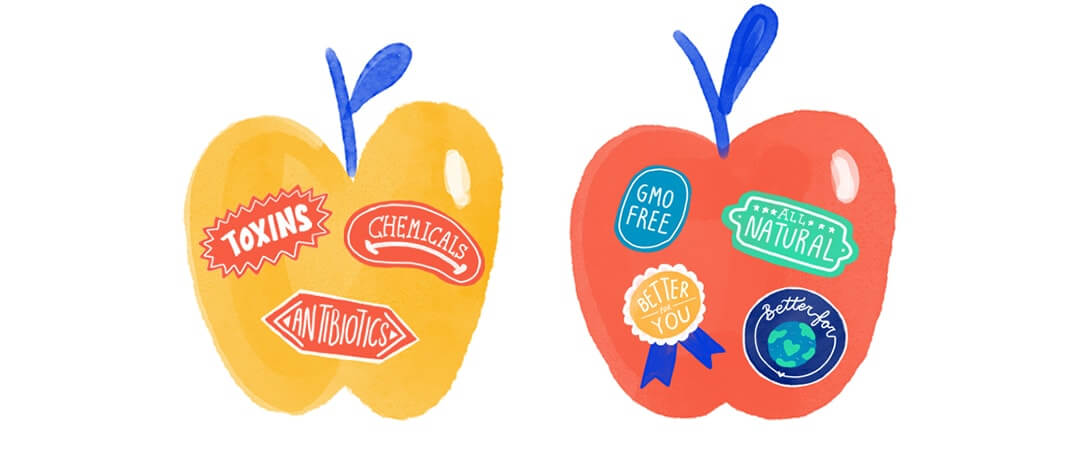
Labels on food are everywhere — organic, free range, no antibiotics, non-GMO, made with Genetic Engineering, etc. What do these mean and how do they relate to conservation on farm lands?
…
GMOS: Genetically Modified Organisms or GMOs are a fairly recent method for creating seeds that have very specific traits. With the advent of GMO crops, farmers have used far fewer pesticides including insecticides…Farmers use 20 to 24 ounces of product per acre. The rest is water and a few ounces of what farmers call “stickers‘ or crop oil that makes the product stick to plants to make pesticides do their job better.
…
NON-GMOs: All seeds before GMO development were non-GMO and many crops are still raised without that technology. This usually means more toxic herbicides and insecticides are used as needed, which is the biggest difference in using non-GMO seeds. It’s also a little harder, though not impossible, for farmers to use no till practices. There are more fuel and water used because of the extra spraying and perhaps more fuel for extra tillage.
…
ORGANIC: Organic food by USDA definition doesn’t use synthetic pesticides or fertilizers except when they are approved by Organic Material Review Institute (OMRI)…With the exception of hay and rye, organic crops on an average yield 1/3 less than other farming methods. This is due to disease, weed and other pest pressure.
A resolution to encourage breast-feeding was expected to be approved quickly and easily by the hundreds of government delegates who gathered this spring in Geneva for the United Nations-affiliated World Health Assembly.
Based on decades of research, the resolution says that mother’s milk is healthiest for children and countries should strive to limit the inaccurate or misleading marketing of breast milk substitutes.
Then the United States delegation, embracing the interests of infant formula manufacturers, upended the deliberations.
…
When that failed, they turned to threats, according to diplomats and government officials who took part in the discussions. Ecuador, which had planned to introduce the measure, was the first to find itself in the cross hairs. The Americans were blunt: If Ecuador refused to drop the resolution, Washington would unleash punishing trade measures and withdraw crucial military aid. The Ecuadorean government quickly acquiesced.
…
“We were astonished, appalled and also saddened,” said [policy director] Patti Rundall.
…
“What happened was tantamount to blackmail, with the U.S. holding the world hostage and trying to overturn nearly 40 years of consensus on the best way to protect infant and young child health,” she said.
In the end, the Americans’ efforts were mostly unsuccessful. It was the Russians who ultimately stepped in to introduce the measure — and the Americans did not threaten them.
Add this to the list of possible applications for the seemingly-magical gene editing technology CRISPR: helping people with neurological disorders edit their brains with pinpoint accuracy to alleviate the symptoms of their disorder.
That’s the potential promise of a new study, out today in the journal Nature Biomedical Engineering. In the study, a team of researchers from the University of Texas and the University of California at Berkeley as well as a Berkeley-based company called GenEdit describe a new process for using gold nanoparticles for the delivery of the Cas9 enzyme that does the editing. They say this technique, first described in a 2017 paper dealing with gene editing in muscle cells, could pose fewer problems than the viruses that serve as CRISPR’s conventional delivery method.
…
“This paper is the first demonstration that you can do non-viral gene editing in the brain and have local effects,” says Niren Murthy, a Berkeley bioengineer who has been working on new CRISPR delivery vehicles for several years. This kind of localized editing could potentially help treat patients with conditions such as Huntington’s Disease, epilepsy, chronic pain, or even addiction.
…
She says it might be possible, using this technology, to allow autistic people to treat unwanted symptoms such as repetitive behaviors just like they might with medicine—with the difference that CRISPR changes would likely be permanent.
Anyone can order 23andMe — with less than $150 and a small tube of saliva, you can learn much about your ancestry, where your family came from, and whom you might be related to. Even more than learning about your ancestry, you may be interested in the medical implications of the results — for example how well your body can handle certain drugs, or caffeine. Or whether you are at risk for allergies, heart disease… or even cancer.
…
The 23andMe test is not intentionally misleading. But on the other hand, it’s important to understand that knowledge itself also has limits. You’ll only find out BRCA gene risks if both of your parents are of Jewish ancestry. That explains why when I read my 23andMe results, there was nothing about BRCA — my Swiss-French ancestry made it unlikely, as did the fact that I had no other high-risk factors. Still, I do have the BRCA mutation and did get breast cancer.
…
However, even as a doctor, I did not completely grasp that when my 23andMe test came back as only a slightly increased risk for breast cancer, this would have no real meaning for me. So how can we expect the general consumer to fully understand this?
…
When dealing with direct-to-consumer tests that may help address and/or raise important health issues, we as consumers need to fully understand the fine print.
Science Advances (the open-access version of Science Magazine) just published a paper I co-authored with Jane Kolodinsky from the University of Vermont.
…
Several years ago, I was decidedly in the camp that thought imposition of mandatory labels would cause people to be more concerned about GMOs because it would signal that something was unsafe about the technology. … A few years ago, Marco Costanigro and I put this hypothesis to the test in a paper published by Food Policy, and we found little evidence … that the label per se neither increased or decreased aversion to GMOs.
…
Then, last summer … I saw Jane present a paper based on survey data she collected in Vermont before and after mandatory labels went into place there. Her data suggested opposition to GMOs fell at faster rate after mandatory labels were in place. Despite my findings in Food Policy, I remained dubious and Jane and I went back and forth a bit on the robustness of her findings.
…
Our article in Science Advances has the result:
Difference-in-difference estimates of opposition to GE food before and after mandatory labeling show that the labeling policy led to a 19% reduction in opposition to GE food.
Our result does NOT suggest people will suddenly support GMOs once mandatory labels are in place. Rather, our findings suggest that people will be somewhat less opposed than they were prior to labels. … [L]abels per se may in fact reduce opposition.
Former National President of the Peasant Farmers Association of Ghana Mohammed Adams Nasiru has dismissed concerns Genetically Modified Foods (GMO) are harmful to humans.
…
The Peasant Farmers Association of Ghana has claimed “GMOs are dangerous to health and a leading cause of carcinogenic diseases.”
But Mr. Nasiru disagrees. “I am very comfortable with GMOs… Because the motive of companies like Monsanto (which produce GMOs) is to be in business and make profits. Why would they want to kill their customers to go out of business? So I don’t think there is any harm in going GMOs,” he noted.
He was speaking during a panel discussion after the screening of science movie ‘Food Evolution’ on the campus of the University of Development Studies at Nyankpala in the Northern Region.
…
Another panelist Abdul Rahman Dobea who works with the Tamale Metro Agric office backed the claim that GMOs are not harmful.
“There is no evidence that if you eat GM foods, it causes any abnormality in your system. The purpose of GM is to increase productivity and ensure quality nutrition. These are the main reasons why I think we should embrace the technology,” he said.
Over the past year, several small pilot studies have produced promising results for games designed to help children with autism, showing that they may improve a range of abilities — including balance, attention and gaze control. The creators of those games are working to prove that those gains persist and translate into real-life benefits. In gaming lingo, they are trying to ‘level up.’
…
[A game psychologist James Tanaka] developed — called “Let’s Face It!” — was one of the first games for autism to show improvements in a randomized controlled trial, and is still influential in the field. In the trial, 42 children with autism who played the games for 20 hours got better at recognizing facial expressions and at related tasks.
…
Other researchers are creating video games that make use of Nintendo Wii Fit boards, designed for use with exercise programs. Balance problems are common in people with autism, and can make daily skills such as dressing challenging.
…
In addition to their therapeutic potential, video games designed for people on the spectrum may hold other benefits. “Games support mastery, exploration — they’re safe ways to try out things,” [RAD Labs’ associate director Leanne] Chukoskie says. “So many of our kids experience a lot of failure.” Getting really good at playing a video game can be an antidote to difficulties in school and trouble making friends.
[On June 19, IBM] announced that it had brought us one step closer to “real AI” (an intelligence as smart as a human) with its snappily named Project Debater: a supercomputer dedicated to the art of competitive debating. After years of research, this week it finally competed against two real-life human debaters.
…
Image credit: IBM
Set aside for the moment the following facts: that Project Debater is called Project Debater, that it manifests as a black monolith emitting the gentle, affectless tones of a child-killing psychopath, and that its “thinking face” is an animated set of gently bouncing blue balls. Ignore these, and you are left with a machine that can argue with a real human in real time.
…
The irony of the route they have mapped for themselves is that if IBM does one day succeed in creating an intelligent machine, conscious of its own consciousness, capable of moving through the world and engaging its fellow sentient entities in conversation, it will most likely be a machine that no one will want to talk to.
…
In terms of the much-feared Singularity, we will just have to hope that Project Unloveable, or whatever the researchers christen it, reaches the conclusion that taking over the world would not be enough to make people want to be its friend, and starts learning how to be a real person.
From cancer to malaria to HIV, CRISPR is set to open up all kinds of dramatic breakthroughs in medicine, as well as agriculture. But who gets to wield this exciting new gene-editing tool, and who will benefit from the outcomes? Systems biologist and TED Fellow Geoffrey Siwo — who works at the Eck Institute of Global Health at the University of Notre Dame — wants to make sure that this emerging technology gets an equitable start. Last week, Siwo published new research that he hopes will address and prevent gender, geographical and other disparities in CRISPR research.
…
Here, Siwo shares some of the disparities that his new paper highlights and tells us why it’s so important to start making genome-editing research more accessible to all.
…
The first are regional disparities: institutions in the US and China are leading in terms of publications on genome-editing technologies.
…
Some published papers are not open access — problematic because if only those who can read these are those who can afford them, it affects who ends up developing the technology.
…
It’s important to keep in mind, too, that CRISPR and other emerging technologies are being developed so quickly that any disparity that exists at their outset will be greatly amplified within a short period of time.
Time has been called on the northern white rhinoceros, but this call is already being challenged. When the last male died on March 30, 2018, at the Ol Pejeta Conservancy in Kenya, the species was declared functionally extinct. Although the deceased rhino’s daughter and granddaughter remain alive, the species is no longer reproductively viable.
However, researchers at the San Diego Frozen Zoo believe they have the means to make this a brief extinction. The zoo’s archives include a large amount of cryopreserved northern white rhino genetic material. Because both of the northern females are infertile, the path to recovery runs through that of the southern white rhinoceros.
Whereas northern rhinos are facing extinction, its southern neighbor is doing exceptionally well. Approximately 20,000 roam in mostly South Africa, making it by far the most populous species of rhinoceros in the world. The northern and southern relatives are believed to have diverged from a common ancestor about 80,000 years ago as their habitats came to differ. However, genome sequencing and the successful artificial insemination of a southern white rhino by a northerner suggest that they are actually subspecies of a mutual species.
If hybridization is possible, then it is likely that cloning via nuclear transfer is as well. An unfertilized egg from a living southern white rhino could have its DNA removed and replaced with the nucleus of its northern neighbor. This is the same technique used in iconic clones like Dolly the sheep.
Image credit: Nevodka/Shutterstock
The methodology is more or less unquestioned and the team is proceeding apace. However, the project has been met with criticism inside and outside the scientific community. Though the genetic variation between northern and southern white rhinos is much lesser than that between true species, it is not immaterial. As such, the likelihood of harmful mutations in utero is probably elevated.
However, the biggest questions arise if the cloning is successful. The last wild member of the species was spotted in 2009; the species has since then survived fully in captivity. Both environmental degradation and poaching for horns led to the demise of the northern white rhinoceros. Habitat damage is arguably worsening, as is poaching: As rhino numbers decline, the value of the remaining horns increases through simple supply and demand. That leads critics to ask if it make sense to invest considerable resources to resurrect a species that will probably have to live entirely in captivity for the foreseeable future?
Mis- and disinformation are distorting science and public policy. Subscribe to our Daily and Weekly Digests for incisive coverage of ‘disruptive’ innovations in AI, agricultural biotechnology, food, chemicals, nuclear energy, vaccines, and other disruptive innovations.
Jason Gilchrist, an ecologist at Edinburgh Napier University, believes it is unwise to revive a species that’s unable to return to its ancestral environments. “What I want is to see wild ecosystems functioning as close to naturally as they can,” he told The New York Times. He is worried that resurrected animals would “simply be living museum exhibits, destined to live out their lives in zoos, with habitat loss or poaching preventing life in the wild.”
Furthermore, the capital invested in these projects does not come out of a vacuum. The millions of dollars spent on de-extinction projects could go far in conserving other species whose situations are precarious. Three other species of rhino fit that bill. The Sumatran, Javan and black rhinos are all critically endangered, and many of those engaged in preserving them grumble about the money and attention being spent on a species they view as a lost cause.
In fact, a study published in Nature determined that spending limited resources on resurrection efforts could actually lead to a net loss in biodiversity. After the species was revived, it is likely that management of the newly extant species would fall to the government, as is largely the case with endangered animals. Given the inherent difficulty of managing a species that was unable to survive in the wild, this would almost certainly be a greater public cost than that of maintaining other endangered species. However, if private funds could be raised to pay for both the resurrection and the maintenance of the formerly extinct species, then it is possible that de-extinction could occur without reducing net biodiversity.
Image credit: Tim Hough
Such is the goal of a handful of startups, which plan to use nuclear transfer to bring back a gamut of extinct species. Most prominent among them is the Sausalito-based Revive and Restore, which aims to resurrect iconic species like the passenger pigeon. For co-founders Ryan Phelan and Stewart Brand, increasing biodiversity is the explicit goal of their organization. For example, the passenger pigeon was a keystone species in the hardwood forests of the eastern United States and Canada, and much of those areas have struggled since its demise. Furthermore, a bird like the passenger pigeon would almost certainly require a fraction of the resources that the northern white rhino would to re-introduce it into the wild.
However, the team stretches the biodiversity argument thinly when justifying some of its other projects, like reviving the wooly mammoth. They note that much of what used to be vast grasslands turned to tundra and taiga after the mammoth’s disappearance. And those areas are more vulnerable to the effects of climate change than are grasslands. While this is true, these environments have adapted in multifaceted ways in the thousands of years since the woolly mammoth’s extinction, and it is unlikely that the re-introduction of a few woolly mammoths would be able to reverse these long-ingrained changes.
Though proponents of resurrection technology will always claim biodiversity as their motivation, it appears that much of the motivation centers around human emotions. Conservationist researcher Joseph Bennett of Carleton University believes that inspiration would be one of the primary benefits of bringing back the northern white rhino, noting that it could be “a really nice ‘good news story’ for people.” Another common viewpoint is that reviving species that went extinct because of humans will grant us a form of atonement for our sins. There do seem to be a handful of cases, like the passenger pigeon, where the habitats would truly benefit from the revival of a species it used to depend on. However, humanity will not get moral redemption if it allows salvageable species to lapse into extinction due to an increasing focus on resurrecting a few charismatic, but costly, extinct species.
Sean Hall is a writer and engineering student at Santa Rosa Junior College exploring the overlap between politics and synthetic biology. Follow him on Twitter at @seantheserene.
Civilization begins with distillation,” said William Faulkner, a writer and drinker. Although our thirst for alcohol dates back to the Stone Age, nobody has figured out a good way to deal with the ensuing hangover after getting drunk.
As a chemical engineering professor and wine enthusiast, I felt I needed to find a solution. As frivolous as this project may sound, it has serious implications. Between 8 and 10 percent of emergency room visits in America are due to acute alcohol poisoning. Alcohol is the leading risk factor for premature deaths and disability among people aged 15-49 and its abuse leads to serious health problems, including cardiovascular and liver cancer. Despite these sobering facts, current treatments for alcohol overdose largely rely on the body’s own enzymes to break down this drug.
I decided to design an antidote that could help people enjoy wine or cocktails or beer without a hangover, and at the same time create a lifesaving therapy to treat intoxication and overdose victims in the ER. I chose to create capsules filled with natural enzymes usually found in liver cells to help the body process the alcohol faster.
Together with professor Cheng Ji, an expert in liver diseases from Keck School of Medicine at the University of Southern California, and my graduate student Duo Xu, we developed an antidote and tested it in mice.
Inspired by the body’s approach for breaking down alcohol, we chose three natural enzymes that convert alcohol into harmless molecules that are then excreted. That might sound simple, because these enzymes were not new, but the tricky part was to figure out a safe, effective way to deliver them to the liver.
To protect the enzymes, we wrapped each of them in a shell, using a material the U.S. Food and Drug Administration had already approved for pills. We then injected these nanocapsules into the veins of drunk mice where they hurtled through the circulatory system, eventually arriving in the liver where they entered the cells and served as mini–reactors to digest alcohol.
We showed that in inebriated mice (which fall asleep much faster than drunk humans), the treatment decreased the blood alcohol level by 45 percent in just four hours compared to mice that didn’t receive any. Meanwhile, the blood concentration of acetaldehyde – a highly toxic compound that is carcinogenic, causes headaches and vomiting, makes people blush after drinking, and is produced during the normal alcohol metabolism – remained extremely low. The animals given the drug woke from their alcohol-induced slumber faster than their untreated counterparts – something all college students would appreciate.
Mis- and disinformation are distorting science and public policy. Subscribe to our Daily and Weekly Digests for incisive coverage of ‘disruptive’ innovations in AI, agricultural biotechnology, food, chemicals, nuclear energy, vaccines, and other disruptive innovations.
The ability to efficiently break down alcohol quickly should help patients wake up earlier and prevent alcohol poisoning. It should also protect their liver from alcohol–associated stress and damage.
We are currently completing tests to ensure that our nanocapsules are safe and don’t trigger unexpected or dangerous side effects. If our treatments prove effective in animals, we could begin human clinical trials in as early as one year.
This sort of antidote won’t stop people from going too far when consuming alcohol, but it could help them recover quicker. In the meantime, we plan on drinking responsibly, and hope that you do too.
Yungfeng Lu is a Professor of Chemical and Biomolecular Engineering at University of California, Los Angeles. He is interested in design and synthesis of nanocapsules of proteins, si-RNA, and DNA, with high delivery efficiency, stability and activity.