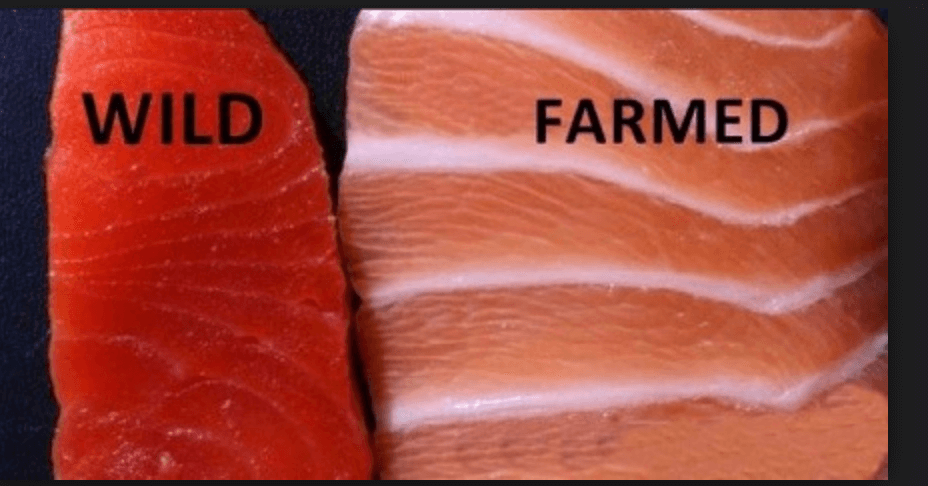
In the wild, fish such as salmon or trout eat crustaceans or insects with natural pigments that lend their flesh a pink or red tint. Fish raised in ponds or sea pens, however, receive no such natural coloration. Their flesh is often pale pink or even gray—not so appetizing to consumers used to a healthy pink. Fish farmers routinely add dyes derived from petroleum to the fish’s feed to mask this lack of wild coloration. But researchers think they’ve found a better way to procure these colorful edible additives. Rather than making dyes from petrochemicals, they’re growing the colorants in genetically modified tomatoes.
…
So, using a variety of tomato called Moneymaker that had been genetically edited to add bacterial DNA associated with producing ketocarotenoids, the researchers engineered a tomato to make those different colorful compounds. But the gene editing by itself wasn’t enough to get the necessary high-yield tomato.
It took an old-fashioned gene editing technique known as “gardening” to get the results they wanted. The researchers crossbred their modified tomatoes with a variety that is extra high in beta-carotene, a carotenoid that is naturally occurring in tomatoes…The combination of the two lines of tomato yielded a tomato that produced high levels of ketocarotenoids.
[Enrico] Fermi wasn’t the first person to ask a variant of this question about alien intelligence. But he owns it. The query is known around the world as the Fermi paradox. It’s typically summarized like this: If the universe is unfathomably large, the probability of intelligent alien life seems almost certain. But since the universe is also 14 billion years old, it would seem to afford plenty of time for these beings to make themselves known to humanity. So, well, where is everybody?
In the seventh episode of Crazy/Genius, a new podcast from The Atlantic on tech, science, and culture, we put the question to several experts.
Proposed solutions to Fermi’s Paradox fit into three broad categories.
One: They’re nowhere—and no-when. Aliens don’t exist, and they never have.
…
Two: Life is out there—but intelligence isn’t. [NASA scientist] Ellen Stofan predicts that we’ll find evidence of simple life on Mars or a faraway moon within the next 10 to 30 years. But she’s imagining something more like microbes or algae, not underwater cities in the liquid-methane lakes of Titan.
…
Three: Intelligent life is abundant—but quiet. This possibility, known as the zoo hypothesis, invites some of the strangest speculation. Maybe humanity is still so basic and primitive that advanced civilizations don’t think we’re worth talking to.
Several companies are testing whether engineered bacteria can treat conditions that affect the brain, liver and other organs — and even kill other, harmful microbes. But although US regulators have approved trials of several types of engineered bacteria as a form of gene therapy, questions remain about whether microbes’ ability to share DNA with one another will create long-term safety risks.
…
Matthew Chang, a synthetic biologist at the National University of Singapore, says that genetically modified bacteria have the potential to treat many types of disease. His group is engineering the gut bacteria Escherichia coli and Lactobacillus to recognize and destroy harmful microbes1.
…
In April, Synlogic began a trial of engineered E. coli that make enzymes to clear the toxic build-up of ammonia in the blood of people with metabolic liver diseases.
Another firm, Intrexon of Germantown, Maryland, has altered Lactococcus lactis, a bacterium used in cheese production, to make a protein that protects the outer layers of the skin. One ongoing clinical trial that has enrolled about 200 people with cancer is testing whether an L. lactis mouthwash can prevent oral sores.
…
Challenges remain before these engineered bacteria can enter the market. Scientists need a better understanding of how the bacteria interact with the body, [Synlogic executive Aoife] Brennan says, because their effects are less straightforward than those of drugs.
Remember all the warnings about genetically modified organisms? They’re bad for us; they harm the environment; there is too little oversight; they fail to increase yields; and they will do little to help feed the world.
…
For years, Lynas had been one of the most outspoken eco-warriors in the fight against GMOs. His biggest targets were companies like Monsanto and Syngenta — leaders in developing genetically modified crops. But several years ago, he began to realize he was wrong. In 2013, he outraged activist friends and colleagues by speaking at a British farming conference and apologizing for helping “to start the anti-GMO movement.”
This week, Lynas’ lastest book, “Seeds of Science: Why We Got It So Wrong on GMOs,” was released. The book reports that almost all warnings made over the past decades about the altered foods have been completely debunked.
The Wall Street Journal recently published an essay from Lynas’ new book. In it, the author says he realizes now that the biggest problem isn’t that so many countries have banned GMO use; what’s far worse is “that the anti-GMO campaign has deprived much of the world of a crucial, life-improving technology — and has shown the readiness of many environmentalists to ignore science when it contradicts their prejudices.”
Is lower academic achievement in early life tied to the same gene changes as an increased risk for Alzheimer’s in older age? That is one of dozens of possible deductions to be drawn from the largest genomic study of brain conditions ever conducted, research that obscures what often have been considered clear diagnostic borders.
According to the findings, published June 22 in Science, conditions such as schizophrenia, major depressive disorder (MDD) and bipolar disorder share a suite of overlapping genetic variants rather than having distinct genetic signatures.
In addition to the genetic links between educational attainment and Alzheimer’s risk, the results link neuroticism to anorexia nervosa, anxiety disorders, MDD and obsessive-compulsive disorder (OCD). Neurological disorders like Parkinson’s and multiple sclerosis, however, have few variants in common with each other or with psychiatric conditions.
…
“One of the big messages is that psychiatric disorders turned out to be very connected on the genetic level,” says Verneri Anttila, the first author on the paper.
…
With dozens of new investigative starting points involving these common variants in-hand, what’s next? “The immediate takeaway from this study is that now that we have identified these connections, we can better understand how these disorders arise,” says Anttila. “There may be some deeper genetic mechanisms at play here [that] predispose individuals to multiple disorders, rather than just a single one.”
Consumers will lose trust in the food industry if USDA does not mandate that refined ingredients such as oils and sugars derived from bioengineered crops are subject to GMO labeling, says the Grocery Manufacturers Association (GMA).
In comments filed with the USDA on its proposed rule laying out a national bioengineered food standard, the GMA urged the agency to include refined ingredients in its ‘bioengineered’ definition, even if they contain no detectable modified DNA, or face charges of ‘hiding’ information from shoppers.
Echoing comments made by two of its departing members (Hershey and Unilever), the GMA said excluding refined ingredients from the scope of the mandatory disclosure would result in around 78% fewer products being disclosed under the federal law, making something of a mockery of the exercise.
…
It will confuse consumers, erode trust in brands and the technology and encourage further polarizing activism about what is perceived to be information ‘hidden’ by brands, the food industry, institutions and policymakers.
…
The final rule should also establish a threshold of 0.9% by weight of bioengineered ingredients intentionally added to a finished food product, which would “be compatible with voluntary certification standards in the U.S. that make similar de minimis allowances for products that are described as non-GMO,” added the GMA.
Immunotherapy is effective against a variety of cancers, with sometimes spectacular results. But I worry about how effective it is in people over age 65, who make up half of cancer patients.
We know that immunotherapy is tolerated by older individuals. But how well they respond to it and the side effects it causes them may be different from those observed in most clinical studies for two reasons. One is that clinical trials tend to include younger participants. The other is because of an aging process known as immunosenescence. It causes the immune system to change and become less effective over time.
…
But we don’t know as much as we should about immunotherapy for older individuals as they are poorly represented in clinical trials. In 2013, individuals between the ages of 65 and 69 years made up 17 percent of clinical trial participants, those between the ages of 75 and 79 years made up 8 percent, and those who were 80 years and older made up only 4 percent.
…
To help everyone — physicians, researchers, and patients — better understand how the immune system changes with age and how those changes could influence the success of immunotherapy, future studies must include a more representative elderly population, including those with multiple health issues.
Hunger and population outgrowing food supply have been an age-long issue. The English scholar and cleric, Thomas Malthus raised the issue in 1798 in his now famous Malthusian Theory of Population.
…
Malthus argued that because there will be higher population than the availability of food, many people will die from the shortage of food. He theorised that this correction will take place in the form of Positive Checks (or Natural Checks) and Preventative Checks. These checks would lead to the Malthusian catastrophe, which would bring the population level back to a ‘sustainable level’. Mankind has not allowed the Malthusian catastrophe to occur, but has continued to strive to apply scientific methods to boost agricultural production.
In spite of advances in the sciences; food insecurity remains a global problem.
However, experts say that if mankind embraces biotechnology, hunger would be conquered and there would be no fear of the Malthusian catastrophe as agriculture based on biotechnology is sustainable.
…
The productivity in genetically modified crops is estimated at between 7 per cent and 20 per cent higher than in traditional agriculture, and 33 per cent higher than organic crops. …
“What we are having is ignorance; that’s where education comes in,” [said Prof. Akinola] Hassan, a professor of genetics at Uthman Danfodio University, Sokoto, who described the campaign against genetically modified organisms (foods) as mere propaganda.
“GMOs don’t kill, they are not dangerous to health; the Federal Government is talking about green alternatives. They are saying that they want foods to be produced in safe manner; and that can be achieved through the use of GMO.”
It may only be a matter of time before synthetic biology, such as weaponized pathogens, finds its way into a military’s or terrorist’s arsenal. In order to stay prepared, the [Department of Defense] commissioned the National Academy of Sciences to release a comprehensive report about the state of American biodefense.
…
[T]he DoD is most concerned that people might recreate known infectious viruses or enhance bacteria to become even more dangerous.
…
The solution that stood out the most is also perhaps the least concrete: invest and develop a robust public health system that could identify, prevent or counter, and respond to an epidemic or the use of a bioweapon.
…
With a solid, well-funded public health system in place, the DoD and National Academy of Sciences researchers argue, the country will be more resilient.
…
[A] better public health system could help catch such an attack before it spreads out of control — if a doctor notes a bizarre case or symptom, then a strong national network would be able to flag that case and perhaps even identify a patient zero, creating treatments more quickly and quarantining that person to prevent others from getting sick.
This type of investment would improve many parts of American life, especially for the most vulnerable and underserved among us. If “national security” is the angle that makes it happen then, well, fine.
Two weeks ago, we reported on a bizarre decision by the online news arm of the journal Science: The outlet had reprinted an article from a politically slanted environmentalist website that hyped concern over a particular chemical. The article fell quite short of the high standards we associate with the journal.
Now, Live Science has done something similar, but it’s far worse. Normally a reliable source of information (and an outlet with which ACSH has a reprinting agreement), Live Science published an article that is a dream for anti-pesticide and anti-chemical fearmongers.
The article, written by Christopher Pala, begins with an ominous warning that is far more suitable for the pages of an H.P. Lovecraft story than a science article:
On a former sugar plantation on the dry southeast coast of Kauai, Hawaii, far from the tourist beaches, agrochemical companies are testing a secret cocktail of toxic pesticides on genetically modified corn.
Good grief. Was the “secret cocktail” being sprayed from black helicopters? And why, exactly, is it a problem for chemical companies to conduct field trials with their products? Isn’t that what we want them to do before they sell them on the market?
An insulin pill for people with diabetes could be in the offing, say researchers, providing hope that a daily regime of injections might one day become a thing of the past.
…
[Researcher Samir] Mitragotri and colleagues report how they took a new approach by dispersing insulin in a liquid made of two components: a nutrient called choline, and a substance called geranic acid that is used as a food flavouring agent and is found naturally in cardamom.
Among the experiments, the team put the mixture inside capsules made of a material that can withstand stomach acid, and injected them down the throat of six rats.
The animals’ blood sugar levels fell rapidly, on average reaching about 62% of initial levels in the first two hours, and 55% by 10 hours.
…
The team say further experiments suggested the liquid in which the insulin was dispersed inside the capsule prevents the hormone from being broken down by enzymes in the digestive system after the capsule dissolves, helps the insulin to pass through the mucus layer of the intestines.
…
However the insulin pill will not be available any time soon: the capsules have so far only been tested on a small number of non-diabetic animals, and it could be several years before clinical trials can begin.
While fewer people are drinking milk overall these days, organic milk is holding steady in Canada’s $5-billion organic industry, with an estimated 2017 sales totaling $77 million.
Its popularity stems from consumers’ perception that organic milk is purer and more natural, not only because it’s made the old-fashioned way from happier cows on cleaner farms but because it is free from unhealthy additives, such as antibiotics and hormones.
The [Toronto] Star investigated organic milk in Ontario, tracking the staple’s journey from cow to carton, and found the product is no different than cheaper regular milk: The nutritional content, the synthetic vitamin D added after pasteurization, the levels of pesticides and metals and heart healthy fats – all the same. And Canadian law forbids antibiotics and added growth hormones in any kind of milk.
…
While Canada’s organic dairy farmers do some things differently than their conventional colleagues – like sending their cows to pasture and using only chemicals that are considered natural – it’s not reflected in the end product.
“The milks are the same – they are identical with respect to the testing and quality standards. There’s no added hormones. No antibiotics,” says Graham Lloyd, of the Dairy Farmers of Ontario, the quasi-governmental organization that controls the organic and regular milk supply.
Scott Pruitt, who lost his job as head of the Environmental Protection Agency last week after a flood of complaints and investigations regarding his conduct and ethics, nevertheless accomplished a great deal to institute needed reforms at the agency and roll back harmful and counterproductive over-regulation.
Whatever you think of how Pruitt conducted himself personally, he leaves a positive policy legacy behind from his tenure at EPA. Deputy Administrator Andrew Wheeler – who becomes EPA acting administrator Monday – seems sure to continue and build on these achievements.
Let’s get one thing clear. Despite the claims of Democrats and environmental extremists who regularly demonize those of us who believe in evidence-based regulation, limited government and the free enterprise system, we all want a clean and healthy environment – Pruitt, Wheeler and other Republicans included.
But since its inception during the Nixon administration, EPA has been a mess – corrupt, incompetent and disdainful of science. Pointing out its many failings and calling for reforms does not make critics like me anti-environment, or make us opposed to clean air and water. It makes us proponents of good government and the wise use of taxpayer dollars.
The reality is that EPA has been a bureaucratic cesspool for decades. Policy by policy and decision by decision, EPA has damaged our nation’s competitiveness, ability to innovate and capacity to create wealth.
EPA has been a prime example of an out-of-control Big Government regulator that spends more and more to address smaller and smaller risks. In one analysis by the Office of Management and Budget, of the 30 least cost-effective regulations throughout the government, EPA had imposed no fewer than 17.
The agency’s ever-expanding regulations have imposed huge costs on American businesses and, ultimately, on consumers. An analysis by the Competitive Enterprise Institute estimated that compliance with EPA regulations costs the U.S. economy more than $300 billion annually – a staggering regulatory burden.
Regulatory excesses and well-intentioned mistakes are one thing – dishonesty and mendacity are something else.
Unnecessary, ill-conceived regulatory costs imposed on job-creating businesses inhibit innovation and make it less likely that companies will be able to take risks that could produce the Next Big Thing.
It would take a book – make that several books – to list all the abuses, errors and regulatory excesses of EPA since the agency was founded in 1970.
One such book was “Breaking the Vicious Circle,” written by none other than Supreme Court Justice Stephen Breyer when he was a lower court judge. In it, he addressed the EPA’s counterproductive efforts to eliminate the “last 10 percent” of risk from a substance or activity, noting that it involves “high cost, devotion of considerable agency resources, large legal fees, and endless argument,” with only limited, incremental benefit.
Let me cite a small number of additional, brief examples.
EPA has long maintained a stable of outside advisers made compliant by grant money. Making grantees advisers to EPA creates a serious conflict of interest, because grantees want to keep collecting more and more money from the agency. So when they serve on advisory committees, the grant recipients are often only too willing to rubber stamp the agency’s unwise, unscientific and excessive regulation.
Image Credit: Bill O’Leary/The Washington Post, via Getty Images
To remedy this situation, Pruitt announced last October that EPA would no longer permit grant recipients to serve on advisory committees that evaluate EPA’s programs and policies.
One of the EPA’s most egregious recent policy excesses was to redefine “navigable waters,” for the purpose of regulating them under the Clean Water Act, to include virtually every body of water in the nation right down to the smallest of streams, farm ponds and ditches. However, under an executive order from President Trump, that travesty will be reversed.
At the behest of activists, the EPA has unilaterally killed off entire, once-promising sectors of U.S. research and development. The use of genetically engineered microorganisms for bioremediation – the biological cleanup of toxic wastes – is one.
Why should you care?
Because accidents that cause oil spills are inevitable as long as they can be caused by human or mechanical failures or the vagaries of weather. During the 1980’s, microorganisms genetically engineered to degrade spilled oil were developed in laboratories, but draconian EPA regulations discouraged their testing and commercialization. As a result, techniques available for responding to these disasters remain low-tech and only marginally effective.
Regulatory excesses and well-intentioned mistakes are one thing – dishonesty and mendacity are something else.
A con game that has received attention from the Senate Environment and Public Works Committee is the “sue and settle” maneuver that EPA has frequently used to advance a radical environmental agenda that gets around the need for legislation and agency rulemaking to make policy.
Here’s how it has worked: Extremist environmental groups (some of which receive government grants) sue the federal government, claiming that federal agencies are failing to meet their statutory obligations. And then – behind closed doors, with a wink and a nod – the activists and regulators concoct a settlement agreement that furthers activists’ (and regulators’) radical goals that go beyond what Congress authorized in passing laws.
This “sue and settle strategy” circumvents both congressional intent and the rulemaking process. Pruitt directed EPA to stop this practice.
Government Accountability Office investigators found that the EPA illegally used Thunderclap, a social media site, “to correct what (EPA) viewed as misinformation.”
Government use of social media is not unlawful, and many agencies use it to communicate their actions and policies to the public. But EPA crossed the line when it asked members of the public to share EPA-composed propaganda on Facebook or Twitter without attributing it to the government.
Neglecting to reveal the source was the basis of the “covert propaganda” violation, because the law says that citizens must know when messages presented to them were created by their government.
Here’s yet another example of EPA abuses: Federal agencies are supposed to be apolitical, and federal law prohibits lobbying for or against proposed legislation. But an EPA blog post contained links to websites that encouraged members of the public to, for example, “urge your senators to defend Clean Water Act safeguards for critical streams and wetlands.” This “grassroots lobbying” was a violation of federal law.
Another underhanded ploy, exposed several years ago, would have diverted EPA “research” funds to pay outside public relations consultants up to $5 million over five years to improve the website of the Office of Research and Development, conduct focus groups on how to polish the office’s image, and produce ghostwritten articles praising the agency “for publication in scholarly journals and magazines.”
This payola scheme is similar to the agency’s longstanding practice of buying influence by doling out hundreds of millions of dollars each year to certain favored nonprofit organizations – money that, according to the EPA inspector general and Government Accountability Office, is dispersed with no public notice, competition or accountability.
EPA’s incompetence is legendary. A typical incident occurred in August 2016, when an EPA cleanup crew accidentally triggered a breach in an abandoned gold mine in the southwestern part of Colorado, spilling 3 million gallons of highly toxic mining waste that contaminated waterways in Colorado and New Mexico. Inexplicably, EPA officials failed to warn downstream public health and environmental regulators in a timely way.
For decades, the EPA has been a rogue agency – ideological, poorly managed, dishonest and out of touch with sound science and common sense. Under President Trump and Scott Pruitt, things have changed for the better. Let’s all hope this progress continues.
Henry I. Miller, a physician, molecular biologist and former flu virus researcher, is the Robert Wesson fellow in scientific philosophy and public policy at Stanford University’s Hoover Institution. He was the founding director of the Food and Drug Administration’s Office of Biotechnology. Twitter: @henryimiller
[R]esearch teams are engineering stem cells to include Neanderthal genes and growing them into “minibrains” that reflect the influence of that ancient DNA.
…
[Geneticist Alysson Muotri’s] team has coaxed stem cells endowed with Neanderthal DNA into pea-size masses that mimic the cortex, the outer layer of real brains. Compared with cortical minibrains made with typical human cells, the Neanderthal organoids have a different shape and differences in their neuronal networks, including some that may have influenced the species’s ability to socialize. “We’re trying to recreate Neanderthal minds,” Muotri says.
…
Muotri focused on one of approximately 200 protein-coding genes that differ between Neanderthals and modern humans. Known as NOVA1, it plays a role in early brain development in modern humans and also is linked to autism and schizophrenia.
…
Comparing them with modern human brain organoids made under identical conditions, his team found that the neuronal cells with the Neanderthalized NOVA1 migrate more quickly within an organoid as they form structures.
…
Several of these differences mirror what Muotri has found studying neuronal development in the brains of children with autism.
…
“In modern humans, these types of changes are linked to defects in brain development that are needed for socialization. If we believe that’s one of our advantages over Neanderthals, it’s relevant,” [Muotri said].
Earlier this year, the European Parliament created PEST, a temporary committee on pesticides, to try and draw a line under the controversy surrounding the EU’s approval process for the widely used herbicide glyphosate. However, the latest meeting of PEST, which took place [in early June], may have stirred up even more drama.
This renewed controversy has arisen primarily due to the alleged use of the committee as a point-scoring platform in the run-up to next year’s elections, as well as its decision to seek counsel from Christopher Portier— a scientist who was one of the major points of contention in the original scandal. At a time when the glyphosate controversy has only inflamed the EU’s reputation as an unwieldy decision maker, the committee’s focus and choice of witnesses risks only making matters worse.
…
After coming under heavy fire for its decision to approve glyphosate for a further five years, it’s only right that the EU should have created PEST – not only to cover its own back, but also to clear up once and for all the various misunderstandings surrounding the wider chemical approval process. However, vagueness over the committee’s exact utility, suggestions that it may be being manipulated for political gains and the questionable integrity of its chosen witnesses do nothing to help the bloc assuage public fears over the validity of the methods it uses.
Current prosthetic limbs aren’t yet capable of transmitting complex sensations like texture or pain to the user, but a recent breakthrough by scientists at Johns Hopkins School of Medicine, in which a synthetic layer of skin on an artificial hand transmitted feelings of pain directly to the user, takes us one step closer to that goal.
…
Working with JHU neuroengineer Nitish Thakor, [Luke] Osborn and his colleagues developed a system called e-dermis—a skin-like layer that gives prosthetic limbs the capacity to perceive touch and pain. Pressure applied to the e-dermis is transmitted to the user’s brain via an electric nerve stimulator implanted in the arm above the prosthesis, allowing the system to emulate actual sensations. In tests of the e-dermis system, a volunteer amputee said he could tell the difference between objects that were rounded or sharp.
…
People who use prosthetic limbs can use these pain signals to avoid damaging their prosthesis, just as they use the warning of pain to avoid harming any other body part.
…
As the authors of the new study admit, an ideal prosthesis would “allow the user to maintain complete control” and choose to “overrule pain reflexes” if desired. For example, users should be able to switch off the pain function and have automated, built-in pain reflexes kick in when the limb senses something is causing damage.
If the story sounds familiar, that’s because cupped leaves and the angry farmers who tend them are emerging as a recurring summer saga in the Heartland as swaths of land are exposed to errant mists of the potent herbicide dicamba. The pesticide is marketed by Monsanto, the erstwhile US seed/pesticide giant which will soon be subsumed into German chemical behemoth Bayer. And as Bayer integrates Monsanto, it’s also inheriting the smaller company’s dicamba mess.
…
Like last year, the company appears to be on a collision course with independent scientists over its blockbuster pesticide. And now it’s Bayer, a chemical company most famous in the United States for its aspirin, that will inherit the headache. For dicamba-using farmers and their neighbors, 2018 is shaping up to be yet another long, hot summer.
[Henrietta Lacks’ cancer cells,] HeLa cells, have enabled scientists around the world to make great leaps in science and medicine. This list highlights five of these remarkable contributions.
1. Polio eradication
Jonas Salk had developed a polio vaccine in the early 1950’s but was struggling to find a way to test it in field trials as traditionally used rhesus monkey cells were too expensive for such a large-scale study. In 1952, HeLa cells were found to be both susceptible to, but not killed by polio, making them an ideal source of host cells.
…
2. Improved cell culture practices
During the mass production and distribution of HeLa cells for polio vaccine testing at Tuskegee University, lead researchers Brown and Henderson pioneered new cell culture protocols.
…
3. Chromosome counting
Rebecca Skloot describes in her book, The Immortal Life of Henrietta Lacks, how a lab mix up in Texas in 1953 accidentally enabled researchers to see and count each chromosome clearly in the HeLa cells they were working with.
In the 1980’s, Henrietta’s cells were found to contain HPV-18 by Harald zur Hausen, who later went on to win a Nobel Prize for his discovery linking HPV and cervical cancer.
We asked [Professor Jim Dunwell] about the protracted decision on regulation and what this will mean for the future of gene editing in crops.
What will the recent [EU] judicial opinion mean for scientists?
The original judgement from the Advocate General on this European Court of Justice ruling is simply a preliminary ruling and will offer some guidance as to how the judges themselves will reach a final decision. I estimate that the final judgement won’t come out until the summer.
The reaction to the interim advice from the Advocate General is quite mixed because it’s obviously a long, complex thirty-page legal document. The main conclusions were that some of the mutation processes could be excluded from the “GM regulations” There’s already an existing system in legislation made in 2001 that says that mutagenesis is a named exclusion to the GM regulations.
…
Do you think that’s a better approach?
I think it gives clarity, and it’s the reason why commercial investment in this type of work in the EU is being effectively withdrawn. So the large companies are still doing the work, but they’re not doing it in Europe.