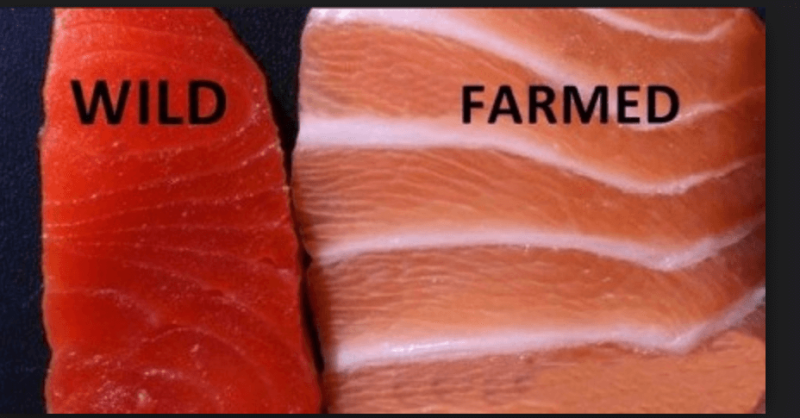
Gene edited tomatoes could produce natural colorings to replace dyes used to colorize farmed fish

Screen Shot at AM

In the wild, fish such as salmon or trout eat crustaceans or insects with natural pigments that lend their flesh a pink or red tint. Fish raised in ponds or sea pens, however, receive no such natural coloration. Their flesh is often pale pink or even gray—not so appetizing to consumers used to a healthy pink. Fish farmers routinely add dyes derived from petroleum to the fish’s feed to mask this lack of wild coloration. But researchers think they’ve found a better way to procure these colorful edible additives. Rather than making dyes from petrochemicals, they’re growing the colorants in genetically modified tomatoes.

…

So, using a variety of tomato called Moneymaker that had been genetically edited to add bacterial DNA associated with producing ketocarotenoids, the researchers engineered a tomato to make those different colorful compounds. But the gene editing by itself wasn’t enough to get the necessary high-yield tomato.
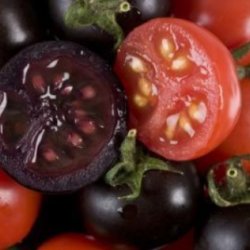

It took an old-fashioned gene editing technique known as “gardening” to get the results they wanted. The researchers crossbred their modified tomatoes with a variety that is extra high in beta-carotene, a carotenoid that is naturally occurring in tomatoes…The combination of the two lines of tomato yielded a tomato that produced high levels of ketocarotenoids.

Read full, original article: Genetically Modified Tomatoes Give Fish a Futuristic Hue

Related Articles

Infographic: Global regulatory and health research agencies on whether glyphosate causes cancer

Infographic: Global regulatory and health research agencies on whether glyphosate causes cancer

Does glyphosate—the world's most heavily-used herbicide—pose serious harm to humans? Is it carcinogenic? Those issues are of both legal and ...

Most Popular

ChatGPT-Image-Sep-23-2026-02_36_39-PM
Viewpoint: After firing the entire National Science Board, Trump reshapes funding initiatives. Here’s the good and the bad.
ChatGPT-Image-Mar-10-2026-01_39_01-PM
Viewpoint—“Miracle molecule” debunked: Why acemannan supplements don’t work
sorghum farmers in kenya FARMERS TREND
Here are all the ways CRISPR gene editing is transforming Africa’s staple crops—and there’s a lot more innovation to come
ChatGPT-Image-Sep-10-2026-10_36_07-AM
Viewpoint: Even lousy scientific articles can shield authors when they hype dubious health claims and products
ChatGPT-Image-Sep-30-2026-01_38_36-PM
Viewpoint: Died “with measles” vs. died “from measles”: RFK, Jr.’s dangerously subversive word games
ChatGPT-Image-Sep-30-2026-01_25_34-PM
Blood tests for Alzheimer’s? The latest grifter, social media scam.
ChatGPT-Image-Sep-21-2026-03_15_09-PM
Viewpoint: Chipotle-inspired lesson: 10,000 sick customers suggest that processed foods can be safer than fresh ones
glp menu logo outlined

Get news on human & agricultural genetics and biotechnology delivered to your inbox.