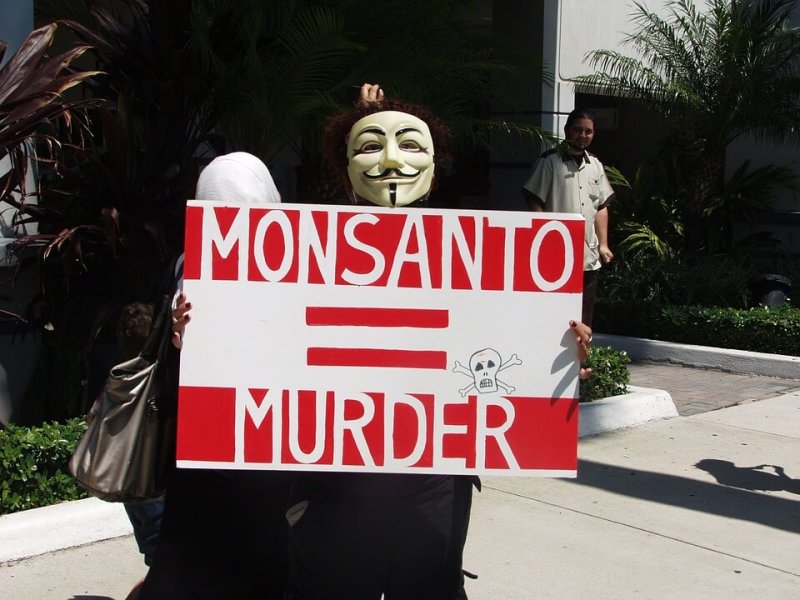
‘Psychology of extremism’: People most opposed to GMO crops are least informed about science

protest
Credit: Pixabay/khsmiley

The people who hold the most extreme views opposing genetically modified (GM) foods think they know most about GM food science, but actually know the least, according to new research [published January 14] in Nature Human Behavior….

Marketing and psychology researchers asked more than 2,000 U.S. and European adults for their opinions about GM foods. The surveys asked respondents how well they thought they understood genetically modified foods, then tested how much they actually knew with a battery of true-false questions on general science and genetics.

Despite a scientific consensus that GM foods are safe for human consumption and have the potential to provide significant nutritional benefits….[m]ore than 90 percent of study respondents reported some level of opposition to GM foods.

“This result is perverse, but is consistent with previous research on the psychology of extremism,” said Phil Fernbach, the study’s lead author and professor of marketing at the Leeds School of Business. “Extreme views often stem from people feeling they understand complex topics better than they do.”


“Our findings suggest that changing peoples’ minds first requires them to appreciate what they don’t know,” said study co-author Nicholas Light, a Leeds School of Business PhD candidate. “Without this first step, educational interventions might not work very well to bring people in line with the scientific consensus.”

Read full, original article: Genetically modified food opponents know less than they think, research finds 

{{ reviewsTotal }}{{ options.labels.singularReviewCountLabel }}
{{ reviewsTotal }}{{ options.labels.pluralReviewCountLabel }}
{{ options.labels.newReviewButton }}
{{ userData.canReview.message }}

Related Articles

Infographic: Global regulatory and health research agencies on whether glyphosate causes cancer

Infographic: Global regulatory and health research agencies on whether glyphosate causes cancer

Does glyphosate—the world's most heavily-used herbicide—pose serious harm to humans? Is it carcinogenic? Those issues are of both legal and ...

Most Popular

ChatGPT-Image-May-7-2026-12_16_37-PM-2
Viewpoint: Are cancer rates ‘skyrocketing’ as RFK, Jr. and MAHA claim? The evidence says mostly the opposite
Screenshot-2026-04-13-at-1.39.26-PM
Viewpoint: ‘Safer for children?’ Stonyfield yogurt under fire for deceptive organic marketing
Screenshot-2026-04-22-at-10.46.29-AM
Viewpoint: How to counter science disinformation? Science journalist offers 12 practical tips
Picture1-14
When superbugs threaten vulnerable children: Can AI help solve antibiotic resistance?
Screenshot-2026-04-23-at-11.00.36-AM
Regulators' dilemma: Thalidomide, Metformin, and the cost of getting drug approvals wrong
Picture1-1
Cooling the planet with balloons: Could a geoengineering gamble slow global warming?
ChatGPT-Image-May-12-2026-08_39_41-PM
GLP podcast: Big Pharma, Big Ag, Big Food—health harming industries or life-saving innovators?
bigstock opioids on chalkboard with rol
GLP podcast: 'Safe injection sites': enabling drug addiction or saving lives?

Sorry. No data so far.

glp menu logo outlined

Get news on human & agricultural genetics and biotechnology delivered to your inbox.