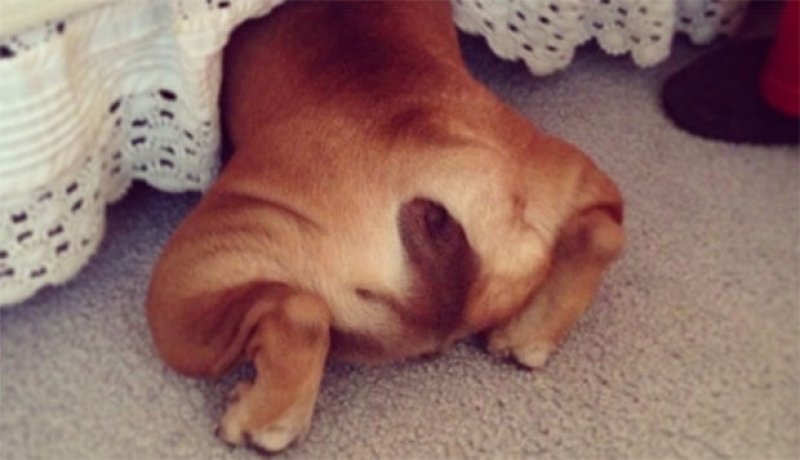
One of the most distinctive body parts of your typical English bulldog, French bulldog, or Boston terrier—their coiled screw tail—might be caused by a specific genetic mutation, suggests recent research. And more importantly for us humans, that same genetic quirk might help scientists better understand a rare disorder in people.
…
[Researcher Danika] Bannasch and her team spotted a specific mutation, in a gene known as DISHEVELLED 2 or DVL2, in all of the bulldogs and Frenchies and in nearly every terrier.…
[The mutation] seems to alter a protein that helps cells communicate with one another during a dog’s development in the womb. That subtle change might then account for the misshapen spines.
…
But the kind of health problems and skeletal deformities seen in bulldogs and terriers are very similar to those found in people who suffer from a debilitating genetic disorder called Robinow syndrome. And sure enough, Bannasch and her team found that the DVL2 mutation they spotted in these dogs is very much like the mutations in the human DVL1 and DVL3 genes that cause Robinow syndrome in people.
Scientists currently use specially bred mice as a model to study Robinow syndrome, an incredibly rare condition with fewer than 200 documented cases. But given how common this mutation is in certain breeds, dogs could be an ideal model animal.
Read full, original post: A Bulldog’s Screw Tail Might Help Us Understand a Rare Genetic Disease in People