Women are more skeptical of GMOs than men—but not because of their ‘maternal instincts’

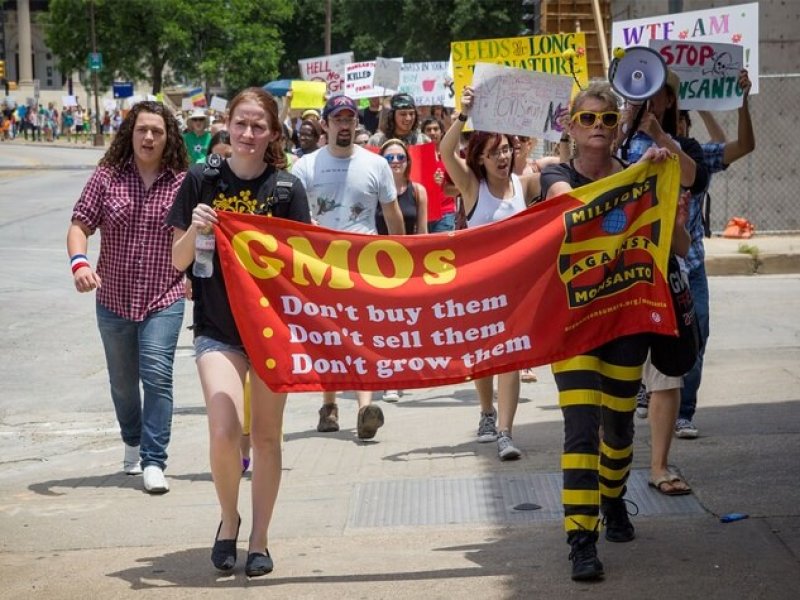
Photo of marchers protesting GMOs

Studies have found that women are more skeptical of genetically modified (GM) foods than men….Conventional wisdom has been that maternal instincts may explain the difference, but research shows that this isn’t the case.

A recent study, published in The Social Science Journal, evaluated data from more than 1,500 people – part of a 2014 Pew Research Center survey – in an attempt to tease out the factors behind the GM foods gender gap. The paper, “The gender gap on public opinion towards genetically modified foods,” found a surprising driver that may account for women’s attitudes toward GM food.

We recently had a chance to talk with Steve Greene about the findings. Greene, a professor of political science at NC State, co-authored the paper….

[Interviewer]: So, what is responsible for the gender gap?

Greene: General orientations toward science and knowledge of science are largely responsible for the gender gap. Men have more confidence in science and scientists and are much less inclined to focus on the risks in various science fields. This seemed to explain most of the gender gap. Interestingly, though, our combination of science variables, political variables and demographic variables could not fully account for this gender gap, meaning there is still something unique to the role of gender in explaining GM foods that we were not able to uncover.

Read full, original article: Maternal Instincts Don’t Explain the Gender Gap on GM Foods

{{ reviewsTotal }}{{ options.labels.singularReviewCountLabel }}
{{ reviewsTotal }}{{ options.labels.pluralReviewCountLabel }}
{{ options.labels.noReviewsLabel }}
{{ options.labels.newReviewButton }}
{{ userData.canReview.message }}

Related Articles

Infographic: Global regulatory and health research agencies on whether glyphosate causes cancer

Infographic: Global regulatory and health research agencies on whether glyphosate causes cancer

Does glyphosate—the world's most heavily-used herbicide—pose serious harm to humans? Is it carcinogenic? Those issues are of both legal and ...

Most Popular

Screenshot-2026-07-09-at-1.09.25-PM
Anti-vaccine myths rattle health care
ChatGPT-Image-Mar-10-2026-01_39_01-PM
Viewpoint—“Miracle molecule” debunked: Why acemannan supplements don’t work
ChatGPT-Image-Jul-10-2026-12_21_03-PM
Viewpoint: Is there new evidence that the animal deworming drug ivermectin decreases the risk of Covid and cancer? Don’t waste your money.
Picture1
Hiroshima at 81: America’s new nuclear bomb, a buried Iranian target, and a question no one wants to ask
ChatGPT-Image-Jun-25-2026-12_23_17-PM
No, Bill Gates did not secretly engineer ticks to promote veganism
leeteam
How Kennedy and his family could pocket millions from Merck’s $50 million vaccine injury settlement that he oversaw
Screenshot-2026-07-30-at-2.30.35-PM
Climate scientists claim conservative activists are promoting ‘lies’ that Europe’s summer heatwaves are far from unusual
Screenshot-2026-07-30-at-3.07.42-PM
Controversy over WNBA star Sophie Cunningham’s comment opposing trans females in women’s sports reinvigorates the culture wars

Sorry. No data so far.

glp menu logo outlined

Get news on human & agricultural genetics and biotechnology delivered to your inbox.