CRISPR’s lengthy patent legal battle could finally end—in a tie

3-5-2019 crispr composite
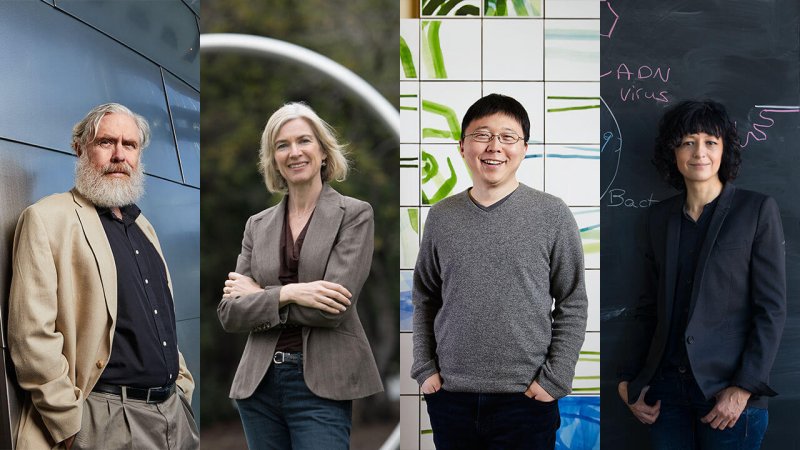
CRISPR pioneers (from left to right): George Church, Jennifer Doudna, Feng Zhang, and Emmanuelle Charpentier. Image credit: Ken Richardson

Like a couple of heavyweight boxers who just keep slugging it out, the University of California Berkeley (UCB) and the Broad Institute continue to pummel each other through the courts. No knockout blows yet, but in the latest ruling from the US Patent and Trademark Office, UCB may finally be ahead on points.

These two behemoths of genetic research are fighting over ownership of the breakthrough technology known as CRISPR-Cas9.

In the USA the valuable claims were granted for the Broad Institute. UCB cried foul, insisting that Feng Zhang’s demonstration that he could make gene-editing work in cells was nothing more than an obvious add-on to the work of Doudna and Charpentier and shouldn’t be given a dominant patent position.

The US Patent and Trademark Office has now completed its examination of a key patent application from UCB, and has signalled that it intends to accept their claims.

A tie is very rare in a boxing match. But perhaps in this contest we’re approaching the time for the two corners to get together and agree cross-licensing strategies and agreements before everyone is too punch-drunk to continue fighting effectively.

Read full, original post: The epic legal battle over CRISPR’s future could finally be over

Related Articles

Infographic: Global regulatory and health research agencies on whether glyphosate causes cancer

Infographic: Global regulatory and health research agencies on whether glyphosate causes cancer

Does glyphosate—the world's most heavily-used herbicide—pose serious harm to humans? Is it carcinogenic? Those issues are of both legal and ...

Most Popular

ChatGPT-Image-Aug-4-2026-10_15_14-AM
Viewpoint—A hard look at the Fauci diaries: Do they change what we know about COVID’s origins?
ChatGPT-Image-Mar-10-2026-01_39_01-PM
Viewpoint—“Miracle molecule” debunked: Why acemannan supplements don’t work
ChatGPT-Image-Aug-4-2026-12_42_58-PM
Viewpoint: Fact-checking CNN interview with RFK, Jr. underscores the depth of his disinformation delusions
Picture1
Hiroshima at 81: America’s new nuclear bomb, a buried Iranian target, and a question no one wants to ask
ChatGPT-Image-Jul-17-2026-09_50_27-AM
Viewpoint: How disease tracking and prevention has cratered under the Kennedy-Trump administration
ChatGPT-Image-Aug-4-2026-07_52_00-PM
No liability for scientific due diligence: California Supreme Court rejects bizarre lawsuit faulting Gilead for fully evaluating HIV drug before release
ChatGPT-Image-Aug-4-2026-09_31_50-AM-2
Viewpoint: Could the U.S. become dependent on China to develop critical new genetic and drug therapies?
Screenshot-2026-07-17-at-1.34.59-PM
Poll: Vaccine hesitancy soars when patients distrust health providers and turn to social media
ChatGPT-Image-Aug-4-2026-02_05_46-PM
Does Congress have the guts to successfully challenge Trump’s politicization of science funding?
png livestock cow cattle a
Consumer skepticism about gene-edited milk is neither fixed nor particularly high—and falls even more if it’s priced lower
ChatGPT Image Jul 29, 2026, 09_08_15 AM 2
The retreat of environmental extremism: Why activist NGOs are losing favor
ChatGPT Image Jul 29, 2026, 10_17_59 AM
Viewpoint: What does it mean when critics of conventional agriculture say many fruits and vegetables are “linked” to pesticide poisoning?
ChatGPT-Image-Jun-25-2026-12_23_17-PM
No, Bill Gates did not secretly engineer ticks to promote veganism
glp menu logo outlined

Get news on human & agricultural genetics and biotechnology delivered to your inbox.