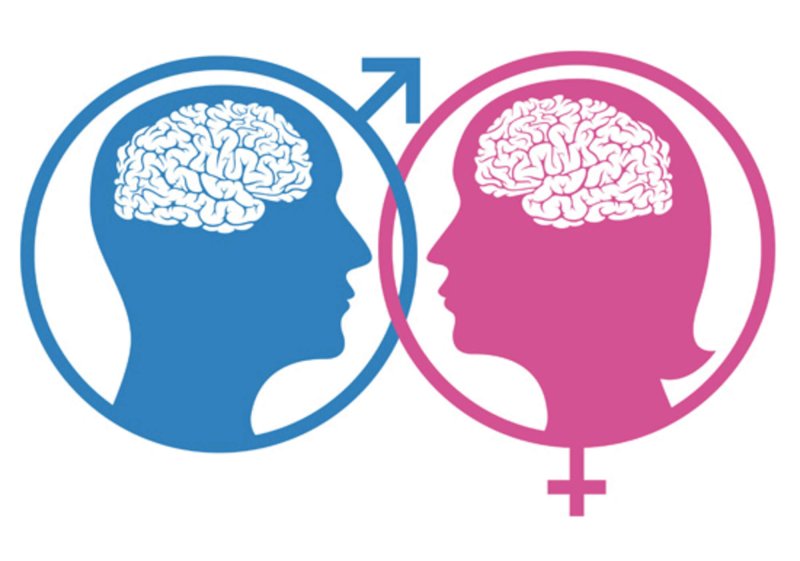

It’s obvious to just about anyone who is paying attention — and to most biologists, in particular — that there are some very important differences between men and women that go far beyond the concentrations of their hormones and the shapes of their genitals.
Consider some of the subtler differences. Men, for example, have higher hematocrit (i.e., red blood cell concentration) than women, which means that for any given volume of blood, men carry more oxygen than women. Men also have more skeletal muscle mass, accounting for roughly 42% of body weight compared to only 36% for women. Reasons like these are why male athletes are stronger and faster than female athletes.
There are also neurological differences between men and women. Just how many differences are there? Well, there are so many, that an entire issue of the Journal of Neuroscience Research was dedicated to analyzing them.
In an accompanying commentary, neurobiologist Dr. Larry Cahill explained that, due to political correctness, the topic of neurological sex differences was so taboo that a scientist risked ruining his career if he openly discussed them. Of course, this does a grievous disservice to both men and women, particularly when it comes to mental health.
It is well established in psychiatry that men and women suffer different rates of mental illness. Women are more likely to be depressed or anxious, while men are more likely to be addicted to and abuse drugs. Migraines are more common among women. Though the prevalence of schizophrenia is roughly the same for men and women, there is a notable sex difference in the age of onset of symptoms.
The bottom line is that there is overwhelming evidence to suggest that the brains of men and women differ, sometimes substantially. But a new book, which is making waves in the media, denies this.
Brain Wars: Return of the Sex Deniers



Dr. Gina Rippon, a professor of cognitive neuroimaging, argues in an article for NewScientist (and in a new book called Gendered Brain) that our understanding of neurological sex differences is all wrong. The more likely explanation is that Dr. Rippon’s understanding of neurobiology is all wrong… or at least tainted by motivated reasoning.
Much of her article points out all the times that neuroscientists thought they identified a real sex difference in male and female brains only to be disproven later. But this is not a convincing argument. Indeed, it’s the same sort of argument that creationists use against evolution: “Biologists got a few things wrong before, therefore the entire theory is wrong!” No, that’s not how science works.
Dr. Rippon also takes offense at the historical and sexist notion that men’s brains are somehow superior to women’s brains. Of course, she is right to be offended; that’s nonsense. However, differences do not imply superiority or inferiority. Yet, she uses this historical sexism as evidence for the wrongness of modern neuroscience, but that point is utterly non-germane to the issue at hand.
Her objections ultimately seem to be rooted in fear of inequality. If we tell men and women that their brains are different, then they will behave accordingly, exacerbating any (real or imagined) sex-based societal injustices. That might be a legitimate concern, but it’s certainly not grounds to throw out data she doesn’t like. That’s the real injustice here.
Alex Berezow is vice president of scientific affairs for the the American Council on Science and Health. Follow him on Twitter @AlexBerezow
This article originally appeared on the American Council on Science and Health website as Brain Wars: Return Of The Sex Deniers and has been republished here with permission.