Plan to battle citrus greening disease in Florida with antibiotics sparks backlash from activists, some scientists

Screen Shot at PM e
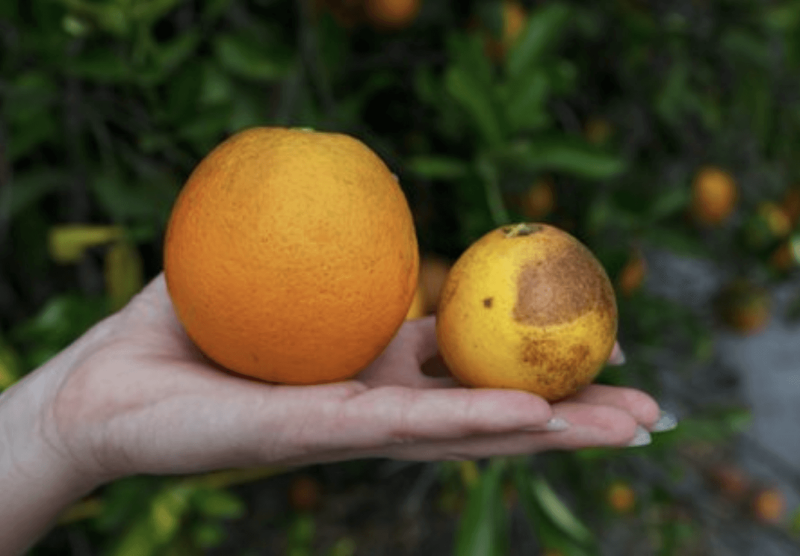
An orange from a healthy tree compared to one from a tree infected by citrus greening disease.

In the next month or so, orange trees across Florida will erupt in white blossoms, signalling the start of another citrus season. But this year, something different will be blowing in the winds. Farmers are preparing to spray their trees with hundreds of thousands of kilograms of two common antibiotics toย combat citrus greening, a bacterial disease that has been killing Florida citrus trees for more than a decade.

Public-health researchers worry that the spraying plan might spur resistance in some human pathogens. Itโ€™s a reasonable concern; a fungicide used to control a tulip blight in the Netherlands, for example, has triggered a rise in treatment-resistant aspergillosis in people with compromised immune systems.

Growers are willing to try anything, however. Citrus greening (also known as huanglongbing, caused by the bacteriumย CandidatusLiberibacter asiaticus), has crippled the Florida citrus industry: almost half the acreage that was in production before the disease arrived has been abandoned and, by some estimates, 90% of the stateโ€™s citrus trees are infected. โ€œThe level of desperation is high,โ€ says Rick Dantzler, chief operating officer of Floridaโ€™s Citrus Research and Development Foundation (CRDF) in Lake Alfred.

Read full, original article: Antibiotics set to flood Floridaโ€™s troubled orange orchards

{{ reviewsTotal }}{{ options.labels.singularReviewCountLabel }}
{{ reviewsTotal }}{{ options.labels.pluralReviewCountLabel }}
{{ options.labels.newReviewButton }}
{{ userData.canReview.message }}

Related Articles

Infographic: Global regulatory and health research agencies on whether glyphosate causes cancer

Infographic: Global regulatory and health research agencies on whether glyphosate causes cancer

Does glyphosateโ€”the world's most heavily-used herbicideโ€”pose serious harm to humans? Is it carcinogenic? Those issues are of both legal and ...

Most Popular

Screenshot-2026-04-22-at-12.21.32-PM
Viewpoint: Why the retracted Monsanto glyphosate study doesnโ€™t change the scienceโ€”the worldโ€™s most popular herbicide is safeย 
ChatGPT-Image-May-1-2026-11_42_59-AM-2
Viewpoint: NAD is the wellness grifters latest evidence-lite longevity fad. At least the mice are impressed.
Picture1
The FDA couldnโ€™t find a vaccine safety crisis, so it buried its own research
ChatGPT-Image-Apr-16-2026-02_56_53-PM
Financial incentives, over diagnosis, and weak oversight: Autism claims are driving up Medicare costs
Screenshot-2026-04-12-135256
Bixonimania: The fake disease scam that AI swallowed whole

Sorry. No data so far.

glp menu logo outlined

Get news on human & agricultural genetics and biotechnology delivered to your inbox.