Activists, scientists spar over effort to restore American chestnut tree with genetic engineering

The American Chestnut Tree
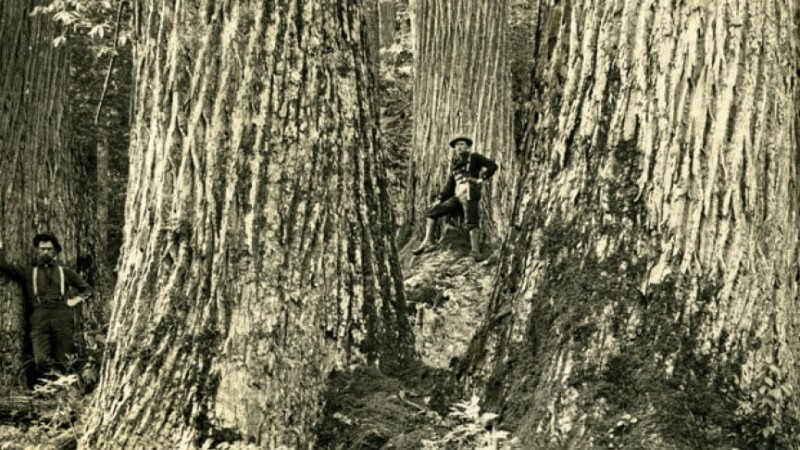
The American chestnut, once known as the “redwood of the east,” could grow to 80 feet tall. Now it is virtually extinct. Image: American Chestnut Foundation

The American chestnut tree once sustained a way of life. Pioneers used the tall, straight, and fast-growing tree for fences, railroad ties, furniture, and anything else they wanted to last.

But beginning around 1904, a blight appeared on chestnut trees in the Bronx Zoo and spread rapidly….Today a high-tech effort to restore the chestnut awaits federal regulatory approval. Scientists….have created a genetically modified lineage of blight-tolerant chestnut trees.

….To some environmentalists, including two prominent American chestnut restoration activists in Massachusetts, this is a bridge too far. In a world where ecosystems are under assault, “we are going to need every tool … to make sure that we have resilient natural and human systems into the future,” says Doria Gordon, a senior scientist at the Environmental Defense Fund. “But,” she says, “we must be precautionary in how we deploy novel gene types into the environment.”

But to biologist William Powell, one of a duo who led the project, the addition of the wheat gene represents the smallest possible human intervention that could restore the species….“New York is where the blight started,” he says. “And here is where I’m hoping it’ll stop.”

Read full, original article: GMO could bring back the American chestnut. But should it?

{{ reviewsTotal }}{{ options.labels.singularReviewCountLabel }}
{{ reviewsTotal }}{{ options.labels.pluralReviewCountLabel }}
{{ options.labels.newReviewButton }}
{{ userData.canReview.message }}

Related Articles

Infographic: Global regulatory and health research agencies on whether glyphosate causes cancer

Infographic: Global regulatory and health research agencies on whether glyphosate causes cancer

Does glyphosate—the world's most heavily-used herbicide—pose serious harm to humans? Is it carcinogenic? Those issues are of both legal and ...

Most Popular

ChatGPT Image Jun 3, 2026, 03_54_37 PM
Viewpoint: “Turn on, tune in, drop out”—Kennedy embraces the Timothy Leary psychedelic revolution
ChatGPT Image Jun 3, 2026, 03_14_43 PM
Viewpoint: How Earthjustice became the poster child for the abuse of special interest activist funding
ChatGPT-Image-Jun-11-2026-01_15_03-PM
Selective Pressure, Selective Silence
Screenshot-2026-06-05-at-2.12.30-PM
Some plants can poison you. So how did humans figure out what is safe to eat?
ChatGPT Image Jun 1, 2026, 11_39_17 AM
Viewpoint: When food myths go viral, farmers pay the price
Screenshot-2026-06-03-at-1.24.46-PM
Challenging anti-GMO disinformation: Why genetically-tweaked crops offer bushels of benefits
ChatGPT Image May 26, 2026, 08_42_17 AM (1)
Viewpoint: Greenpeace and poison: How environmental advocacy groups rely on compliant (and often ignorant) journalists to spread disinformation and spark litigation
Screenshot 2026-05-26 at 10.15
Viewpoint: Double standard—Why does the wellness industry get a free pass while Big Healthcare is treated as morally suspect?
Screenshot-2026-05-28-at-1.36.28-PM
Viewpoint: Can mRNA research survive the Trump administration?

Sorry. No data so far.

glp menu logo outlined

Get news on human & agricultural genetics and biotechnology delivered to your inbox.