‘Smart’ fertilizers help feed booming global population while cutting pollution, slowing climate change

difference between slow release and controlled release fertiliser blog wide
Encapsulated fertilizers nourish plants without causing excessive environmental damage. Image: fernland.com.au

To feed the world’s growing population, farmers need to increase crop yields. Applying more fertilizer could help. But standard versions work inefficiently and often harm the environment. Fortunately, products that are more ecologically sound—controlled-release fertilizers—are available and becoming increasingly smart.

Farmers typically …. spray fields with ammonia, urea or other substances that generate the nutrient nitrogen when they react with water. And they apply granules of potash or other minerals to produce phosphorus …. But …. much of the nitrogen goes into the atmosphere in greenhouse gases, and phosphorus ends up in watersheds, frequently triggering excessive growth of algae and other organisms.

Controlled-release formulations, in contrast, can ensure that significantly higher levels of nutrients reach the crops, leading to higher yields with less fertilizer.
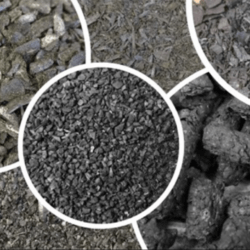
…. These formulations typically consist of tiny capsules filled with substances that contain nitrogen, phosphorus and other desired nutrients. The outer shell slows both the rate at which water can access the inner contents to liberate the nutrients and the rate at which the end products escape from the capsule. As a result, nutrients are meted out gradually, instead of in a wasteful, rapid burst that cannot be absorbed efficiently ….

Read full, original article: Smarter Fertilizers Can Reduce Environmental Contamination

Related Articles

Infographic: Global regulatory and health research agencies on whether glyphosate causes cancer

Infographic: Global regulatory and health research agencies on whether glyphosate causes cancer

Does glyphosate—the world's most heavily-used herbicide—pose serious harm to humans? Is it carcinogenic? Those issues are of both legal and ...

Most Popular

Screenshot-2026-11-09-at-1.40.16-PM
As measles cases continue to surge, RFK Jr. blocks CDC scientists from issuing emergency alert warning unvaccinated pregnant women of significantly increased risks
ChatGPT-Image-Mar-10-2026-01_39_01-PM
Viewpoint—“Miracle molecule” debunked: Why acemannan supplements don’t work
Screenshot-2026-11-09-at-3.01.19-PM
Are Texas data centers killing calves? Debunking viral AI claims
Colorful GLP-1 Pens with Clocks_tagger
Biohacker influencers are claiming GLP-1 weight loss drugs extend lifespan. One mice experiment suggests there may be some truth to the claim
Screenshot-2026-11-06-at-11.44.47-AM
'Gattaca stack': The eugenic, technological push to 'improve the human stock'
Neon Binary Code Bacteriophage
AI medicine breakthrough: Could ‘good viruses’ created by AI cure deadly diseases and infections?
Paper Field Portraits with Distant Barn (1)
Viewpoint: After MAHA-Republican election debacle, controversial campaigner Zen Honeycutt looks to sympathetic Democrats to promote her anti-chemical agenda
Stern-Profile-and-Marked-U.S.-Map
RFK Jr.’s collapsing legacy: U.S. poised to lose measles elimination status
gmos africa
Slow adoption: Only 15 of Africa’s 54 nations embrace genetic engineering food revolution. Here’s why
Children’s Health Defense Press Conference
As measles deaths among the unvaccinated hit a 35-year high, Kennedy-founded Children’s Health Defense bizarrely blames doctors for slow-walking a cure
Aerial Sprayer Over Gradient Fields
Farming, food, and chemicals: Post-midterms, the MAHA alliance between Democrats and MAGA Republicans is bruised but not cowed. What comes next?
Screenshot-2026-11-04-at-11.31.42-AM
Uneasy allies: Are MAHA and American agriculture careening toward a breakup?
glp menu logo outlined

Get news on human & agricultural genetics and biotechnology delivered to your inbox.