‘Elixir of life’: Can epigenetic reprogramming help us live longer and healthier?

salk x
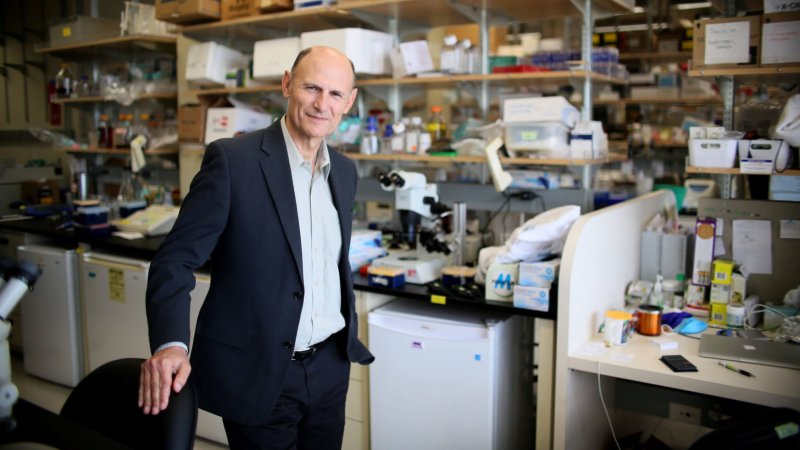
Scientist Juan Carkos Belmonte stands in a lab at the Salk Institute in La Jolla, California. Image: Sandy Huffaker for STAT News

[Juan Carlos]  Izpisúa Belmonte can rejuvenate aging, dying animals. He can rewind time. But just as quickly as he blows my mind, he puts a damper on the excitement. So potent was the rejuvenating treatment used on the mice that they either died after three or four days from cell malfunction or developed tumors that killed them later. An overdose of youth, you could call it.

The powerful tool that the researchers applied to the mouse is called “reprogramming.” It’s a way to reset the body’s so-called epigenetic marks: chemical switches in a cell that determine which of its genes are turned on and which are off. … Izpisúa Belmonte is in a vanguard of scientists who want to apply reprogramming to whole animals and, if they can control it precisely, to human bodies.

Izpisúa Belmonte believes epigenetic reprogramming may prove to be an “elixir of life” that will extend human life span significantly. Life expectancy has increased more than twofold in the developed world over the past two centuries. … But there is a limit to how long anyone lives, which Izpisúa Belmonte says is because our bodies wear down through inevitable decay and deterioration. “Aging,” he writes, “is nothing other than molecular aberrations that occur at the cellular level.”

Read full, original post: Has this scientist finally found the fountain of youth?


{{ reviewsTotal }}{{ options.labels.singularReviewCountLabel }}
{{ reviewsTotal }}{{ options.labels.pluralReviewCountLabel }}
{{ options.labels.newReviewButton }}
{{ userData.canReview.message }}

Related Articles

Infographic: Global regulatory and health research agencies on whether glyphosate causes cancer

Infographic: Global regulatory and health research agencies on whether glyphosate causes cancer

Does glyphosate—the world's most heavily-used herbicide—pose serious harm to humans? Is it carcinogenic? Those issues are of both legal and ...

Most Popular

ChatGPT-Image-Mar-10-2026-01_39_01-PM
Viewpoint—“Miracle molecule” debunked: Why acemannan supplements don’t work
ChatGPT-Image-Jun-25-2026-12_23_17-PM
No, Bill Gates did not secretly engineer ticks to promote veganism
ChatGPT-Image-Jul-7-2026-12_01_35-PM
Viewpoint: 21 worthless wellness trends inspired by RFK, Jr.’s ill-informed MAHA followers that can harm or even kill you.
Screenshot-2026-07-06-at-12.30.23-PM
2,300 endangered species: Controversial de-extinction company Colossal Biosciences joins U.S. effort to preserve their DNA
Screenshot 2026-07-08 at 10.13
What happens when a pro-life congresswoman needs an abortion?
ChatGPT-Image-Jul-9-2026-10_36_24-AM
Deeply-flawed ivermectin study revives scientifically unsupported miracle cancer drug myth
ChatGPT-Image-Jul-1-2026-03_33_49-PM
‘Alternative’ cancer treatments that could kill you
Screenshot-2026-06-05-at-2.12.30-PM
Some plants can poison you. So how did humans figure out what is safe to eat?

Sorry. No data so far.

glp menu logo outlined

Get news on human & agricultural genetics and biotechnology delivered to your inbox.