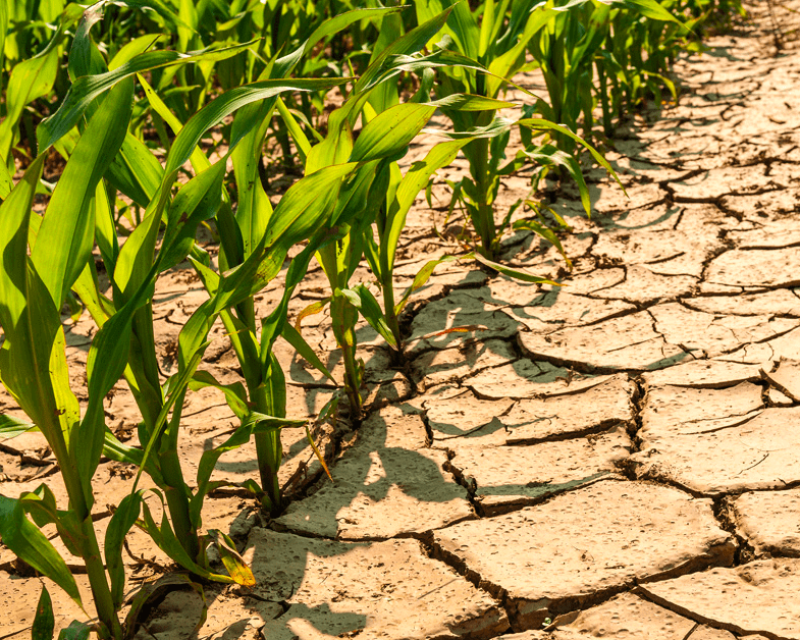
Drought resistant farming breakthrough: GMO corn survives nearly two months without water thanks to tomato genes, in field study

Screen Shot at PM

The intense desert to the south of the Coquimbo Region in Chile makes molecular biologist Simón Ruiz think about how to take advantage of the more than two million hectares of arid and semi-arid lands that Chile has.

“Many plant species cannot survive salinity, drought and constant temperature changes. We [are beginning] to test Chilean native plants that can withstand these conditions and produce transgenic seeds, ” he says.

Ruiz explains that a transgenic (GMO) crop is an organism that receives one or more genes from another species. …. To illustrate what such a crop is, he describes his work with a tomato variety that grows in the Atacama Desert, between 2,500 and 3,000 meters above sea level. The selected seed, Solanum chilense, is so resistant to lack of water, that it produces tomato fruits throughout the year.

The crop only receives water from the Bolivian winter rains, if they come, and absorbs what it can …. Ruiz’s team isolated …. 78 genes that confer tolerance to drought, salinity and cold.

With all the genes identified, he says, they wanted to modify a food that could really address the problem of hunger. “We chose corn because it is widely used in the world,” he says.

[Editor’s note: This article was originally published in Spanish and has been translated and edited for clarity.]

Read full, original article: Chilean scientist develops transgenic corn that resists 52 days without water


{{ reviewsTotal }}{{ options.labels.singularReviewCountLabel }}
{{ reviewsTotal }}{{ options.labels.pluralReviewCountLabel }}
{{ options.labels.newReviewButton }}
{{ userData.canReview.message }}

Related Articles

Infographic: Global regulatory and health research agencies on whether glyphosate causes cancer

Infographic: Global regulatory and health research agencies on whether glyphosate causes cancer

Does glyphosate—the world's most heavily-used herbicide—pose serious harm to humans? Is it carcinogenic? Those issues are of both legal and ...

Most Popular

Screenshot-2026-04-22-at-12.21.32-PM
Viewpoint: Why the retracted Monsanto glyphosate study doesn’t change the science—the world’s most popular herbicide is safe 
Picture1
The FDA couldn’t find a vaccine safety crisis, so it buried its own research
ChatGPT-Image-May-1-2026-11_42_59-AM-2
Viewpoint: NAD is the wellness grifters latest evidence-lite longevity fad. At least the mice are impressed.
global warming
‘Implausible’: Top climate scientists reject worst-case scenario—soaring temperatures and fast-rising sea levels
ChatGPT-Image-Apr-16-2026-02_56_53-PM
Financial incentives, over diagnosis, and weak oversight: Autism claims are driving up Medicare costs
Screenshot-2026-05-21-at-12.15.17-PM
UK gene-editing milestone: Livestock barley that increases ruminant value and reduces methane emissions is first-approved CRISPR crop
vax-misinformation-main
Facts & Fallacies Podcast: Limit free speech to blunt social media misinfo?
Screenshot-2026-05-21-at-3.15.53-PM
Chiropractors may no longer be modern-day snake oil salesmen, but the benefits of their therapy are limited–at best
ChatGPT-Image-May-12-2026-11_27_01-AM-2
AI likely to improve health care, research shows—but not for blacks and ethnic minorities
Screenshot-2026-05-20-at-5.11.17-PM
Viewpoint: No, sugar doesn’t ‘feed’ cancer — common cancer myths, debunked

Sorry. No data so far.

glp menu logo outlined

Get news on human & agricultural genetics and biotechnology delivered to your inbox.