Programming CRISPR to fight viruses could lead to new treatments for Ebola, Zika

crispr could make you immune to the flu x
Image: Niaid/Tag Hartman-Simkins

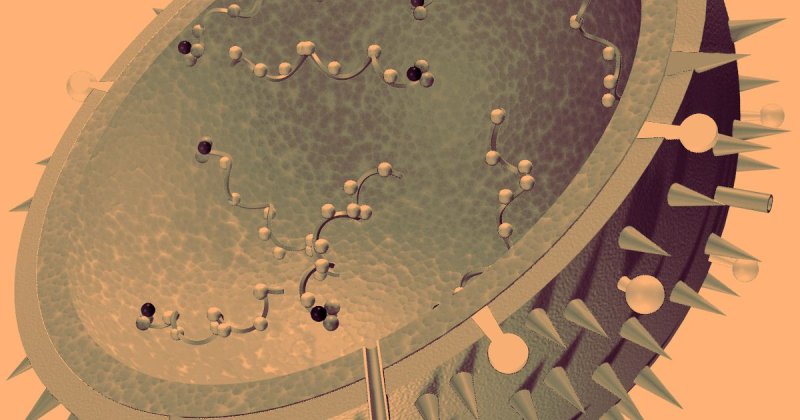
CRISPR is usually thought of as a laboratory tool to edit DNA in order to fix genetic defects or enhance certain traits—but the mechanism originally evolved in bacteria as a way to fend off viruses called bacteriophages. Now, scientists have found a way to adapt this ability to fight viruses in human cells.

In a recent study, Catherine Freije and Cameron Myhrvold of the Broad Institute of MIT and Harvard and their colleagues programmed a CRISPR-related enzyme to target three different single-stranded RNA viruses in human embryonic kidney cells (as well as human lung cancer cells and dog kidney cells) grown in vitro, and chop them up, rendering them largely unable to infect additional cells. If further experiments show this process works in living animals, it could eventually lead to new antiviral therapies for diseases such as Ebola or Zika in humans.

Beyond therapeutics, the team hopes to understand more about how viruses operate—how they replicate and what parts of their genomes are most important. Using approaches like this, “you can really start to get a better picture of what parts of these viruses are, and most importantly, what really makes them tick.”

Read full, original post: Scientists Program CRISPR to Fight Viruses in Human Cells

{{ reviewsTotal }}{{ options.labels.singularReviewCountLabel }}
{{ reviewsTotal }}{{ options.labels.pluralReviewCountLabel }}
{{ options.labels.newReviewButton }}
{{ userData.canReview.message }}

Related Articles

Infographic: Global regulatory and health research agencies on whether glyphosate causes cancer

Infographic: Global regulatory and health research agencies on whether glyphosate causes cancer

Does glyphosate—the world's most heavily-used herbicide—pose serious harm to humans? Is it carcinogenic? Those issues are of both legal and ...

Most Popular

Picture1
The FDA couldn’t find a vaccine safety crisis, so it buried its own research
Screenshot-2026-04-22-at-12.21.32-PM
Viewpoint: Why the retracted Monsanto glyphosate study doesn’t change the science—the world’s most popular herbicide is safe 
ChatGPT-Image-May-7-2026-12_32_36-PM
Viewpoint: The state of U.S. vaccine policy? Dismal nationally, but some states are stepping up.
Screenshot-2026-05-19-at-11.23.34-AM
West-originated vaccine disinformation sparks murders of health care workers across Africa
_20250221_nib_rfk_trump
Viewpoint: 'Crisis of public trust': Autism support community shocked RFK continues to peddle false claims about the danger of vaccines
placebo
Viewpoint — Alternative medicine and the placebo effect: Selling a reassuring illusion of health
ChatGPT-Image-May-18-2026-01_45_05-PM-2
Newest hantavirus conspiracy: Online disinformation turns outbreak into latest ivermectin grift
Screenshot-2026-04-13-at-1.39.26-PM
Viewpoint: ‘Safer for children?’ Stonyfield yogurt under fire for deceptive organic marketing
ChatGPT-Image-May-18-2026-12_06_18-PM-2
Defying death: The immortality movement goes mainstream
Defense_Secretary_Ash_Carter_tours_the_Microsoft_Cybercrime_Center_in_Seattle_March_3_2016
How criminals are using AI to target social media users and steal their money and confidential data
glp menu logo outlined

Get news on human & agricultural genetics and biotechnology delivered to your inbox.