India should ‘definitely adopt’ new GMO crops, nation’s top biotech cotton expert argues

e c e

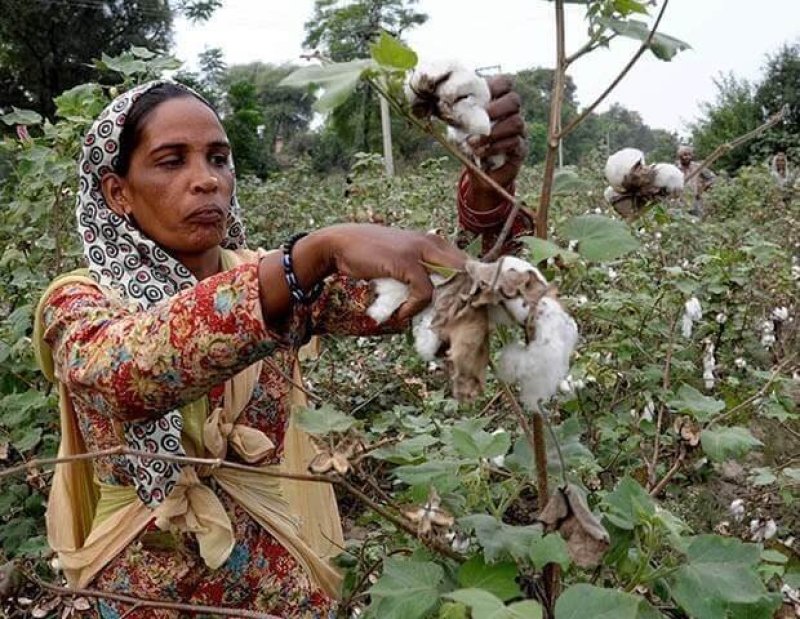
The logjam in approval of newer genetically modified (GM) cotton seeds [in India] has catalyzed planting of unauthorized seeds known as herbicide-tolerant [and insect-resistant] (HTBt) [cotton]. Vijay N Waghmare, director of the Central Institute for Cotton Research (CICR), Nagpur, speaks to Vishwa Mohan on the issue:

[Editor’s note: Read India moves to restrict cultivation of illegal but easily acquired GMO herbicide-tolerant, insect-resistant cotton for background on the regulatory situation in India.]

What would you advise farmers who are forced to use HTBt as their cost of production has increased substantially due to weeding problem with the authorized Bt?

Since [the] Genetic Engineering Appraisal Committee (GEAC), which [makes the] call on genetically modified organism (GMO), has not approved the HTBt variety, I would suggest farmers not to go for this. It’s illegal.

What’s your view as a scientist on GM varieties?

We should definitely adopt new technology like what we did by introducing Bt legally in 2002. It could effectively control bollworm. As a result, areas under cotton crop, production and productivity have increased substantially. Now, we have noticed that even the legally available Bt has become vulnerable to pink bollworm infestation in Gujarat, Maharashtra and southern states.

On the other hand, Punjab, Haryana and Rajasthan don’t have this problem as these states could go for second crop after terminating cotton in October due to assured irrigation.


Read the original post

{{ reviewsTotal }}{{ options.labels.singularReviewCountLabel }}
{{ reviewsTotal }}{{ options.labels.pluralReviewCountLabel }}
{{ options.labels.newReviewButton }}
{{ userData.canReview.message }}

Related Articles

Infographic: Global regulatory and health research agencies on whether glyphosate causes cancer

Infographic: Global regulatory and health research agencies on whether glyphosate causes cancer

Does glyphosate—the world's most heavily-used herbicide—pose serious harm to humans? Is it carcinogenic? Those issues are of both legal and ...

Most Popular

Screenshot-2026-05-01-at-1.29.41-PM
Viewpoint: What happens when whole grains meet modern food manufacturing? Labels don’t tell the whole story.
ChatGPT-Image-Mar-27-2026-11_47_30-AM-2
FDA’s expedited drug reviews are hailed in some quarters but other approval practices are problematic
ChatGPT-Image-Apr-13-2026-02_20_22-PM
Viewpoint: Misinformation infodemic? Why assessing evidence is so challenging 
Farmers can talk to plants
Farmers are a major source of misinformation—about farming
S
As vaccine rejectionism spreads, measles may be taking a more dangerous turn
What explains Homo sapiens’ huge brains? Ancient climate change played a role
Viewpoint: Internal White House documents detail administration’s strategy to undermine climate science
Screenshot-2026-04-20-at-2.26.27-PM
Viewpoint — Food-fear world: The latest activist scientists campaign: Cancer-causing additives
ChatGPT-Image-May-7-2026-11_28_04-AM-2
‘Conflict entrepreneurs’ are driving disinformation and shaping public opinion
bigstock opioids on chalkboard with rol
GLP podcast: 'Safe injection sites': enabling drug addiction or saving lives?
ChatGPT-Image-May-6-2026-03_41_05-PM
‘Protecting the integrity of science’: Kennedy’s FDA blocks release of taxpayer-funded studies finding COVID and shingles vaccines safe
Screenshot 2026-05-06 at 2.19
Vaccine shootout at the CDC 
circular-bioeconomy-should-focus-on-sustainable-wellbeing
GLP podcast: What's wrong with 'doomsday' environmentalism? It's false.
Screenshot-2026-05-06-at-2.07.43-PM
Manufacturing a conspiracy: The timeline of how  the White House embraced the fringe claim that scientists are being mysteriously murdered

Sorry. No data so far.

glp menu logo outlined

Get news on human & agricultural genetics and biotechnology delivered to your inbox.