GMO Golden Rice meets safety standards set by Philippines, Bangladesh, and Indonesia, assessment shows

a b beddcd e b d
Image: Erik De Castro / Reuters

Vitamin A deficiency (VAD) persists as a major public health nutrition problem, especially in sub-Saharan Africa and South Asia. Severe deficiency can lead to disorders such as xerophthalmia, the leading cause of preventable childhood blindness, anemia, and weakened host resistance to infection, which can increase the severity of infectious diseases and risk of death.

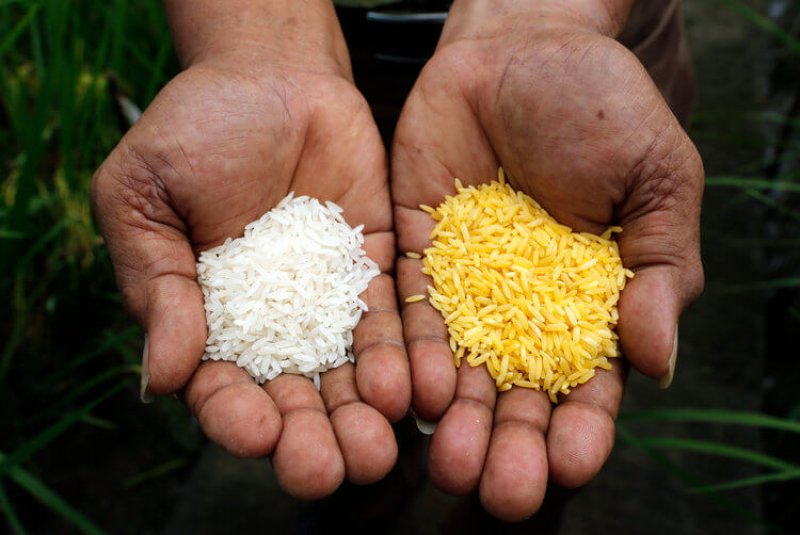
Golden Rice event 2E (GR2E) was developed through the use of recombinant-DNA techniques to express elevated levels of provitamin A (mainly ß-carotene) in the endosperm, which is converted in the body to vitamin A.

Completion of the food safety assessment is a necessary prerequisite to the conduct of bioefficacy studies with GR2E, which are an important component in demonstrating the value of GR2E rice in mitigating VAD. The totality of the assessment that provides assurance that GR2E is as safe as conventional rice involves characterization of introduced genes and proteins, which is discussed in this paper and also additionally, comparative analysis of the composition of rice used for food and feed.


In summary, the molecular-genetic characterization of GR2E rice, including the assessment of potential toxic or allergic reaction to the newly expressed ZmPSY1 and CRTI proteins, when considered together with the comparative compositional assessment, support the conclusion that food derived from rice varieties containing event GR2E is as safe as food derived from conventional rice varieties. All the data presented in the regulatory dossier is mainly intended to meet the regulatory requirements in Philippines, Bangladesh, and Indonesia.


Read the original post

Related Articles

Infographic: Global regulatory and health research agencies on whether glyphosate causes cancer

Infographic: Global regulatory and health research agencies on whether glyphosate causes cancer

Does glyphosate—the world's most heavily-used herbicide—pose serious harm to humans? Is it carcinogenic? Those issues are of both legal and ...

Most Popular

ChatGPT-Image-Mar-10-2026-01_39_01-PM
Viewpoint—“Miracle molecule” debunked: Why acemannan supplements don’t work
Screenshot-2026-09-10-at-11.50.46-AM
Did COVID vaccines kill 2,500 service members? RFK Jr. hires an investigator who compares vaccine promoters to Nazi doctors
Screenshot-2026-09-11-at-2.26.23-PM
Newly approved GMO chestnut trees planted across from the White House are stirring debate
ChatGPT-Image-Sep-13-2026-10_24_17-AM
Bayer urges court to approve $7.25 billion Monsanto Roundup settlement that could limit its future liabilities
Screenshot-2026-09-10-at-12.20.19-PM
'Jet fuel didn't melt the steel': 9/11 conspiracy theories debunked
ChatGPT-Image-Sep-15-2026-05_59_18-PM
RFK Jr. spent two years distancing himself from Children’s Health Defense. Now he’s keynoting its anti-vaccine DC conference.
Screenshot 2026-09-10 at 11.28
A meaty problem: How to make cell-grown protein taste like steak, chicken, and seafood
Screenshot-2026-09-15-at-11.04.54-AM
Viewpoint: Childhood deaths in dispute: Why the CDC vs Pennsylvania conflict over measles vaccines matters
ChatGPT-Image-Aug-28-2026-03_33_46-PM
Viewpoint: Bad science—Five bogus Trump administration claims about vaccines and autism
ChatGPT-Image-Sep-15-2026-06_05_13-PM
CRISPR fine-tuning unlocks vitamin C-rich potatoes without yield loss
Screenshot-2026-09-16-at-12.07.47-PM
The heated debate over trans athletes in the WNBA
ChatGPT-Image-Aug-14-2026-11_16_47-AM
Fibermaxxing: Latest Instagram diet craze raises hope that a fiber-rich diet can improve health
glp menu logo outlined

Get news on human & agricultural genetics and biotechnology delivered to your inbox.