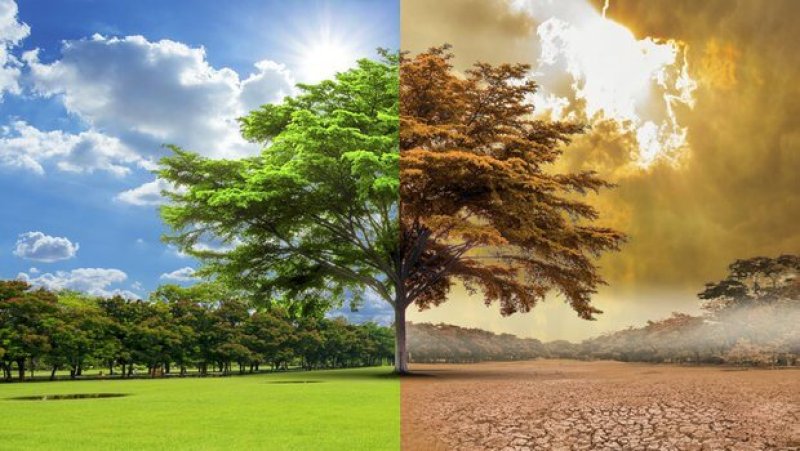
How synthetic biology in farming could slow climate change: ‘Supercharged’ photosynthesis, increased CO2 storage and more are in the works

image f eb ba c ad a
Credit: Shutterstock

Efforts to improve the genetics of food crops are as old as agriculture …. but synthetic biology techniques, including CRISPR-Cas9 and other gene-editing systems, have sped up the process and made new approaches possible. As climate change threatens the world’s food-growing systems, plant scientists, industry, and governments hope to use these powerful methods to make plants hardier and land more productive. Here are some of their targets.

Shrinking stems

Bayer Crop Science is …. developing and field-testing conventionally bred and genetically modified corn varieties that are a meter or more shorter—and much sturdier—than any corn that farmers have previously grown. According to Bob Reiter, head of R&D for Bayer Crop Science, farmers should be able to pack more of the smaller plants into the same area, thereby producing more food on the same land, and prevent stems from breaking in the wind.
Extending Roots

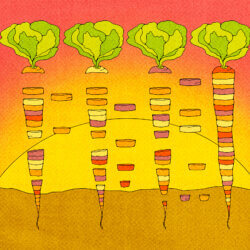
Several groups are working to boost crop yields by improving and increasing root formation. Researchers at the Salk Institute for Biological Studies are taking the idea one step further by making plants with roots that are not only bigger but also resistant to decomposition, potentially enabling them to store more carbon underground.


Read the original post

{{ reviewsTotal }}{{ options.labels.singularReviewCountLabel }}
{{ reviewsTotal }}{{ options.labels.pluralReviewCountLabel }}
{{ options.labels.newReviewButton }}
{{ userData.canReview.message }}

Related Articles

Infographic: Global regulatory and health research agencies on whether glyphosate causes cancer

Infographic: Global regulatory and health research agencies on whether glyphosate causes cancer

Does glyphosate—the world's most heavily-used herbicide—pose serious harm to humans? Is it carcinogenic? Those issues are of both legal and ...

Most Popular

Screenshot-2026-05-01-at-1.29.41-PM
Viewpoint: What happens when whole grains meet modern food manufacturing? Labels don’t tell the whole story.
Farmers can talk to plants
Farmers are a major source of misinformation—about farming
Screenshot-2026-04-12-135256
Bixonimania: The fake disease scam that AI swallowed whole
ChatGPT-Image-Apr-13-2026-02_20_22-PM
Viewpoint: Misinformation infodemic? Why assessing evidence is so challenging 
bigstock opioids on chalkboard with rol
GLP podcast: 'Safe injection sites': enabling drug addiction or saving lives?
a ufo a photoblog
U.S. government accused of pushing ‘fake news’ about UFOs to cover-up secret dark-project drone and aircraft technology
ChatGPT-Image-Mar-27-2026-11_47_30-AM-2
FDA’s expedited drug reviews are hailed in some quarters but other approval practices are problematic
S
As vaccine rejectionism spreads, measles may be taking a more dangerous turn

Sorry. No data so far.

glp menu logo outlined

Get news on human & agricultural genetics and biotechnology delivered to your inbox.