Why do humans have tailbones?

maxresdefault
Image: Steven Becker

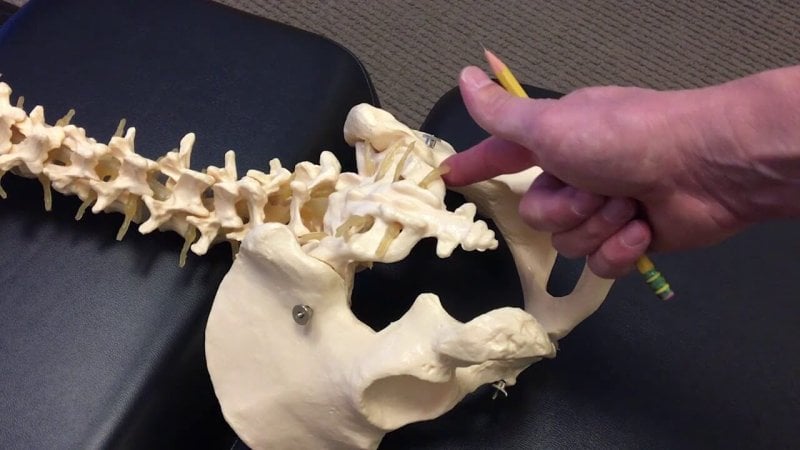
Though it’s currently useless, the human coccyx—commonly referred to as the tailbone—remains nestled at the bottom of the spine, a remnant of our tailed ancestors. Long before human tail-lessness, our early fish relatives had two: A fleshy one and a more flexible fin. As animals took to land, they lost the back fin and kept the fleshier appendage.

Eventually, apes ditched them. These primates no longer required tails to maintain balance or send social signals.

Other land animals still use tails for functions like movement, communication, and swatting insects, while fish maintained their fins to masterfully navigate through water.

Meanwhile, we humans have held onto a tailbone—several fused caudal vertebrae of the same sort found in actual tails—for no apparent reason. Neither harmful nor beneficial, it simply sits attached to the sacrum.

Scientists call these evolutionary holdovers “vestiges”: The term comes from the Latin word vestigium, meaning footprint. Vestigial features can range from anatomical structures like bones and organs to physiological phenomena like goosebumps; when our furrier ancestors got cold, their hairs stood up to provide insulation.

Though scientists disagree on the specifics, the standard definition claims that vestiges lack a present function.

Read the original post

{{ reviewsTotal }}{{ options.labels.singularReviewCountLabel }}
{{ reviewsTotal }}{{ options.labels.pluralReviewCountLabel }}
{{ options.labels.newReviewButton }}
{{ userData.canReview.message }}

Related Articles

Infographic: Global regulatory and health research agencies on whether glyphosate causes cancer

Infographic: Global regulatory and health research agencies on whether glyphosate causes cancer

Does glyphosate—the world's most heavily-used herbicide—pose serious harm to humans? Is it carcinogenic? Those issues are of both legal and ...

Most Popular

ChatGPT Image Jun 3, 2026, 03_14_43 PM
Viewpoint: How Earthjustice became the poster child for the abuse of special interest activist funding
ChatGPT Image Jun 3, 2026, 03_54_37 PM
Viewpoint: “Turn on, tune in, drop out”—Kennedy embraces the Timothy Leary psychedelic revolution
Screenshot-2026-06-05-at-2.12.30-PM
Some plants can poison you. So how did humans figure out what is safe to eat?
ChatGPT-Image-Mar-10-2026-01_39_01-PM
Viewpoint—“Miracle molecule” debunked: Why acemannan supplements don’t work
ChatGPT-Image-Jun-11-2026-01_15_03-PM
Selective Pressure, Selective Silence
Screenshot 2026-05-26 at 10.15
Viewpoint: Double standard—Why does the wellness industry get a free pass while Big Healthcare is treated as morally suspect?
ChatGPT Image Jun 1, 2026, 11_39_17 AM
Viewpoint: When food myths go viral, farmers pay the price
ChatGPT Image May 28, 2026, 08_16_38 PM
Viewpoint: Why the EPA mismeasures cancer risk of chemicals and what should be done to fix it
ChatGPT Image May 26, 2026, 08_42_17 AM (1)
Viewpoint: Greenpeace and poison: How environmental advocacy groups rely on compliant (and often ignorant) journalists to spread disinformation and spark litigation
Picture1
Sounds we can’t hear — the hidden planetary signals behind science, fear, and misinformation

Sorry. No data so far.

glp menu logo outlined

Get news on human & agricultural genetics and biotechnology delivered to your inbox.