Impossible Foods touts eco-benefits of its GMO plant-based burger to win over skeptical consumers

impossible
Image: Morels Cafe

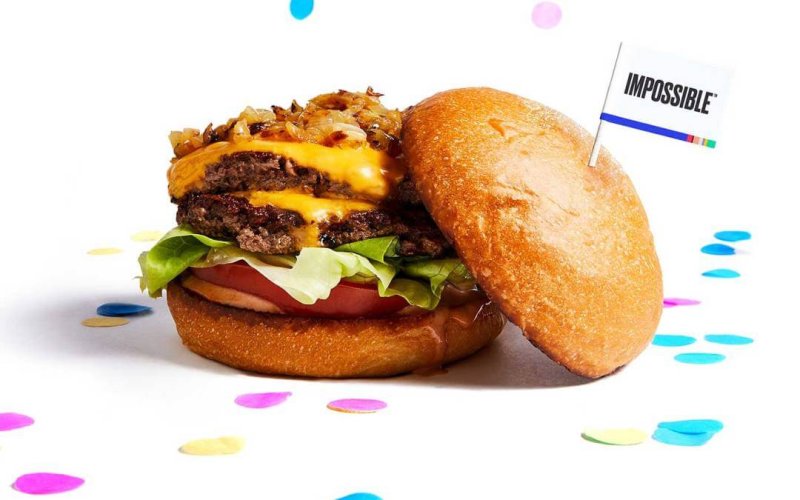
Impossible Foods has claimed a spot on the menus of fast-food chains like Restaurant Brands International’s Burger King and White Castle, making it a major player in the growing alternative meat market. One thing separating it from the crowd: GMOs.

Unlike its biggest competitor Beyond Meat, which touts Non-GMO Project verification for all its plant-based proteins, Impossible Foods uses multiple genetically modified ingredients.

Since Impossible Foods first debuted in restaurants, advocacy groups including the Center for Food Safety, Non-GMO Project and Friends of the Earth all have raised concerns with the available research on its products’ ingredients.

A 2018 Pew Research Center poll found that 49% of consumers say foods with GMO ingredients are unhealthier than GMO-free foods — up from 39% in the center’s 2016 survey.


Despite this, the Impossible Burger has seen nationwide success, focusing its marketing strategy on environmental benefits. Impossible Foods reports that its manufacturing process causes significantly less damage to the environment than beef production, requiring 87% less water, 96% less land and 80% less herbicide, as well as releasing 89% fewer greenhouse gases into the atmosphere.

The National Restaurant Association predicted in a November report that plant-based proteins will continue to surge in popularity …. partially due to increased consumer attention to climate change.


Read the original post

{{ reviewsTotal }}{{ options.labels.singularReviewCountLabel }}
{{ reviewsTotal }}{{ options.labels.pluralReviewCountLabel }}
{{ options.labels.noReviewsLabel }}
{{ options.labels.newReviewButton }}
{{ userData.canReview.message }}

Related Articles

Infographic: Global regulatory and health research agencies on whether glyphosate causes cancer

Infographic: Global regulatory and health research agencies on whether glyphosate causes cancer

Does glyphosate—the world's most heavily-used herbicide—pose serious harm to humans? Is it carcinogenic? Those issues are of both legal and ...

Most Popular

ChatGPT-Image-Mar-10-2026-01_39_01-PM
Viewpoint—“Miracle molecule” debunked: Why acemannan supplements don’t work
Screenshot 2026-07-11 094410
Growing animal muscle and fat cells inside rice grains and calling it beef: One of numerous genetically engineered products shaking up our ecosystem
file-f-d-d-
Facts & Fallacies Podcast: Europe's AC debacle underscores fatal flaw in green activism
Screenshot-2026-07-16-at-11.32.12-AM
Viewpoint: Trump appoints climate change hoax promoter to head influential government policy project
Screenshot 2026-07-16 at 8.49
Pete Hegseth’s bizarre Viagra commercial as Trump administration endorses ‘hormone replacement therapy’
ChatGPT-Image-Jun-25-2026-12_23_17-PM
No, Bill Gates did not secretly engineer ticks to promote veganism
Screenshot-2026-07-16-at-6.02.54-PM
Wellness grifters overwhelm information channels in the developing world, and the problem is escalating
Screenshot 2025-09-17 at 12.41
Misinformation alert: No, glyphosate use in Canadian forests is not spurring more wildfires
ChatGPT-Image-Jul-9-2026-02_39_22-PM
Viewpoint: Polyphenols or NAD+ supplements to combat aging: No, Gwenyth Paltrow and followers, don’t waste your money.
ChatGPT-Image-Jul-1-2026-03_33_49-PM
‘Alternative’ cancer treatments that could kill you
Screenshot-2026-07-16-at-12.08.38-PM
Viewpoint: With trust in doctors and mainstream medicine collapsing, medical professionals need a new communications strategy
Screenshot-2026-07-08-at-9.36.03-AM
Viewpoint: Long-contained diseases are on the rise in the U.S. Are Trump cuts to blame?

Sorry. No data so far.

glp menu logo outlined

Get news on human & agricultural genetics and biotechnology delivered to your inbox.