Can Google’s medical AI improve our medical system? Laboratory results and real life offer different answers

image
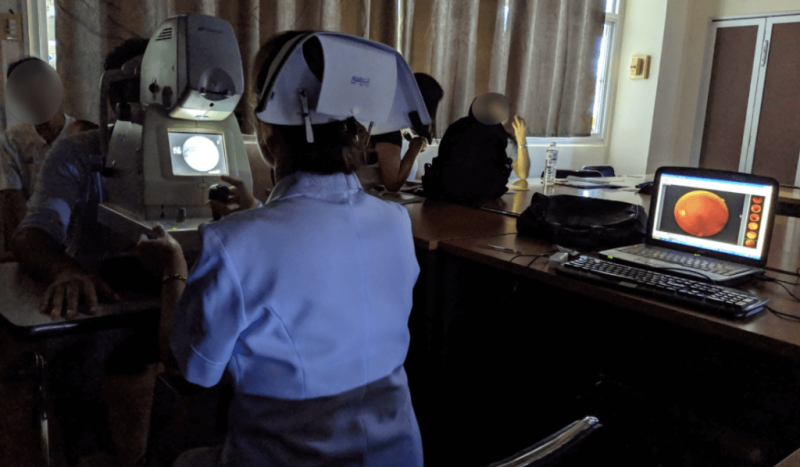
A nurse operates the retinal scanner, taking images of the back of a patient’s eye. Credit: Google
[A] study from Google Health—the first to look at the impact of a deep-learning tool in real clinical settings—reveals that even the most accurate AIs can actually make things worse.

In the system Thailand had been using, nurses take photos of patients’ eyes during check-ups and send them off to be looked at by a specialist elsewhere­—a process that can take up to 10 weeks. AI developed by Google Health can identify signs of diabetic retinopathy from an eye scan with more than 90% accuracy—which the team calls “human specialist level”—and, in principle, give a result in less than 10 minutes.

When it worked well, the AI did speed things up. But it sometimes failed to give a result at all. Like most image recognition systems, the deep-learning model had been trained on high-quality scans; to ensure accuracy, it was designed to reject images that fell below a certain threshold of quality. With nurses scanning dozens of patients an hour and often taking the photos in poor lighting conditions, more than a fifth of the images were rejected.

“This is a crucial study for anybody interested in getting their hands dirty and actually implementing AI solutions in real-world settings,” says [AI researcher] Hamid Tizhoosh.


Read the original post

{{ reviewsTotal }}{{ options.labels.singularReviewCountLabel }}
{{ reviewsTotal }}{{ options.labels.pluralReviewCountLabel }}
{{ options.labels.newReviewButton }}
{{ userData.canReview.message }}

Related Articles

Infographic: Global regulatory and health research agencies on whether glyphosate causes cancer

Infographic: Global regulatory and health research agencies on whether glyphosate causes cancer

Does glyphosate—the world's most heavily-used herbicide—pose serious harm to humans? Is it carcinogenic? Those issues are of both legal and ...

Most Popular

Picture1
The FDA couldn’t find a vaccine safety crisis, so it buried its own research
Screenshot-2026-04-22-at-12.21.32-PM
Viewpoint: Why the retracted Monsanto glyphosate study doesn’t change the science—the world’s most popular herbicide is safe 
Screenshot-2026-05-19-at-11.23.34-AM
West-originated vaccine disinformation sparks murders of health care workers across Africa
ChatGPT-Image-May-7-2026-12_32_36-PM
Viewpoint: The state of U.S. vaccine policy? Dismal nationally, but some states are stepping up.
Screenshot-2026-04-12-135256
Bixonimania: The fake disease scam that AI swallowed whole
ChatGPT-Image-May-12-2026-11_27_01-AM-2
AI likely to improve health care, research shows—but not for blacks and ethnic minorities
_20250221_nib_rfk_trump
Viewpoint: 'Crisis of public trust': Autism support community shocked RFK continues to peddle false claims about the danger of vaccines
glp menu logo outlined

Get news on human & agricultural genetics and biotechnology delivered to your inbox.