Climate change won’t ‘invariably’ cause social collapse—it’s a lot more complicated than that

hollands for schug x
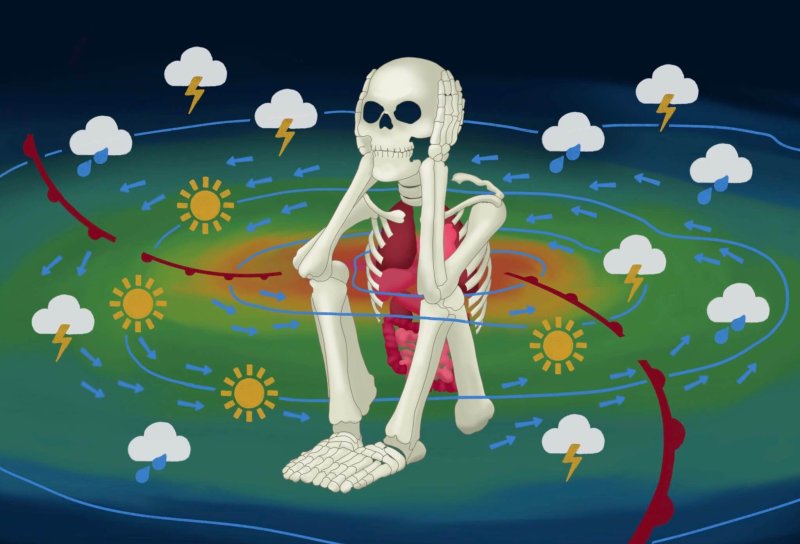
Credit: Charlotte Hollands

Currently, global planning bodies are working on their responses to climate and environmental change and public health concerns. Unfortunately, these professionals don’t typically rely on archaeology to inform their decision making.

Let’s examine the claim that climate change will invariably lead to environmental migration, competition for resources, interpersonal violence, and societal collapse. Bioarcheological research shows that although mobility can be an important strategy for coping with environmental change, climate change does not always lead to migration and migration does not always lead to violence. In some cases, drought and socio-political changes have been triggers for large-scale migration (for example, Beekman 2015). Sometimes increasing mobility in a period of changing environment has also been associated with an increased level of socio-political instability or interpersonal violence (for example, Tung et al. 2016). But in other cases, societies form cooperative alliances with other communities for exchange and resource redistribution (see Harrod and Martin 2013).  

It is up to anthropologists to demonstrate the importance of historical, social, and cultural forces in shaping human perceptions of climate change, decision making, and the consequences of different choices over the long term. These considerations are vital if we are to respond, adapt, and thrive.

Read the original post

{{ reviewsTotal }}{{ options.labels.singularReviewCountLabel }}
{{ reviewsTotal }}{{ options.labels.pluralReviewCountLabel }}
{{ options.labels.newReviewButton }}
{{ userData.canReview.message }}

Related Articles

Infographic: Global regulatory and health research agencies on whether glyphosate causes cancer

Infographic: Global regulatory and health research agencies on whether glyphosate causes cancer

Does glyphosate—the world's most heavily-used herbicide—pose serious harm to humans? Is it carcinogenic? Those issues are of both legal and ...

Most Popular

ChatGPT-Image-May-7-2026-12_16_37-PM-2
Viewpoint: Are cancer rates ‘skyrocketing’ as RFK, Jr. and MAHA claims? The evidence says mostly the opposite
Screenshot-2026-04-13-at-1.39.26-PM
Viewpoint: ‘Safer for children?’ Stonyfield yogurt under fire for deceptive organic marketing
Screenshot-2026-04-22-at-10.46.29-AM
Viewpoint: How to counter science disinformation? Science journalist offers 12 practical tips
png-pill-omega-Supp-fish-oil
Millions take omega-3 fish oil for brain health. New research suggests it may do the opposite.
Picture1-5
Science Disinformation Gap: The transatlantic battle over social media and censorship
ChatGPT Image May 14, 2026, 09_51_35 PM
Facebook swamped by hundreds of thousands of scam ads for illegal or dangerous medical products
Screenshot-2026-04-23-at-11.00.36-AM
Regulators' dilemma: Thalidomide, Metformin, and the cost of getting drug approvals wrong
ChatGPT Image May 12, 2026, 01_21_30 PM
How big health brands are funding online medical misinformation 
ChatGPT-Image-May-13-2026-12_43_37-PM-2
Longevity: Is cellular rejuvenation even possible?
glp menu logo outlined

Get news on human & agricultural genetics and biotechnology delivered to your inbox.