‘Bridge to transplant’: Mini human livers grown in rats spurs research that could alleviate transplant shortage

d db c d c lab grown mini liver
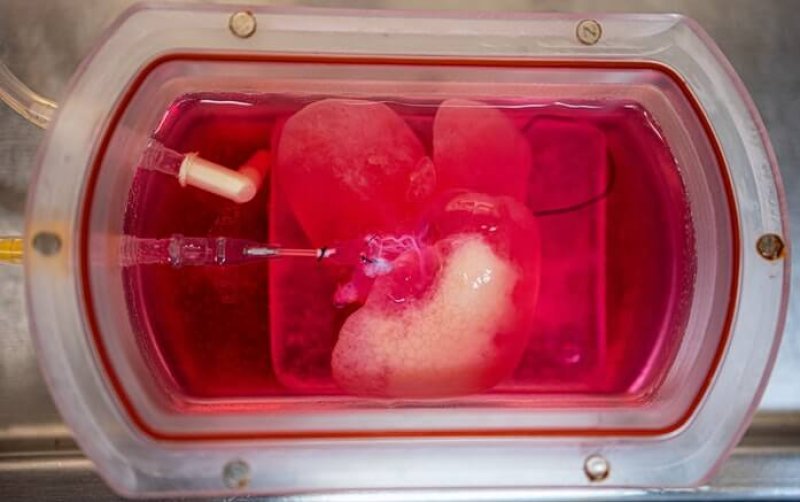
A lab-grown mini liver originally derived from human skin cells in the team's bioreactor. Credit: University of Pittsburgh

Using skin cells from human volunteers, researchers at the University of Pittsburgh School of Medicine have created fully functional mini livers, which they then transplanted into rats.

In this proof-of-concept experiment, the lab-made organs survived for four days inside their animal hosts. These results were published [June 2] in Cell Reports.

โ€œSeeing that little human organ there inside the animal โ€“ brown, looking like a liver โ€“ that was pretty cool. This thing that looks like a liver and functions like a liver came from somebodyโ€™s skin cells,โ€ said senior author Alejandro Soto-Gutierrez.

โ€ฆ

These mini livers secrete bile acids and urea, just like a normal liver, except theyโ€™re made-to-order in the lab using patient cells.

โ€ฆ

In all cases, blood flow problems had developed within and around the graft, but the transplanted mini livers worked โ€“ the rats had human liver proteins in their blood serum.

Soto-Gutierrez is optimistic that this research is not merely a stepping-stone on the path toward growing replacement organs in a lab, but also a useful tool in its own right.

โ€œThe long-term goal is to create organs that can replace organ donation, but in the near future, I see this as a bridge to transplant,โ€ Soto-Gutierrez said. โ€œFor instance, in acute liver failure, you might just need hepatic boost for a while instead of a whole new liver.โ€

Read the original post

{{ reviewsTotal }}{{ options.labels.singularReviewCountLabel }}
{{ reviewsTotal }}{{ options.labels.pluralReviewCountLabel }}
{{ options.labels.newReviewButton }}
{{ userData.canReview.message }}

Related Articles

Infographic: Global regulatory and health research agencies on whether glyphosate causes cancer

Infographic: Global regulatory and health research agencies on whether glyphosate causes cancer

Does glyphosateโ€”the world's most heavily-used herbicideโ€”pose serious harm to humans? Is it carcinogenic? Those issues are of both legal and ...

Most Popular

vax-misinformation-main
Facts & Fallacies Podcast: Limit free speech to blunt social media misinfo?
Picture1
The FDA couldnโ€™t find a vaccine safety crisis, so it buried its own research
ChatGPT-Image-Apr-16-2026-02_56_53-PM
Financial incentives, over diagnosis, and weak oversight: Autism claims are driving up Medicare costs
ChatGPT-Image-May-12-2026-11_27_01-AM-2
AI likely to improve health care, research showsโ€”but not for blacks and ethnic minorities
modi visit sikkim
Viewpoint: Indian PM wants farmers to switch to 50% organic. It would take at least 10 years, likely wonโ€™t work, and isnโ€™t more sustainable
Screenshot-2026-04-22-at-12.21.32-PM
Viewpoint: Why the retracted Monsanto glyphosate study doesnโ€™t change the scienceโ€”the worldโ€™s most popular herbicide is safeย 
newborn infant baby mother
Sharp rise in number of parents refusing newborn vitamin K shots, putting babies at 81-fold higher risk of severe bleeding
ChatGPT-Image-May-20-2026-04_53_21-PM-2
Viewpoint: Doctors can fight health misinformation โ€” if hospitals let them
ChatGPT-Image-May-7-2026-12_32_36-PM
Viewpoint: The state of U.S. vaccine policy? Dismal nationally, but some states are stepping up.
Screenshot-2026-05-19-at-11.23.34-AM
West-originated vaccine disinformation sparks murders of health care workers across Africa
Screenshot-2026-05-18-at-3.04.37-PM-2
Social mediaโ€™s health advice red flags
Screenshot-2026-04-13-at-1.39.26-PM
Viewpoint: โ€˜Safer for children?โ€™ Stonyfield yogurt under fire for deceptive organic marketing
Screenshot-2026-05-18-at-12.57.12-PM
Viewpointโ€”โ€˜Technology is pulling us apartโ€™: Environmental, political, and economic
glp menu logo outlined

Get news on human & agricultural genetics and biotechnology delivered to your inbox.