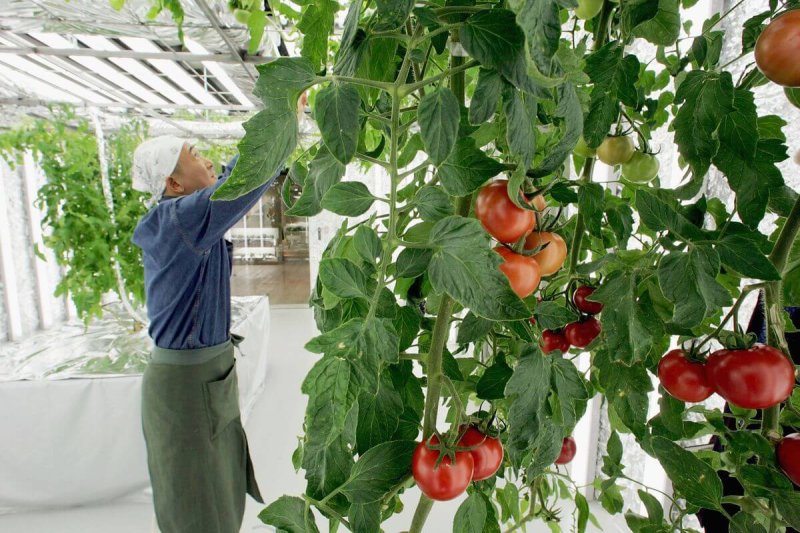
Current genome-editing technologies are more efficient than ever before, making it possible to modify genes as if editing sentences on a word-processor.
Technological advances have been made in life science studies and the development of medicines. According to researchers, breed improvements of agricultural products, which usually take 10 years or longer, can be done in only a few years with the technology.
[A] genome-edited tomato was jointly developed by Sanatech Seed Co., a University of Tsukuba spinoff company, and the university.…
Compared to conventional varieties, the genome-edited tomato is richer in gamma-aminobutyric acid (GABA), which can prevent high blood pressure.
Conventional tomatoes have a gene that limits GABA levels. The company used genome editing technology to destroy part of this gene, to increase the amount of GABA in the new variety.

No genome-edited foods have yet been approved for sale in Japan.
Based on data to be submitted by the company, the expert panel will examine whether foreign genes were inserted into the tomato variety and whether it contains any allergy-causing substances, among other safety issues.
The ministry plans to accept the application from the company if the panel determines that there are no problems.
Read the original post