A simple, safe, low-cost solution exists to combat vitamin A deficiency, in the form of a new breed of rice. But it has been held hostage for years by government regulators throughout the world, many of whom have been cowed by militant, anti-science forces who oppose the rice simply because it’s genetically modified. The episode is a tragic illustration of regulations blocking proven, life-altering remedies under the guise of “safety” and “precaution.”
Vitamin A deficiency is one of the great public health challenges of our time. It affects one third of the world’s under five population — more than 140 million children, making them vulnerable to a range of other childhood diseases.
Addressing vitamin-A deficiency (VAD) should be easy. It’s available through consumption of some fruits (such as cantaloupes) and vegetables (such as carrots and leafy greens). But there is limited access to such foods for families in developing countries. And while the vitamin can be distributed in other forms, such as capsules, doing so is costly and brings logistical challenges, which have been magnified in the current environment.
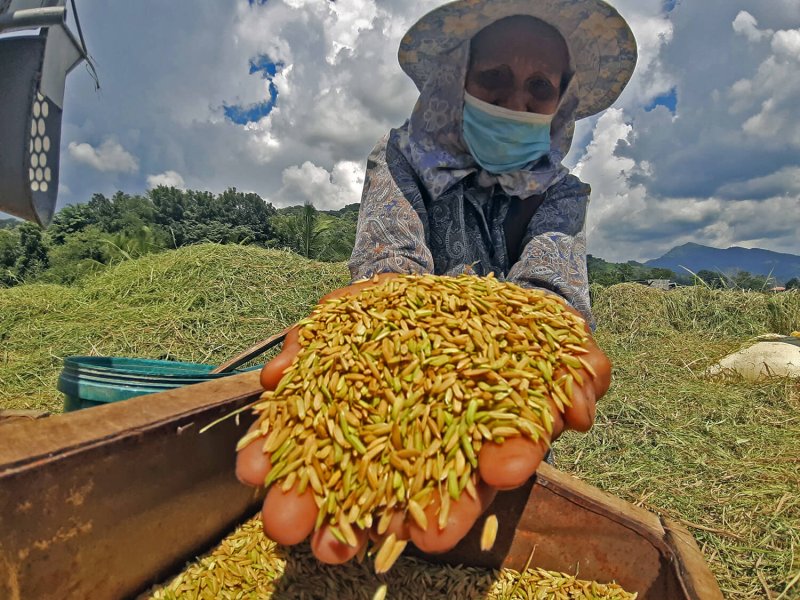
These obstacles, and the morbidity that comes with failing to overcome them, motivated scientists to look for other solutions. In the late 1990s, German plant scientists began developing a revolutionary form of rice. It is identical to conventional rice except for the addition of two genes that allow the plant to naturally produce beta-carotene, which in turn is converted into vitamin A. The tweak, along with natural yellow pigments known as xanthophylls, gives the kernels a golden tint.
With rice a low-cost dietary staple in most developing countries, especially in Asia, “Golden Rice” is an ideal delivery vehicle for vitamin A. It can produce as much as 100 percent of the vitamin A needs of preschool children and multiple independent studies show that it is better at transmitting vitamin A than many vegetables that are typically inaccessible to the poor.

But because Golden Rice is designated a “genetically modified organism” (GMO), its development and distribution have been hampered by regulatory hurdles that reach back nearly 20 years. Those hurdles are largely a product of a United Nations agreement adopted by 170 nations over the past two decades.
The agreement’s seemingly harmless goal was to ensure that any GM crop would not pose health or environmental risks. The effect, however, has been much more draconian than originally envisioned. Its implementation, writes Ed Regis in an excellent book about Golden Rice published last year, “has persistently erred on the side of caution, overregulation, restriction, and prohibition.”
That’s the primary reason why a product with the potential to improve lives – and save them – has never been sold to consumers, despite overwhelming evidence that Golden Rice is every bit as safe as conventional rice. Golden Rice has been approved by regulators in the United States, Canada, and Australia, having passed all the safety requirements imposed by those countries.

But regulators throughout the world have faced pressure, stirred by emotionally-biased advocacy groups, to resist approving Golden Rice. These groups, such as Greenpeace, have never wavered in their opposition, even amid overwhelming evidence of the safety of Golden Rice and other GMOs. Indeed, activists have vandalized hundreds of GMO research projects, which includes the uprooting of Golden Rice that had been planted as part of field trials in 2013 in the Philippines.
The effect has been to create a climate of fear around Golden Rice and other demonstrably safe and useful products. More than 150 Nobel laureates have signed a letter condemning the anti-GMO scare campaign and calling for Golden Rice to be approved.
Amid the fearmongering and hostility to science there has been some encouraging news. In December 2019, the Philippines declared the rice “as safe as conventional” varieties and issued a biosafety permit. The rigorous approval processes there could be a model for regulators in other developing countries to move forward with Golden Rice being approved for cultivation and human consumption.
But Golden Rice remains in limbo. Before the rice can be grown, the Philippines must issue “an approval to cultivate,” which requires trials from the field. Those trials have been suspended because of Covid-19. The result is continued uncertainty about the future of Golden Rice. The head of the Philippines Rice Research Institute estimates that it will be 2023 before the rice will be available to Asian farmers.
These delays mean millions of families will continue to be deprived of a product that could prevent needless suffering – all in the name of trying to protect them from a threat that doesn’t exist.
Phil Harvey is the founder of the DKT Liberty Project, a non-profit organization that has provided financial support to combat Golden Rice prejudice.
Matthew Rees is a writer on international affairs.
A version of this article was originally posted at Real Clear Markets and has been reposted here with permission. Real Clear Markets can be found on Twitter @rc_markets