
Scientists have long posited that time and evolution stratified the human brain, with the oldest and crudest lizard layer lurking at the bottom, followed by the mammalian limbic system, which controls emotion, and topped by the uniquely human neocortex, which guides rational thought.
…
But according to Lisa Feldman Barrett, a professor at Northeastern University, the idea that the human brain developed a way to rein in our inner lizard is one of the most persistent and widespread errors in all of science.
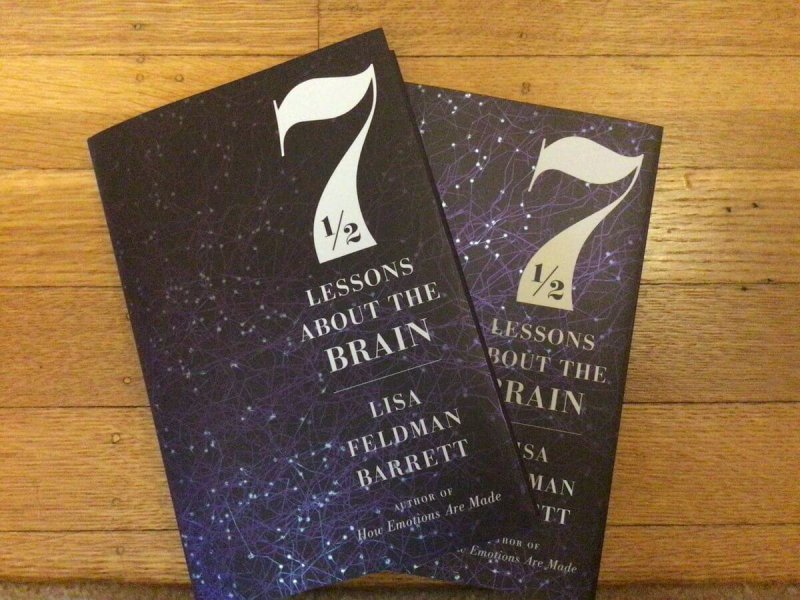
In her slim but potent “Seven and a Half Lessons About the Brain,” Ms. Barrett eagerly dispels this and other myths about the gray matter between our ears. She writes that the notion that the human brain has three discrete layers emerged in the mid-20th century, when the best technology available was a microscope.
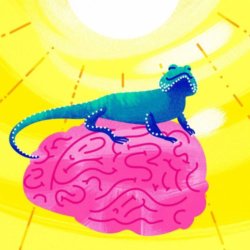
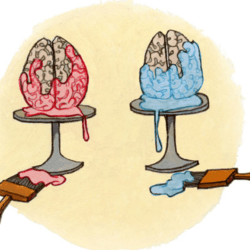



Ms. Barrett writes that scientists have recently discovered that the brains of all mammals—and most likely all vertebrates—follow a single manufacturing plan… Sure, our brain seems impressive, but we are simply one animal among many with a noodle adapted to the task of survival. “Other animals are not inferior to humans,” Ms. Barrett writes. “Your brain is not more evolved than a rat or lizard brain, just differently evolved.”
[Editor’s note: Find “Seven and a Half Lessons About the Brain” here.]