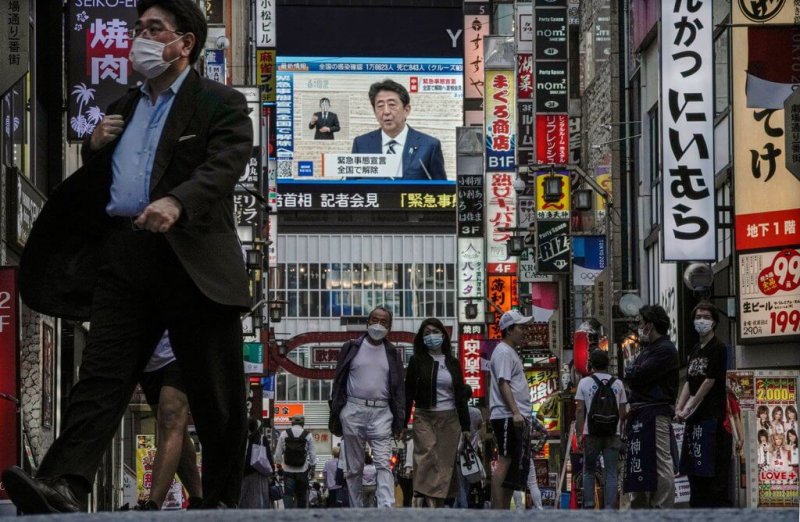
How the ‘Japan model’ – limited testing with robust contact tracing – kept the country from being initially overwhelmed by COVID-19

merlin f a df ec d cbf d jumbo
Credit: Kimimasa Mayama/EPA/ Shutterstock
[At the beginning of the pandemic,] Japan went its own way, limiting tests to only the most severe cases as other countries raced to screen as many people as possible. Medical experts worried that the approach would blind the country to the spread of infection, allowing cases to explode and swamping hospitals.

It hasn’t happened. Japan [had] one of the lowest mortality rates from Covid-19 among major nations. The medical system has not been overwhelmed. And the government never forced businesses to close, although many chose to… Prime Minister Shinzo Abe declared Japan’s battle against the outbreak a resounding success, taking the country off an emergency footing — a sort of “lockdown lite” that lasted only a month and a half.

Instead of testing widely to understand and limit the virus’s spread through the general population, Japan has focused on quickly containing small outbreaks through contact tracing. Instead of dictating strict constraints on daily life, it has focused on educating people about measures like social distancing and gently prodding them to follow along.

Follow the latest news and policy debates on sustainable agriculture, biomedicine, and other ‘disruptive’ innovations. Subscribe to our newsletter.

In a speech on [May 25], Mr. Abe emphasized that the end of the state of emergency did not mean a return to normal life.

“What we need to aim for,” he said, “is establishing a new normal.”

Read the original post

{{ reviewsTotal }}{{ options.labels.singularReviewCountLabel }}
{{ reviewsTotal }}{{ options.labels.pluralReviewCountLabel }}
{{ options.labels.newReviewButton }}
{{ userData.canReview.message }}

Related Articles

Infographic: Global regulatory and health research agencies on whether glyphosate causes cancer

Infographic: Global regulatory and health research agencies on whether glyphosate causes cancer

Does glyphosate—the world's most heavily-used herbicide—pose serious harm to humans? Is it carcinogenic? Those issues are of both legal and ...

Most Popular

ChatGPT-Image-May-7-2026-12_16_37-PM-2
Viewpoint: Are cancer rates ‘skyrocketing’ as RFK, Jr. and MAHA claims? The evidence says mostly the opposite
Screenshot-2026-04-13-at-1.39.26-PM
Viewpoint: ‘Safer for children?’ Stonyfield yogurt under fire for deceptive organic marketing
Screenshot-2026-04-22-at-10.46.29-AM
Viewpoint: How to counter science disinformation? Science journalist offers 12 practical tips
ChatGPT-Image-Apr-20-2026-11_17_18-AM-2
10,000 scientists gone: Trump’s cuts create an unprecedented brain drain

Sorry. No data so far.

glp menu logo outlined

Get news on human & agricultural genetics and biotechnology delivered to your inbox.