India’s scientists urge government to approve gene-edited crops to help battle yield losses

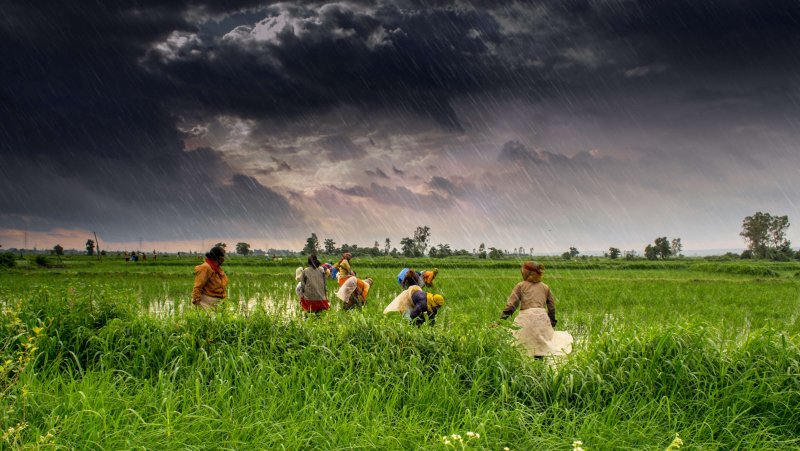
Agriculture and rural farms of India
Credit: Wikimedia Commons

Unlike transgenic technology, in which genes from other organisms are inserted for developing better crops, the CRISPR-Cas9 technique makes it possible to add, remove or alter genetic material so as to add a beneficial trait or remove a deleterious one. It is largely considered safe as no foreign genes are used to alter the plant genome in most cases.

CRISPR-Cas9 can modify genetic material in the genome, like other gene editing tools such as zing finger nucleases and Transcription activator-like effector nuclease. The difference is that the new method, adapted from a naturally occurring gene editing system in bacteria, does the job more accurately and efficiently, and is cheaper and faster.

Follow the latest news and policy debates on sustainable agriculture, biomedicine, and other ‘disruptive’ innovations. Subscribe to our newsletter.

India is still in the process of deciding whether to allow gene editing for better crops. “Indian scientists have been arguing that since SDN-1 and SDN-2 do not use any foreign gene, the crops developed using these methods should be treated as normal crops. Those developed using SDN-3 can be placed under GMO regulation,” says Chinnusamy Vishwanathan, Principal Scientist and Head of Department of Plant Physiology, Indian Agricultural Research Institute, Delhi.


Read the original post

{{ reviewsTotal }}{{ options.labels.singularReviewCountLabel }}
{{ reviewsTotal }}{{ options.labels.pluralReviewCountLabel }}
{{ options.labels.newReviewButton }}
{{ userData.canReview.message }}

Related Articles

Infographic: Global regulatory and health research agencies on whether glyphosate causes cancer

Infographic: Global regulatory and health research agencies on whether glyphosate causes cancer

Does glyphosate—the world's most heavily-used herbicide—pose serious harm to humans? Is it carcinogenic? Those issues are of both legal and ...

Most Popular

ChatGPT Image Jun 3, 2026, 03_54_37 PM
Viewpoint: “Turn on, tune in, drop out”—Kennedy embraces the Timothy Leary psychedelic revolution
ChatGPT-Image-Jun-11-2026-01_15_03-PM
Selective Pressure, Selective Silence
ChatGPT Image Jun 3, 2026, 03_14_43 PM
Viewpoint: How Earthjustice became the poster child for the abuse of special interest activist funding
Screenshot-2026-06-05-at-2.12.30-PM
Some plants can poison you. So how did humans figure out what is safe to eat?
ChatGPT Image Jun 1, 2026, 11_39_17 AM
Viewpoint: When food myths go viral, farmers pay the price
Screenshot-2026-06-11-at-3.40.06-PM
'Toxin' detox: A gastroenterologist weighs in on $71 billion health trend
Screenshot-2026-06-03-at-1.24.46-PM
Challenging anti-GMO disinformation: Why genetically-tweaked crops offer bushels of benefits
ChatGPT Image May 26, 2026, 08_42_17 AM (1)
Viewpoint: Greenpeace and poison: How environmental advocacy groups rely on compliant (and often ignorant) journalists to spread disinformation and spark litigation

Sorry. No data so far.

glp menu logo outlined

Get news on human & agricultural genetics and biotechnology delivered to your inbox.