Who were the first Caribbean populations? Ancient DNA rewrites history

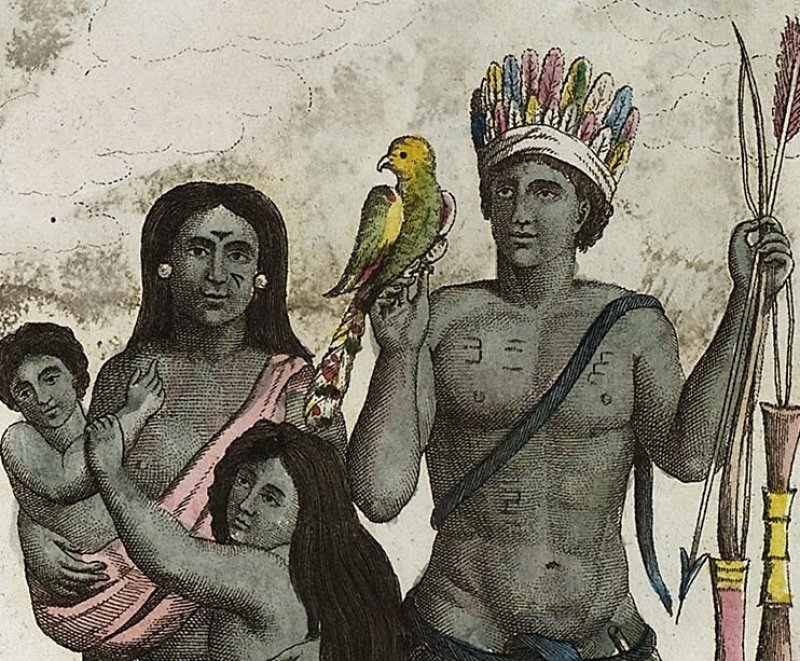
Credit: John Gabriel Stedman

An international team led by Harvard Medical School’s David Reich analyzed the genomes of 263 individuals in the largest study of ancient human DNA in the Americas to date. The genetics trace two major migratory waves in the Caribbean by two distinct groups, thousands of years apart, revealing an archipelago settled by highly mobile people, with distant relatives often living on different islands.

Reich’s lab also developed a new genetic technique for estimating past population size, showing the number of people living in the Caribbean when Europeans arrived was far smaller than previously thought – likely in the tens of thousands, rather than the million or more reported by Columbus and his successors.

Highlighting the region’s interconnectivity, a study of male X chromosomes uncovered 19 pairs of “genetic cousins” living on different islands – people who share the same amount of DNA as biological cousins but may be separated by generations.


Follow the latest news and policy debates on sustainable agriculture, biomedicine, and other ‘disruptive’ innovations. Subscribe to our newsletter.

Uncovering such a high proportion of genetic cousins in a sample of fewer than 100 men is another indicator that the region’s total population size was small, said Reich, professor of genetics in the Blavatnik Institute at HMS and professor of human evolutionary biology at Harvard.

“When you sample two modern individuals, you don’t often find that they’re close relatives,” he said. “Here, we’re finding relatives all over the place.”


Read the original post

{{ reviewsTotal }}{{ options.labels.singularReviewCountLabel }}
{{ reviewsTotal }}{{ options.labels.pluralReviewCountLabel }}
{{ options.labels.noReviewsLabel }}
{{ options.labels.newReviewButton }}
{{ userData.canReview.message }}

Related Articles

Infographic: Global regulatory and health research agencies on whether glyphosate causes cancer

Infographic: Global regulatory and health research agencies on whether glyphosate causes cancer

Does glyphosate—the world's most heavily-used herbicide—pose serious harm to humans? Is it carcinogenic? Those issues are of both legal and ...

Most Popular

ChatGPT-Image-Mar-10-2026-01_39_01-PM
Viewpoint—“Miracle molecule” debunked: Why acemannan supplements don’t work
Screenshot 2025-09-17 at 12.41
Misinformation alert: No, glyphosate use in Canadian forests is not spurring more wildfires
Screenshot 2026-07-11 094410
Growing animal muscle and fat cells inside rice grains and calling it beef: One of numerous genetically engineered products shaking up our ecosystem
ChatGPT-Image-Jun-25-2026-12_23_17-PM
No, Bill Gates did not secretly engineer ticks to promote veganism
Screenshot 2026-07-16 at 8.49
Pete Hegseth’s bizarre Viagra commercial as Trump administration endorses ‘hormone replacement therapy’
Screenshot-2026-07-16-at-11.32.12-AM
Viewpoint: Trump appoints climate change hoax promoter to head influential government policy project
file-f-d-d-
Facts & Fallacies Podcast: Europe's AC debacle underscores fatal flaw in green activism

Sorry. No data so far.

glp menu logo outlined

Get news on human & agricultural genetics and biotechnology delivered to your inbox.