New Zealand farmers experience 25% lower cancer rates than city dwellers, study shows, challenging misleading environmentalist claim they face higher pesticide cancer risks

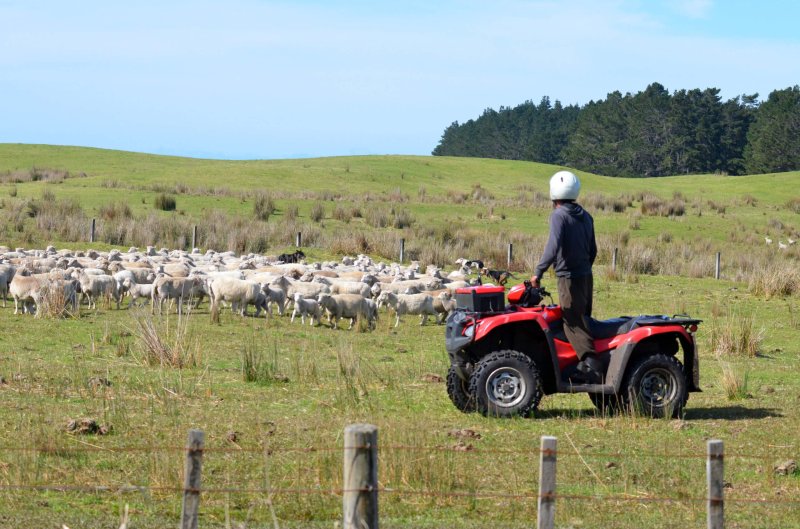
Shepherd in Karikari, New Zealand. Credit: Rafael Ben-Ari/Fotolia

The good news [in the 2020 New Zealand] State of Cancer report is that the overall incidence of cancer is 25 percent lower among those living in rural areas, compared with those living in the main urban areas.

Although it might not be a reason to leave the cities (nose-to-tail traffic every long weekend indicate there are enough reasons to cause outflows already) it certainly is reason enough to reconsider the validity of some arguments.

Agrichemicals, whether fertiliser nitrogen or Roundup, have been the butt of activist concern for years.

Working on the fear of a possible health threat, activists provoke anxiety and anger in society, without considering all the consequences of their actions.

Generating unnecessary anxiety in people is one consequence. Another is that without the tools of food production, which, when used as recommended, do not cause problems with human health, food would be very much more expensive.

Follow the latest news and policy debates on sustainable agriculture, biomedicine, and other ‘disruptive’ innovations. Subscribe to our newsletter.

With this news it should be possible to refocus funding and effort on education for the real reasons causing cancer in New Zealand – smoking and obesity.

Increased education in household management, shopping for meal plans and basic cooking are foundational for a healthy future.


Read the original post

{{ reviewsTotal }}{{ options.labels.singularReviewCountLabel }}
{{ reviewsTotal }}{{ options.labels.pluralReviewCountLabel }}
{{ options.labels.newReviewButton }}
{{ userData.canReview.message }}

Related Articles

Infographic: Global regulatory and health research agencies on whether glyphosate causes cancer

Infographic: Global regulatory and health research agencies on whether glyphosate causes cancer

Does glyphosate—the world's most heavily-used herbicide—pose serious harm to humans? Is it carcinogenic? Those issues are of both legal and ...

Most Popular

ChatGPT-Image-May-7-2026-12_32_36-PM
Viewpoint: The state of U.S. vaccine policy? Dismal nationally, but some states are stepping up.
Screenshot-2026-04-13-at-1.39.26-PM
Viewpoint: ‘Safer for children?’ Stonyfield yogurt under fire for deceptive organic marketing
Screenshot-2026-04-22-at-10.46.29-AM
Viewpoint: How to counter science disinformation? Science journalist offers 12 practical tips
ChatGPT-Image-May-7-2026-12_16_37-PM-2
Viewpoint: Are cancer rates ‘skyrocketing’ as RFK, Jr. and MAHA claim? The evidence says mostly the opposite
ChatGPT-Image-May-12-2026-08_39_41-PM
GLP podcast: Big Pharma, Big Ag, Big Food—health harming industries or life-saving innovators?
Screenshot-2026-04-23-at-11.00.36-AM
Regulators' dilemma: Thalidomide, Metformin, and the cost of getting drug approvals wrong
Picture1-1
Cooling the planet with balloons: Could a geoengineering gamble slow global warming?
Picture1-14
When superbugs threaten vulnerable children: Can AI help solve antibiotic resistance?
ChatGPT-Image-May-7-2026-01_23_27-PM-2
Viewpoint: Will AI democratize personalized cancer treatment or fuel medical misinformation?
the magic of mRNA
Viewpoint: Anti-vax fake ‘turbo cancer’ claims threaten cancer treatment breakthroughs
bigstock opioids on chalkboard with rol
GLP podcast: 'Safe injection sites': enabling drug addiction or saving lives?
Defense_Secretary_Ash_Carter_tours_the_Microsoft_Cybercrime_Center_in_Seattle_March_3_2016
How criminals are using AI to target social media users and steal their money and confidential data
artificial intelligence brain think illustration md
Viewpoint — Digital gods and human extinction: Will we be the first species ever to design our own descendants?
glp menu logo outlined

Get news on human & agricultural genetics and biotechnology delivered to your inbox.