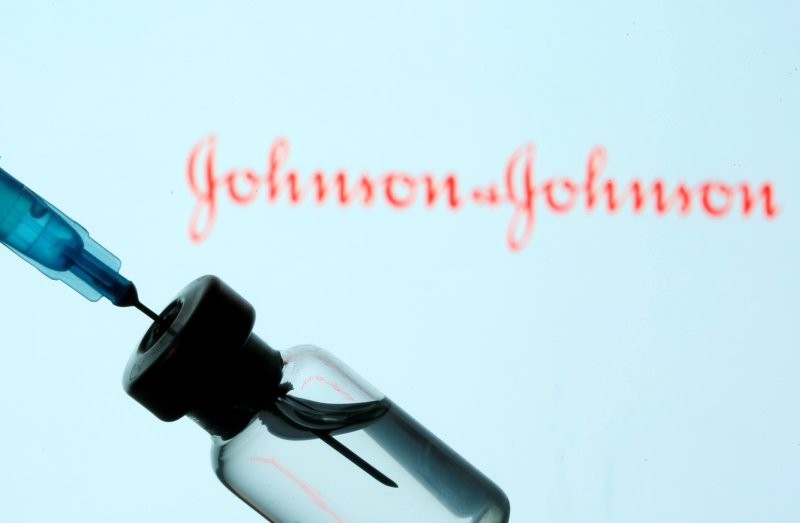
What you need to know about the one-shot vaccine by Johnson & Johnson

Credit: Dado Ruvic/Reuters

More than two months after its last COVID-19 vaccine authorization, the FDA authorized for emergency use a one-shot vaccine from Janssen Biotech Inc., a Johnson & Johnson pharmaceutical company, on Feb. 27.

Unlike the Pfizer/BioNTech and Moderna vaccines, which use an mRNA design, the Johnson & Johnson shot uses a harmless adenovirus — a type of virus that typically causes the common cold — modified with the genetic material for SARS-CoV-2 to trigger an immune response. The Johnson & Johnson vaccine has the advantages of being one shot, not two, and being stored at regular refrigeration temperatures for up to three months. The Pfizer and Moderna two-shot vaccines can only be kept at refrigerator temperatures for five or 30 days, respectively.

Overall, J&J reported 66.1% efficacy globally in preventing moderate to severe COVID-19 in adults 28 days or more after vaccination, and an efficacy of 85.4% in preventing severe or critical COVID-19. The efficacy was similar across demographics including age, race and ethnicity.
Follow the latest news and policy debates on sustainable agriculture, biomedicine, and other ‘disruptive’ innovations. Subscribe to our newsletter.

The vaccine had 100% efficacy in preventing COVID-19 that would require medical intervention — meaning hospitalization, ICU admission, mechanical ventilation or a life support machine — 28 days or more after vaccination.


Read the original post

{{ reviewsTotal }}{{ options.labels.singularReviewCountLabel }}
{{ reviewsTotal }}{{ options.labels.pluralReviewCountLabel }}
{{ options.labels.noReviewsLabel }}
{{ options.labels.newReviewButton }}
{{ userData.canReview.message }}

Related Articles

Infographic: Global regulatory and health research agencies on whether glyphosate causes cancer

Infographic: Global regulatory and health research agencies on whether glyphosate causes cancer

Does glyphosate—the world's most heavily-used herbicide—pose serious harm to humans? Is it carcinogenic? Those issues are of both legal and ...

Most Popular

ChatGPT-Image-Jul-22-2026-09_13_07-AM
Viewpoint—The Strategic Litigation boom: Understanding the tightening coalition among NGOs, foundations, journalists, and tort lawyers
ChatGPT-Image-Mar-10-2026-01_39_01-PM
Viewpoint—“Miracle molecule” debunked: Why acemannan supplements don’t work
diversity
We are entering a new era of personalized medicine—if you’re white
close up arabica coffee farmer s hands picking beans plant his farm colombia
Viewpoint: Why do so many ‘mainstream’ and ‘respected’ media outlets exaggerate climate change threats?
How to Include More Strawberries in Your Diet
Strawberries are berries—and 35 other surprising food and drink myths
Screenshot-2026-07-07-at-12.55.44-PM
Viewpoint: Yes, we can adapt to a changing climate without devastating the environment and the economy
ChatGPT-Image-May-22-2026-10_26_09-AM
Trump-RFK, Jr. National Science Board firings: Accountability vs. partisan meddling
ChatGPT-Image-Jun-25-2026-12_23_17-PM
No, Bill Gates did not secretly engineer ticks to promote veganism
organic scaled
Facts & Fallacies podcast: Organic food cuts pesticide exposure? A response to Dr. Rhonda Patrick
ChatGPT-Image-Jul-6-2026-02_25_26-PM
40 million Americans take glucosamine. If you have memory loss, it could accelerate cognitive decline.
kratom
Viewpoint: Kratom ‘supplement’ crisis: DEA sits on its hands while patient addictions to this ineffective drug  rise

Sorry. No data so far.

glp menu logo outlined

Get news on human & agricultural genetics and biotechnology delivered to your inbox.